The “Weird Al” for lovers of language

There is so much to like here: the lyric, the visual imagination, the beat…the fact that you don’t actually see “Weird Al” Yankovic during the performance (not if you blink).  Make all your illiterate friends watch and wisen up!

Watch Cosmos, be less dumb

I wouldn’t be much of a television professional if I didn’t watch a lot of TV, have an opinion on all of it, and insist on sharing that opinion even when you don’t ask.  But I do; I do; and even though you didn’t, here goes.

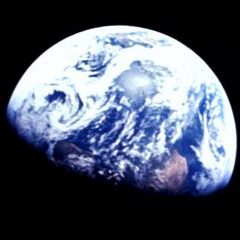
I hope you’re watching Cosmos.  If you’re not, you can catch it online here as well as on Fox and a few of the Fox-affiliated networks; next new episode is Sunday night.  Astronomer/rock star Neil deGrasse Tyson is an engaging if slightly self-absorbed host for a journey of the imagination that’s not only exploring out in space, but back in time.  This version takes full advantage of the capabilities of the medium in the modern day and tells a great story.  I don’t find it as enthralling as the original with astronomer/rock star Carl Sagan back in 1980, but it’s not fair to compare the two, not for people like me who saw the Sagan series when we were young and the things he talked about were actually new and unknown to us.  For me, it had the advantage of provoking wonderment in a way the current version just can’t; I hope it does for the kids of today.

The new series, produced by Sagan’s widow Ann Druyan, Seth McFarlane and others, is providing easy-to-follow explanations of some difficult scientific concepts.  The writers and producers have found a way to lay things out so you can understand the concept in the same way you eat an elephant (one bite at a time); it’s not scary to learn new things here.  I particularly liked Episode 2 for the explanation of evolution by natural selection.  Anyone who didn’t watch that show with a preset determination that evolution is for atheists could grasp the basics; yes, you’ve got to give up the notion that the Earth is only 6000 years old and that people and dinosaurs lived side by side, but you will understand what the scientific terms “evolution” and “natural selection” really mean.  It should be required viewing for the members of the Texas State Board of Education, that’s for sure.

If you prefer yours in a handy graphical form, here’s a swell chart from Reddit user SlipperyFish done for The Infographics Project (thumbnail image via Thinkstock).  Thanks to Upworthy for the link to this short answer to a perennial favorite dumb question:

v10-534111abc1539ee4c33e5c2815aae6d6

Just because there’s been another mass shooting is no reason to think that there’s a problem here

Reaction to this morning’s shootings at the Washington Navy Yard are running pretty much as you expect them to: most people are concerned and frightened and interested to know more details, and the cable television news is falling all over itself to bring you the very latest on this BREAKING STORY but generally not helping clear up the confusion that’s only to be expected immediately after an event of this sort.  (Wolf Blitzer, I’m talking to you.)  The pro-gun/anti-gun rhetoric that’s followed all the recent major shootings is no doubt on its way; this morning from his Twitter account David Frum gave us all a head start:

Let’s just wait and see: I bet Frum’s suggestions are pretty close to what we’ll see and hear in the next few days.  It’s sad to think that we’re not capable of any more constructive civic discussion than this…or are we?

Oh, there’s one more thing:

“I have a dream”

Fifty years ago, Dr. Martin Luther King, Jr., took the podium at the Lincoln Memorial and delivered his “I Have a Dream” speech at the March on Washington for Jobs and Freedom; it is still one of the most profound and moving speeches in the history of American rhetoric, on top of what it meant to the civil rights movement.  King did not dream that his children would one day be able to watch the speech on their desktop computer or smartphone, but they can, and so can we.

The whole thing is remarkable, including the peek you get at what a slice of America looked like in the early 1960s; go to the 12:00 mark to catch the dreams, and then on through to the end for the ad-libbed “let freedom ring”s and the promise of ultimate freedom which still stir my emotions.

“…let freedom ring.  And when this happens…and when we allow freedom ring, when we let it ring from every village and every hamlet, from every state and every city, we will be able to speed up that day when all of God’s children, black men and white men, Jews and gentiles, Protestants and Catholics, will be able to join hands and sing in the words of the old Negro spiritual: free at last, free at last, thank God Almighty, we are free at last!”

Out of the coverage leading up to this week’s anniversary I’ve pulled a couple of gems: from Brian Naylor at NPR, a look at the little segregated southern town that was Washington, D.C. 50 years ago; and from Robert G. Kaiser in The Washington Post, a reporter’s remembrance of the event he covered 50 years earlier, with a quite remarkable admission—that the local paper blew it when it all but overlooked King’s speech in its coverage of the march!

The next time someone says space travel isn’t dangerous…

…suggest that they read this: Italian astronaut Luca Parmitano’s first person account of his most recent spacewalk, during which he nearly drowned inside his helmet.

…just as I’m thinking about how to uncoil the cable neatly (it is moving around like a thing possessed in the weightlessness), I ‘feel’ that something is wrong. The unexpected sensation of water at the back of my neck surprises me – and I’m in a place where I’d rather not be surprised. I move my head from side to side, confirming my first impression, and with superhuman effort I force myself to inform Houston of what I can feel, knowing that it could signal the end of this EVA.Luca-smiling-ESA

(snip)

At first, we’re both convinced that it must be drinking water from my flask that has leaked out through the straw, or else it’s sweat. But I think the liquid is too cold to be sweat, and more importantly, I can feel it increasing. I can’t see any liquid coming out of the drinking water valve either. When I inform Chris and Shane of this, we immediately receive the order to ‘terminate’ the sortie.

(snip)

As I move back along my route towards the airlock, I become more and more certain that the water is increasing. I feel it covering the sponge on my earphones and I wonder whether I’ll lose audio contact. The water has also almost completely covered the front of my visor, sticking to it and obscuring my vision. I realise that to get over one of the antennae on my route I will have to move my body into a vertical position, also in order for my safety cable to rewind normally. At that moment, as I turn ‘upside-down’, two things happen: the Sun sets, and my ability to see – already compromised by the water – completely vanishes, making my eyes useless; but worse than that, the water covers my nose…

(snip)

I try to contact Chris and Shane: I listen as they talk to each other, but their voices are very faint now: I can hardly hear them and they can’t hear me. I’m alone. I frantically think of a plan. It’s vital that I get inside as quickly as possible. I know that if I stay where I am, Chris will come and get me, but how much time do I have? It’s impossible to know.

(snip)

Space is a harsh, inhospitable frontier and we are explorers, not colonisers. The skills of our engineers and the technology surrounding us make things appear simple when they are not, and perhaps we forget this sometimes.

Better not to forget.