It’s the right thing to do…and now we have data!

Today’s the day we can celebrate the first anniversary of the demise of the “don’t ask don’t tell” policy that pushed 13,000 homosexual soldiers, sailors, airmen and Marines out of the armed forces of our country and forced untold thousands of others to lie about their sexual orientation in order to continue to serve.  How has the republic fared?

You’ll recall that some opponents of the repeal warned of dire consequences should we choose to stop discriminating against homosexuals who wanted to serve their country; well OK, let’s assess the fallout now, a year removed from the heat of the moment.  Nathaniel Frank today in Slate:

During the debate over “don’t ask, don’t tell”—which ended one year ago this week—Sen. John McCain insisted that ending the gay ban would do “great damage” to the military, and the commandant of the Marine Corps said it could “cost Marines’ lives.” One think-tanker agreed that we’d be taking “a risk with our lives, property and freedom.” Another declared breathlessly that, “ultimately all of civilian life will be affected.” Then there was the dire prediction that one-quarter of the military, or 500,000 troops, might quit in protest.

(snip)

A new UCLA study, which I co-authored with other academics including military professors from all four U.S. military service academies, has assessed whether ending the gay ban has indeed harmed the armed forces. It hasn’t. Our conclusion is that ending the policy “has had no negative impact on overall military readiness or its component parts: unit cohesion, recruitment, retention, assaults, harassment or morale.”

(snip)

But we found we could go beyond that: We can also report that after the military ended the gay ban, the institution itself improved, and not just for gay people but for the overall force. Lifting the ban, we found, improved the ability of the military to do its job by removing needless barriers to peer bonding, effective leadership and discipline.

Surprised?  I’m not.  I did then and do now have confidence in the Pentagon’s ability to carry out its orders; I did then and do now have faith that most American men and women, in and out of the armed forces, believe in the American values of equality, fairness and tolerance; I did then and do now believe that the remaining barriers of prejudice are best overcome by exposure to the unknown.

And I believe that ending policies and practices that discriminate against homosexuals will have the same effect in other areas of life as it’s had for the military, because I believe most American men and women, despite the teachings of some religions to the contrary, know in their hearts that it’s the right thing to do.

Mark your civil rights calendar: the gay marriage issue could get to the Supreme Court before the end of the current term.

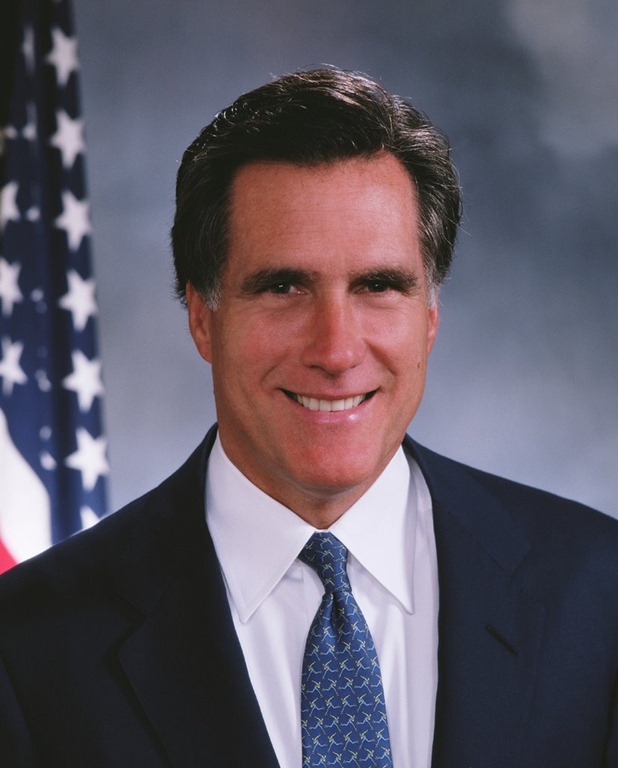
Mitt: Did I say that out loud?

Years ago I was a political junkie, but I kicked it. Turned out it was pretty easy to get the political process monkey off my back when the campaign content and tactics got so distasteful that I couldn’t bear to listen. But some things come back easily, in the right circumstances.

The “hidden video” news revealing Mitt Romney in an unguarded moment in his native environment—among the wealthy—expressing his apparently-honest feelings about a large portion of his fellow citizens left me shaking my head and imagining the effect on voters. Even if what he said was right—and mostly it’s not—demonstrating that contempt for the poor and the elderly, who make up most of those who owe no federal income tax but still pay plenty of other taxes, isn’t going to help Romney with his likeability problem. Today’s revelation of another video clip from that same fundraiser—in which Romney asserts that Palestinians (apparently, all of them) “have no interest whatsoever in establishing peace” with Israel—and the promise of the full video still to come, makes you grateful to live in a time when everyone with a phone is a potential hidden camera.

Romney is right about the fact that most people, on both sides, have made up their minds, and the outcome depends on the choices of a small portion of voters. The experts haven’t had time yet to gather data on how Romney’s truth outbursts in a Florida fundraiser will affect those undecided voters, but that data will get put into the mix along with this very interesting analysis of the polling up to this point which concludes that “Given where the election is being contested, however, the most likely outcome is that Obama wins enough tipping-point states to eke out a victory.” I can hardly wait for the debates!

“American Taliban”

From time to time I find something I think is worth recommending that other people check out; I found such a thing last week.

This is about politics; this is about the people I’ve accused of hijacking the Republican Party and turning it into a secular curtain that they hide behind in their fight to impose their religious beliefs on all Americans through civil law, despite what the First Amendment says about that in this country (“Congress shall make no law respecting an establishment of religion, or prohibiting the free exercise thereof…”); this is about us all getting a clear look at what’s going on back there behind that curtain.

Political parties are not mentioned in the United States Constitution; they don’t exist as a part of government to promote the common good, they exist as private organizations to promote themselves and those who support them.  In the last generation, the Republican Party of Lincoln and Reagan has been take over by people who played the political game according to the rules, who participated and organized and worked their asses off, until they were in a position to control the outcomes of party primaries.  Today, anyone who wants to be the Republican candidate for anything has to please a small group of religious extremists, even when doing so means abandoning their own political heritage.

Some Republican candidates these days are true believers; others sell a bit of their soul in hopes of winning an election so they can do some good, and maybe someday move beyond the control of the extremists.  But make no mistake, the radicals are in charge of the GOP.  And they are now passing “voter ID” laws in most of the country to prevent voting fraud, laws that, arguably, have the real world effect of limiting voter participation by people in groups that have historically been reliable voters for Democratic Party candidates.  Pretty smart, and sneaky: no one can be in favor of voter fraud…but what they don’t like you to realize is that the incidence of actual voter fraud is on the order of 4/100,000ths of one-percent, or just 86 cases out of 196,000,000 votes cast over a five-year period of the early 2000s.  Thirty-three states have passed voter ID laws; in 32 of those states, the laws were proposed by Republican lawmakers and passed by Republican-controlled legislatures and signed by Republican governors.  If there’s no significant voter fraud to stop, then what are they after?

The people who control today’s Republican Party have been as successful as they have because (1) some Americans agree with their goals, (2) most Americans aren’t paying attention, and (3) the news media is too occupied with what David Shaw in the Los Angeles Times called “the four horsemen of the journalistic apocalypse: superficiality, sensationalism, preoccupation with celebrity, and obsession with the bottom line.”  So, we have to rely on fictional journalists to do the heavy lifting:

“American Taliban.”  Yep; that’s perfect.  Spread the word.  And thanks to Upworthy.com for the tip.

Neil Armstrong

Today his family held a private memorial service for Neil Armstrong, who died last week at the age of 82. I’ve read a lot of the tributes to the first man to walk on the moon that have been published in the past week, and have a little to add.

I never met Neil Armstrong, but I’ve always looked up to him. As a kid I paid a lot of attention to the space program, and when my dad was transferred to Houston in mid-1966 I started to feel like I was a part of it since I lived where the astronauts lived, but I really don’t remember Armstrong’s name sticking in my mind until it came time for Apollo 11. I was 12 years old that night in 1969: I was on the floor at home in front of our family’s first color television, straining to comprehend through the static-y images and voices just what was happening as the Eagle landed, and then as Armstrong and Buzz Aldrin stepped out onto the moon. Although that summer I was laser-focused on making the Little League all-star team (I didn’t), as I sat on the floor that night I really felt like I had done something great, had somehow helped make that moon landing possible.

When the ticker tape parades I saw on television were over, Armstrong faded from view; it turns out, that’s what he wanted. And that’s a big part of why I’ve respected him over the years. I realize now that Neil Armstrong probably wasn’t any braver than any of the other astronauts for making that flight—every other astronaut wanted the assignment, and many lobbied for it to have the chance for a prominent place in history. Although he’s been highly praised as being among the finest pilots at NASA, his colleagues weren’t slouches at the stick. But Armstrong wasn’t after glory or recognition: he wanted to fly, to do new things; he wanted to do his job, and he didn’t want to become the center of attention.

He personified the American ideal of the strong, silent type: the guy who was the best at what he did and loved doing it, who wanted to make a contribution to society, who didn’t want to brag about it later or feel like he was taking too much credit. Highly talented, well educated, capable and confident, with a sense of adventure and a sense of humor, and not an overinflated sense of himself. I have always been proud that it was that kind of man, that kind of American, who took the symbolic step into the future on behalf of the rest of us, from all the scientists and engineers who made it happen to all the 12-year-olds who felt like they were making that first step themselves.

So today—ironically, the day of an actual Blue Moon—on the day his family says farewell to him, I want to say thank you to Neil Armstrong for his part in opening up the future for our species, and for being the kind of man and leader in whom our country can take quiet pride. And I plan to follow his family’s honest and good-humored suggestion about how to honor him:

For those who may ask what they can do to honor Neil, we have a simple request. Honor his example of service, accomplishment and modesty, and the next time you walk outside on a clear night and see the moon smiling down at you, think of Neil Armstrong and give him a wink.

Separating the symptoms from the syndrome

Had enough already of the economy, jobs, and Medicare as political issues?  Are you ready for some good, old-fashioned, divisive social issues, guaranteed to split Americans along religious lines?  That’s what evangelical Christians do, and with the election getting closer there should be no surprise that a new round is erupting.

The Republican National Convention is next week; this week the platform committee approved a plank regarding abortion that pretty much falls in line with the party’s position on that issue over the last few platforms: no abortion, no way, no how…and no exceptions for pregnancies that result from rape or incest.

“Faithful to the ‘self-evident’ truths enshrined in the Declaration of Independence, we assert the sanctity of human life and affirm that the unborn child has a fundamental individual right to life which cannot be infringed,” said the draft platform language approved Tuesday, which was first reported by CNN. “We support a human life amendment to the Constitution and endorse legislation to make clear that the Fourteenth Amendment’s protections apply to unborn children.”

I’ll give them this: that’s the only intellectually consistent anti-abortion position possible—if an unborn child has a fundamental right to life, there can be no exception that would permit that right to be “infringed.”  But that’s a hard line to take, and those exceptions have been included in many laws outlawing abortions because, to most people, it doesn’t seem fair for the government to force a woman to carry a pregnancy to term when she didn’t choose to become pregnant, or when the pregnancy itself threatens her life and health.  Unless you don’t believe that women deserve the same treatment under law as men, in which case, well, that’s tough luck for the little lady.

Is it just coincidence that this comes up as a Missouri congressman stuns us with the concept of “legitimate rape”?  Probably; more’s the pity.

Let me give Rep. Todd Akin, R-Mo., the benefit of the doubt.  When he answered a question about permitting abortion in the case of rape (KTVI-TV’s complete report is here), and said that he understood pregnancy as a result of rape was rare because “the female body has ways to try to shut that whole thing down,” I think he was trying to say that he believes that most of the pregnant women who claim they were raped are lying about having been raped, not trying to suggest that there is such a thing as “legitimate rape” as opposed to “illegitimate rape.”

In other words, he was demonstrating his ignorance.  That’s what’s driving a large part of the reaction, but what’s driving the rest—the portion from within the Republican Party—is that Akin looked stupid on a national stage, thereby threatening the GOP’s takeover of the U.S. Senate in this election, and opened up a crack in the extremist positions of the Republican Party for all the rest of us to take a peek.

We should not be fooled that Akin’s statement, merely because it is so offensive and quickly retracted or clarified, is a mere slip. It actually represents the worldview of Akin and many like-minded Republican colleagues. His comments are part and parcel of a view of civil rights, women’s rights, and science that should be antithetical to a modern society. It reflects a worldview that has held up progress on too many serious issues, a form of know-nothingism for the modern era, a rejection of the very notion of learning.

There’s little doubt that the “conservative” forces that have taken control of the GOP have a wide-ranging agenda driven by their adherence to the belief that America is a Christian nation that needs to be evangelized, to be “taken back” from the forces advocating the constitutional principles of a secular, inclusive, civil society.  What was once the party of Lincoln, of Roosevelt, even of Reagan, has moved so far to the extreme that it’s left a lot of its old membership behind.  (Let’s make posting examples of that a new parlor game, shall we—who wants to go next?)

Republicans…conservatives…evangelical extremists…organizing themselves to support and promote their beliefs, is absolutely their right, without question; speaking out against that myopic vision of our country is a right, too.  A right LZ Granderson exercised today…

Some social conservatives talk of protecting religious freedom, but what they are really seeking is a theocracy that places limits on freedom based on a version of Judeo-Christianity that fits their liking.That language is also being considered for the GOP’s national platform.

And John Avlon, also

So the real scandal is not just the sincere stupidity of Akin’s statement — it is the policy that undergirds it, enshrined in the Republican National Platform. The problem is bigger than politics, and that’s why it is worth discussing in this election, even when Akin is off the front pages.

…just to name two; I’ll be looking for the slightest excuse to post more.

Today Akin apologized for his comment and confessed he does understand that, yes, rape can cause pregnancy.  He also defied his party (from a safe perch behind Mike Huckabee’s microphone) and said he will not resign from the Senate race against Missouri’s Democratic incumbent senator; the applause and the apoplexy resume.  But Akin is not the issue…he’s only a symptom, and one to which an attentive citizenry needs to pay attention.