
“I have a dream”

Fifty years ago, Dr. Martin Luther King, Jr., took the podium at the Lincoln Memorial and delivered his “I Have a Dream” speech at the March on Washington for Jobs and Freedom; it is still one of the most profound and moving speeches in the history of American rhetoric, on top of what it meant to the civil rights movement.  King did not dream that his children would one day be able to watch the speech on their desktop computer or smartphone, but they can, and so can we.

The whole thing is remarkable, including the peek you get at what a slice of America looked like in the early 1960s; go to the 12:00 mark to catch the dreams, and then on through to the end for the ad-libbed “let freedom ring”s and the promise of ultimate freedom which still stir my emotions.

“…let freedom ring.  And when this happens…and when we allow freedom ring, when we let it ring from every village and every hamlet, from every state and every city, we will be able to speed up that day when all of God’s children, black men and white men, Jews and gentiles, Protestants and Catholics, will be able to join hands and sing in the words of the old Negro spiritual: free at last, free at last, thank God Almighty, we are free at last!”

Out of the coverage leading up to this week’s anniversary I’ve pulled a couple of gems: from Brian Naylor at NPR, a look at the little segregated southern town that was Washington, D.C. 50 years ago; and from Robert G. Kaiser in The Washington Post, a reporter’s remembrance of the event he covered 50 years earlier, with a quite remarkable admission—that the local paper blew it when it all but overlooked King’s speech in its coverage of the march!

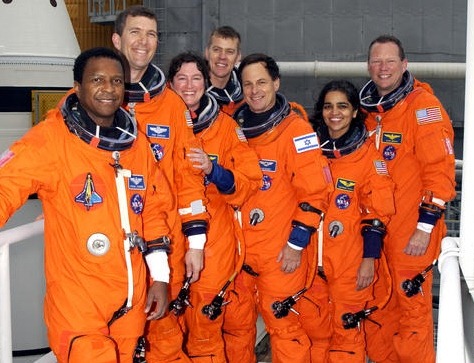
Recommended reading: an inside story of the loss of space shuttle Columbia

This week, January 16, is the 10th anniversary of the last launch of last launchspace shuttle Columbia. If you’re interested in knowing what happened at NASA leading up to that launch and what happened in Houston during the flight, read Wayne Hale’s Blog. Wayne is retired from NASA now after a 32-year career that saw him rise from flight controller to flight director to posts within the space shuttle program hierarchy and at NASA Headquarters, including Space Shuttle Program Manager after the loss of Columbia and her crew.

Start with his August 14, 2012 entry and read forward in time: he carefully and colorfully sets the stage, introduces the players and fills in shuttle program background; he doesn’t retreat into engineering jargon; he offers his recollections of the most difficult time in the professional lives of many of the people who make up America’s human spaceflight program and doesn’t spare himself from a close look. He writes of “The Tyranny of Requirements” and the warnings that were plainly there in the two previous flights (for any who could see them), of “Counting Down to Disaster” while “Working on the Wrong Problem.”

As someone who worked at Columbia crewNASA then and now, I’ve found his essays both moving and instructive; I don’t know where he’s going with the story exactly, but I’m eager to read each new installment. I can explain to you what happened to that vehicle as it rose to orbit 10 years ago, and what tore it apart and killed its crew as it came home 16 days later, but Wayne’s point of view on what led up to those events—what caused them, what was responsible—is unparalleled in its accessibility and honesty.

In 2002 I thought we were paying the right level of attention to the shuttle. I thought I was paying the right level of attention to the shuttle. I was a Flight Director. I was also a husband and a father and active in my community. I thought I could do it all.

I was wrong.

Later on, I will write about the MLK three day weekend that cost us a crew just because we took three days off. But how can you know in advance where the proper balance is between work and life when you work at extreme risk?


While I can’t cite specific studies, my observation of several major NASA projects that have gotten in trouble over the years shows a high correlation with new, added, late, or poorly defined requirements which caused technical issues, increased the costs, and delayed the schedule. Put simply, a good program manager has got to have the gumption to just say no to changes in requirements – even when they are really good ideas.


In the end, I am convinced that the “relentless budget reduction pressures” were a major cause of the Columbia accident that cost us a crew and an orbiter. Not the only cause, but a major cause.

So where do you draw that line, between prudent and acceptable expenses and extravagance? What do you do when you depend on a vehicle that just flat costs more to fly than you can afford?


The rest of the story is coming soon, but you can get caught up now: the story of space shuttle Columbia on  Wayne Hale’s Blog is worth the effort.

Here’s where your argument falls to the ground

I’m having trouble sorting out the competing arguments on this whole “fiscal cliff” thingy: either we’ve got to prevent going over it, or it’s OK to go over it a little, or it’s not really a cliff at all but more like a slope; and if the far right criticizes Speaker Boehner’s plan and so does the president, does that mean the far right agrees with the president?

You may suffer from the same problem: from time to time and no matter the topic, there are those days when each argument advanced sounds pretty good, but then someone else opens up their piehole and I don’t know what to think anymore except that maybe I am too stupid to live. How, my friends, how are we to sort out the good from the bad, the sound from the unsound, the wheat from the chaff…the flotsam from the jetsam, the Hatfields from the McCoys? How indeed!

With thanks for the tip to the fine folks at Upworthy.com, behold the world’s handiest tool for cutting through the crap: an interactive website which “offers definitions and examples of the most common logical fallacies plaguing our debates today.”

image

AND, they’ve got free posters available for download—looks like the perfect stocking stuffer, and such a thoughtful gift at this special time of year.

Endeavour, End of Mission

By turns, this video is remarkable, unbelievable, inspiring, comical, and by the end very very sad, as the object of our attention first comes face to face with its new home, something that looks for all the world like a gigantic aluminum garden shed.  From the Los Angeles Times, click the pic for an outstanding time-lapse view of space shuttle Endeavour being moved from Los Angeles International Airport through the city streets to the California Science Center, where it goes on permanent display.

The 47% fallout at Fox, as told by Jon Stewart

It has been great fun to watch the political circus play out around last week’s revelation of Mitt Romney’s campaign gaffe—or to put it another way, that chance for the rest of us to hear the truth Romney tells his supporters behind closed doors.  The good folks at The Daily Show even took a good-natured little poke at their friends at Fox News Channel for their contortionally-magnificent defense of the Republican Party nominee: “Let me sum up the message from Bullshit Mountain, if I may: this inartfully-stated dirty liberal smear is a truthful expression of Mitt Romney’s political philosophy and it is a winner.”  Click the pic for the whole beautiful report.

image

This is the core of Bullshit Mountain: the 49% entitlement society Obama enables.  That is the core of the Bullshit Nation fiction, that somehow only since Obama, the half of Americans who love this country and work hard and are good have had the fruits of their labor seized and handed over to the half of this nation that is lazy and dependent and the opposite of good—I’m sure there’s a better term for that.  Now, in that 49% [Sean] Hannity is including those on Social Security and Medicare, or as I like to call them, his audience.

Thanks to Mashed Potato Bulletin for the heads up.