Time to take the long view

In less than a day we’ll either know which candidate has won the election for president or we’ll be standing by at the starting gate to cheer the lawyers as they rush for the courthouse to file suits protesting the election of 2012.  Either way: good times.  If you’re like me and have subscribed to the mantra “please, for the love of God, make it stop,” you haven’t been thinking about the elections that come after this one; here’s a little food for thought when you do.

The demographics of the American electorate are in the midst of an historic shift that bodes ill for the future of today’s Republican Party and Tea Party and any other angry-old-white-people’s party, whether they win this election or not.  The findings of the Pew Research Center include that:

  • We are steadily moving toward the day when minorities will be the majority. In 1950, the country was 87 percent white. [Paul] Taylor says that number will dip below 50 percent by 2050.
  • “The people leaving are predominantly white. The people coming in are heavily nonwhite.”
  • The growing percentage of the population that is minority comes thanks to a fast-growing Hispanic population as well as a steady increase in the number of Americans of Asian descent.
  • “Republicans are 90 percent white. Democrats are only about 60 percent white,” says Pew Research’s Andy Kohut. “The Republicans have a white problem — or a lack of diversity problem. It’s not apparent in this election so far, but over time, the changing face of America is going to represent more of a challenge to the GOP than to the Democrats.”
  • Minorities overwhelmingly favor Democrats. That trend is likely enhanced by President Obama’s status as the nation’s first black president. In this election, African-American support for Obama tops 90 percent. Polls show Hispanics supporting the president by better than 2 to 1.
  • As for white voters, polls show they prefer Republicans. They went 55 percent for John McCain four years ago, and this year Mitt Romney is doing just as well or even better among whites.

(Surely is it just coincidence that the 90%-white party is proudly in the lead on issues of “immigration reform” and “securing our borders” and “preventing voter fraud.”)

Add to that calculus the fact that a growing number of people—now more than 40% of Americans—say they are not Republicans or Democrats, and that younger voters, the ones filling in the voter rolls as the older voters die off, are also more liberal in their attitudes on the GOP’s favorite social issue shibboleths.

When I cast my first vote in a presidential election and my guy lost, I was very worried that society was going to unravel.  It didn’t, of course, but I was only 18 and didn’t have the virtue of the long view.  The country has powered along in greased grooves for a few generations since then, just as it did for 200 years before that.  I don’t mean that everything has been perfect or that we can take national success and longevity for granted and lay back sipping daiquiris by the pool, but I don’t believe that today’s situation or the outlook for the future are as bad as the partisan zealots and the political-industrial complex make them out to be.  Not if we can finally get our leaders to take responsible action to pull the federal budget back from the cliff while there’s still time…that should become our focus between now and New Year’s; then we can worry about the cable news noise stations and their crises du jour.
For me, there’s really only one choice

Four nights of debates, finally over; I slouched in my comfy recliner with a determination to listen to what was said rather than make clever refutations or point out logical missteps (I was mostly successful) because I wanted to hear their arguments from their own mouths, to see if they could persuade me.

An American president has so many responsibilities to fulfill that no person can be expected to have expertise in all the necessary areas, so I’m looking for a candidate who can convince me that he or she understands what’s going on and what’s at stake, who can manage the day to day responsibilities of government, who has a plan for responding to current needs and the agility to respond to new crises as they develop, and who is willing to listen to new ideas and to respect and work in concert with members of Congress for the good of the entire nation.

Any candidate put forth by today’s Republican Party starts at a disadvantage in my eyes. The party of Abraham Lincoln and Theodore Roosevelt and Dwight Eisenhower and Richard Nixon—the one that believed in a strong defense, in law and order, in limited government that still supports the weakest among us, in free market capitalism with common sense regulation to encourage broad growth that strengthens us all—that party has been eaten alive from the inside, leaving a shell that still wears a nametag reading “GOP,” but the ideas in its head and its heart today are foreign to that legacy.

To win the support of today’s Republican Party, candidates must bow to a combination of economic extremists who don’t believe in raising taxes to pay the bills but refuse to cut back the programs that are running the bills up, and evangelical extremists who are working to make America the Christian nation they claim it was always meant to be, despite the evidence of the First Amendment to the contrary; they must deny objective fact and scientific evidence when it doesn’t support their position, and cast aspersions on the sanity and motives of anyone who dares object; they must be encouraging of those who insist their “conservatism” is an indication of greater virtue as a person and a citizen, albeit ones who must bravely shoulder the burden of the so-called Americans who are just waiting for their entitlements to roll in.

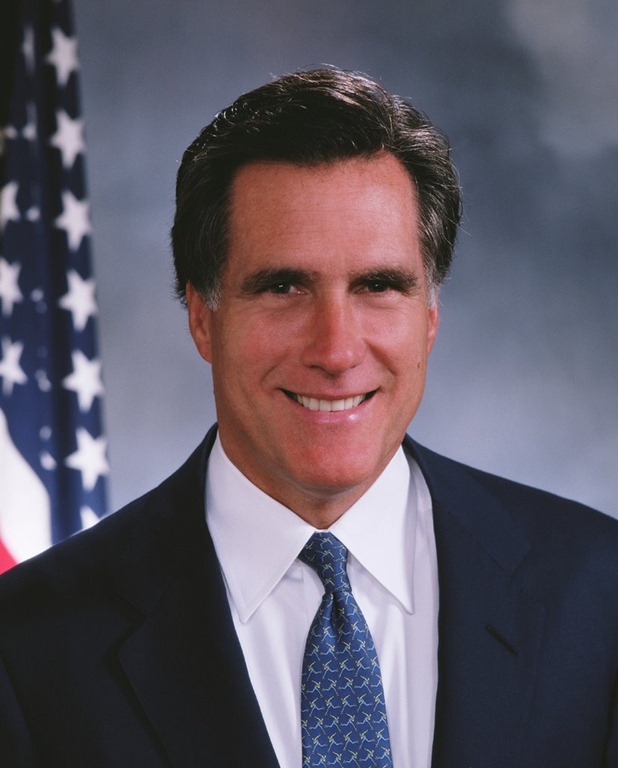
Mitt Romney wants to be president; that much is clear. He says he wants to save our Mitt-Romney-2756economy and create jobs, but he refuses to let me in on the details of how he plans to do that. And it’s not that I expect him to have a perfect plan he can turn on and walk away from; I know circumstances will change and he will have to adapt. But I need more than a knowing wink and a “just trust me on this,” particularly when the record shows Romney’s vibrant history of changing his positions on issues—and not changing just because he’s become wiser with age, but changing in order to win popular support…and later changing back again if need be. I don’t know what he really stands for, what he really wants to do, and I have no reason to trust that he has any other core interest at heart beyond his desire to win an election.

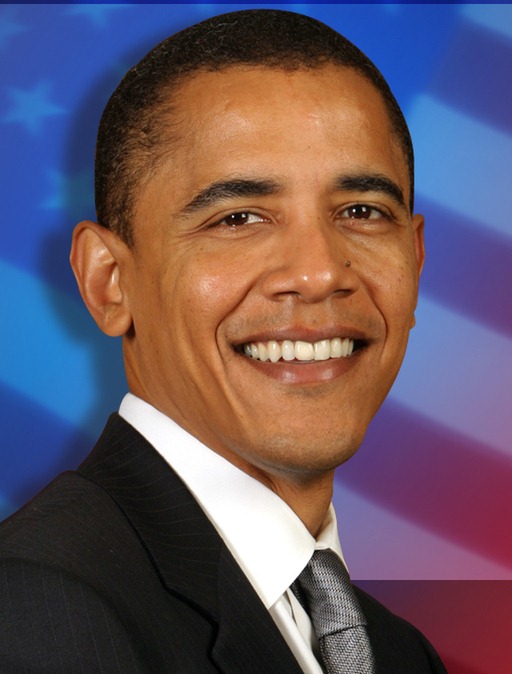
I believe Barack Obama wants to do what’s best for America, and that he has done good in his first term evenobama though some of that has led to an increase in the national debt—he had to try something to stem the economy’s slide into the worst recession of most of our lifetimes. I don’t buy the argument that he’s a failure because he didn’t do all the things he promised four years ago, because I know he’s had an immoveable object in his way. Since before he took office Republicans in the House and Senate have been in opposition: not just opposing ideas they don’t agree with but opposing ideas they do agree with, because they declared quite publicly, and with no little glee, that preventing Obama’s re-election was their top priority; they would go to any length at all to ensure that he had no achievements of which to boast…and then argue against his re-election because of his failure to work productively with Congress.

Think I’m overstating the case? Courtesy of The Daily Show, click the pic for a reminder of a small part of the catalogue of plagues that the Right has warned us were inevitable if Barack Obama was elected (none of which came true). And keep in mind: either these people really believed everything they were saying, or they thought we were just scared enough or stupid enough to believe anything they said…then imagine what might happen if these Republican obstructionists operating on behalf of their American Taliban brain trust were to have a president of their own party, one carefully crafted to avoid any pesky checks and balances…

image

It’s still the economy, stupid

Any system that tries to make candidates for public office come together in one place to talk about what they intend to do if elected is a positive for civic discourse. This week the two major party candidates for president of the United States met on a stage in Denver to talk about domestic issues and that meant, mostly, our country’s economy. They kinda sorta agreed that the fiscal situation is bad and something should be done, and yet the only thing we clearly remember out of the exchange is a lame crack about Big Bird? This is why we have a problem.

Our government’s fiscal affairs are a mess, but the only talk that gains any traction is about something that doesn’t really make a difference. Business columnist Loren Steffy calls it the Big Bird Syndrome, “when politicians imply they will fix the country’s massive fiscal problems by eliminating what amounts to chicken feed in federal spending.” Even though we all agree that a federal deficit exceeding $1 trillion must be reduced—for our own good—the people sucking around for our votes are too afraid of losing support to be serious and specific about how they propose to solve the problem. So they tentatively nibble around the edges:

Perhaps we need to cut these programs because they’re inefficient or we don’t believe government should fund them or we simply don’t like them. But as a deficit reducer, it’s like throwing a few grains of sand over the rim of Grand Canyon and saying you’re fighting erosion.

There are thousands of variables in this equation—spending programs, entitlements, tax rates, deductions, exemptions—and the Simpson-Bowles Commission did a great job envisioning how they might all be leveraged to make progress in reducing the deficit. That framework is still over there on the shelf waiting to be tried if anyone is interested…in Denver both candidates “praised the deficit-cutting framework” without “embrac[ing] the politically unpopular choices” it offered. (What, were the politically popular choices already taken?)

The U.S. government budget works the same as your personal budget and mine; it’s on an entirely different scale, but the basic principles are consistent. From time to time your family and mine spend more than we make, just like Washington, and it’s not always a bad thing: that’s how we pay for houses and cars and educations for our children, for disaster relief and war mobilization. But when we do it as a matter of course, as a way to pay for the “nice to haves” in our lives, and do it over and over for a long enough time, it pushes us into a pit that is damn hard to climb out of.

In that pit, we spend more and more of whatever money we make to repay the interest on the money we borrowed to buy the things we couldn’t afford but thought would be nice to have as well as the borrowed money itself. As the percentage of our income required to pay for the borrowing gets larger, the percentage available to pay for today’s needs gets smaller, and if we don’t reduce our spending to match the available income we have to borrow more to keep up. If there’s no increase in income, or no reduction in expenses, the process repeats and repeats and we spin further and further into debt. This is how banks and credit card companies and loan sharks get rich.

Paying back the loans is hard. Assuming you have no lottery windfall, it probably means doing without or with less for a while (but after you pay back the loan you have more money to spend on what you need or what you want or to save for future spending). That’s not to advocate for trying to pay off the entire national debt right away, but we can’t keep having such a high percentage of our income committed to paying interest—that keeps us from paying for other things that we decide are worth doing, or from reducing the tax burden (hey, how about that concept!). We can’t keep borrowing forever. Growth in the economy will contribute to more revenue without raising tax rates, but the economy isn’t growing fast enough today to make a dent.

This is still the most important issue facing the president and Congress, without exception. But I didn’t hear anyone on that stage in Denver suggest that you or me need to act like responsible adults and do the hard work that’s required: they have plans with lower tax rates (yeah!) and shrinking deficits (wowser!), with milk and cookies served all along the primrose path to solvency!!

They’re telling us what they think we want to hear. They believe we won’t vote for them if they tell us the truth: the economy is a sand castle near the water’s edge, and the tide is coming in…we all have to pitch in, sacrifice some, to protect and strengthen its foundation before the damn thing collapses of its own weight. And, they vaguely promise they have the road map to a solution, and drop only subtle hints about the condition of the road we’ll have to take to get there.

The next two “debates” between the candidates for president and vice president offer another opportunity for some straight talk on this subject. We, and the people who’ll actually be doing the asking in Danville and Hempstead, should be insisting that they give it to us.

The 47% fallout at Fox, as told by Jon Stewart

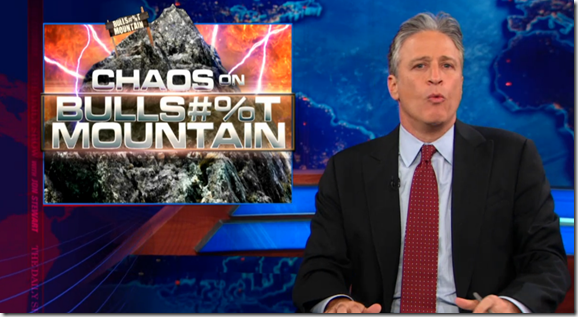
It has been great fun to watch the political circus play out around last week’s revelation of Mitt Romney’s campaign gaffe—or to put it another way, that chance for the rest of us to hear the truth Romney tells his supporters behind closed doors.  The good folks at The Daily Show even took a good-natured little poke at their friends at Fox News Channel for their contortionally-magnificent defense of the Republican Party nominee: “Let me sum up the message from Bullshit Mountain, if I may: this inartfully-stated dirty liberal smear is a truthful expression of Mitt Romney’s political philosophy and it is a winner.”  Click the pic for the whole beautiful report.

image

This is the core of Bullshit Mountain: the 49% entitlement society Obama enables.  That is the core of the Bullshit Nation fiction, that somehow only since Obama, the half of Americans who love this country and work hard and are good have had the fruits of their labor seized and handed over to the half of this nation that is lazy and dependent and the opposite of good—I’m sure there’s a better term for that.  Now, in that 49% [Sean] Hannity is including those on Social Security and Medicare, or as I like to call them, his audience.

Thanks to Mashed Potato Bulletin for the heads up.

Mitt: Did I say that out loud?

Years ago I was a political junkie, but I kicked it. Turned out it was pretty easy to get the political process monkey off my back when the campaign content and tactics got so distasteful that I couldn’t bear to listen. But some things come back easily, in the right circumstances.

The “hidden video” news revealing Mitt Romney in an unguarded moment in his native environment—among the wealthy—expressing his apparently-honest feelings about a large portion of his fellow citizens left me shaking my head and imagining the effect on voters. Even if what he said was right—and mostly it’s not—demonstrating that contempt for the poor and the elderly, who make up most of those who owe no federal income tax but still pay plenty of other taxes, isn’t going to help Romney with his likeability problem. Today’s revelation of another video clip from that same fundraiser—in which Romney asserts that Palestinians (apparently, all of them) “have no interest whatsoever in establishing peace” with Israel—and the promise of the full video still to come, makes you grateful to live in a time when everyone with a phone is a potential hidden camera.

Romney is right about the fact that most people, on both sides, have made up their minds, and the outcome depends on the choices of a small portion of voters. The experts haven’t had time yet to gather data on how Romney’s truth outbursts in a Florida fundraiser will affect those undecided voters, but that data will get put into the mix along with this very interesting analysis of the polling up to this point which concludes that “Given where the election is being contested, however, the most likely outcome is that Obama wins enough tipping-point states to eke out a victory.” I can hardly wait for the debates!