The fault is not in our stars

Congress is back in Washington—a warning that reminds me of the comment many years ago by then-mayor Jeff Friedman of Austin, Texas, who, when asked for his thoughts about the fact that the state legislature was coming back to town soon, said “Lock up the kids and dogs.”

The legislative branch and the president are back in town, in theory, to deal with the prospect of more than $600 billion worth of budget cuts and tax increases scheduled to go into effect next week. They’re not making much progress, as you might imagine.

Remember, the “fiscal cliff” is a threat the legislative and executive branches imposed on themselves a year and a half ago. To resolve an impasse over extending the debt ceiling so the government could continue to borrow money and pay its bills, our “leaders” set this time bomb of higher taxes and cuts to federal programs to force themselves to come to agreements on taxes and spending and debt ceilings before the “unthinkable” happened. Well, now we’re on the doorstep of the unthinkable, and look what they’re doing. (By the way, the Treasury department says we’re going to hit the debt ceiling next week!)

Perhaps more annoying than our elected leaders’ inability to govern—for that is what it really comes down to, their inability to do what they were sent there to do—is the realization that the focus on the fiscal cliff isn’t what’s really important anyway. Not to say that higher taxes and program cuts don’t matter, but that the real cause of the government’s economic problems—spending more than we take in—still isn’t being addressed.

The fiscal cliff was a crisis of Congress’ own making, brought on by its inability to address many of the same problems last year. The bigger problem, which lawmakers aren’t addressing, is the lack of sustainable fiscal policy.

We are in this mess in part because for decades leaders from both parties have been reading from the same economic playbook. They haggle over the small change while trying to convince Americans that it will make a profound difference in the country’s finances.

Houston Chronicle business columnist Loren Steffy recently offered another on-target analysis that reminds us the real problem isn’t the fiscal cliff, it’s the historic lack of honesty on the part of the political parties.

The budget battle playing out in Washington is nothing more than a giant national temper tantrum. Since 2001, we have been on a spending jag that has ballooned well beyond the costs of inflation and population growth. We’ve funded wars and prescription drug plans, bailed out banks and automakers and stimulated the economy. These programs have spanned both parties’ control of the White House and Congress.

At the same time, we’ve cut taxes. We now have the lowest average tax rate in about 30 years, yet many still complain taxes are too high and protest any threats to cut or curtail entitlement programs.

For more than a decade, we have demanded more while expecting to pay less. No one wants to admit the party’s over.

But they do want to admit—they’re desperate to admit—that the other party is causing the problem. As for the immediate issue, after the House speaker and the president couldn’t come up with a deal last week John Boehner has insisted that the Senate must come up with a plan and then the House will consider it, while the Democratic leadership in the Senate “stands strong” insisting that the House approve a measure it’s already turned down…or else.  (Or else what?) And just while I’ve been writing this, CNN reported that President Obama is about to make a new offer, until it reported that he won’t.

As disheartening as it is to see our national leadership apparently incapable of acting in the nation’s best interests, the situation becomes damn near depressing when you recognize who is really to blame: it’s us. You; me; them; those guys over there, too—we are responsible for the evolution of a system in which ideological extremists representing the view of a minority of citizens are able to reach positions of national power, and we are responsible for not holding our leaders to account for not putting national interests first, and we are responsible for taking more and more from our government but not being willing to pay for what we take.

The solution to our government’s economic problems won’t come out of Congress this week or next; it won’t come from refusing to reduce spending on government programs (which, frankly, no one is doing), nor from refusing to raise taxes and threatening to hold one’s breath until one turns blue (which, candidly, more than one are doing). It will come, when it comes, with the realization by Americans that America can’t keep putting its everyday expenses on a credit card and only make the minimum payments indefinitely and still expect to remain fiscally healthy.  It doesn’t work like that, and we have the national debt and the federal budget deficit to prove it.

Here’s where your argument falls to the ground

I’m having trouble sorting out the competing arguments on this whole “fiscal cliff” thingy: either we’ve got to prevent going over it, or it’s OK to go over it a little, or it’s not really a cliff at all but more like a slope; and if the far right criticizes Speaker Boehner’s plan and so does the president, does that mean the far right agrees with the president?

You may suffer from the same problem: from time to time and no matter the topic, there are those days when each argument advanced sounds pretty good, but then someone else opens up their piehole and I don’t know what to think anymore except that maybe I am too stupid to live. How, my friends, how are we to sort out the good from the bad, the sound from the unsound, the wheat from the chaff…the flotsam from the jetsam, the Hatfields from the McCoys? How indeed!

With thanks for the tip to the fine folks at Upworthy.com, behold the world’s handiest tool for cutting through the crap: an interactive website which “offers definitions and examples of the most common logical fallacies plaguing our debates today.”

image

AND, they’ve got free posters available for download—looks like the perfect stocking stuffer, and such a thoughtful gift at this special time of year.

Congratulations, America

We did some good things out there in those little voting booths yesterday…most of us…but a hearty “good on ya” to everyone who took the trouble to participate in the process beyond just running their mouths (or their typing fingers).  And as my old high school biology teacher (and football coach) used to say each Monday morning in the fall, “I’d like to say jest a few words about the happ’nins of last week.”

Light bulbThis morning McClatchy ran a pretty good early analysis of why a president who seemed to be in a neck and neck race for re-election ended up winning so decisively.

…Democrats say [President Barack] Obama was able, despite the sluggish economy, to point to achievements. He trumpeted success at preventing the economy from hitting bottom with a stimulus plan that plowed government dollars into hiring. He achieved long-sought health care legislation, enacted a firewall to prevent a relapse of the Wall Street fiasco, backed a federal bailout to save auto industry jobs, ended the war in Iraq and oversaw the raid that ended in the death of Osama bin Laden.

“Osama bin Laden is dead and General Motors is alive,” Vice President Joe Biden suggested as an Obama campaign bumper sticker. “That about sums it up, man.”

At the close of the election, Obama was boosted by a crisis beyond any candidate’s control. As the massive storm Sandy barreled up the East Coast, Obama suspended his campaign appearances to tend to the emergency response, projecting an air of confidence and compassion and avoiding the criticism that plagued former President George W. Bush in the wake of Hurricane Katrina.

Light bulbOh, and on that neck and neck thing: Nate Silver of The New York Times 538 Blog, the target of a lot of conservative venting over his analysis of state by state polls which predicted that Obama had a way better than 50-50 chance of winning, is the smartest man on the planet today: if by now we know that Obama won Florida, Silver picked every. state’s. outcome. correctly.

“Journalists who professed to be political experts were shown to be well connected, well-informed perhaps, but – on the thing that ultimately decided the result: how people were planning to vote – not well educated. They were left reporting opinions, while Nate Silver and others reported research.”

Light bulbPolitico has a list of the dozen things we learned yesterday.

7. The Bush problem lingers

Romney’s refusal to triangulate away from President George W. Bush is one of the stranger decisions he made in this political climate.

Exit polls from Tuesday night show that a majority of voters still blame Bush for the weak economy.

This could be cause for concern for former Florida Gov. Jeb Bush, who is widely viewed as a potential 2016 hopeful and is a middle-of-the-road voice on immigration reform. It’s also an issue in terms of some of the Republicans’ top figures, such as Crossroads co-founder and former Bush political strategist Karl Rove.

How the Republicans deal with this in the next two years will be telling as their chances of reclaiming the White House next time around.

Light bulbOne more thing I learned is that Mitt Romney, though clearly in emotional pain when he took the stage in Boston, was incredibly gracious in defeat, setting a terrific example when he said “This is a time of great challenge for America, and I pray that the president will be successful in guiding our nation.”  Compare that to the creepily gleeful declaration from Republican leaders four years ago that their highest priority was to make Obama a one-term president, a priority they pursued with no discernible concern for the impact of their actions on the nation they claimed to love and swore to serve.  Those among them who don’t try to live up to Romney’s “come together” example are giving us a glimpse of their true motivations.

Light bulbSpeaking of their motivations, LZ Granderson thinks the president has won some vindication from those who’ve been clamoring to “take our country back” and have never seemed to have been able to give Obama credit for anything he’s done.

So when he was awarded the Nobel Peace Prize, his critics spent more time discrediting the importance of the award than congratulating him for winning it.

When unemployment fell under 8%, they accused the Obama administration of fixing the numbers.

When the president opted to campaign instead of surveying the damage caused by Hurricane Isaac sooner, he was called selfish. When Obama left the campaign trail to survey the damage caused by Hurricane Sandy, former FEMA Director Michael Brown criticized him for responding too quickly.

Nothing he did was good enough for them.

But on Tuesday, it was good enough for the majority of real Americans.

Light bulbThe drive to extend equal protection of the law to homosexual citizens and give them the right to marry under civil law cleared another hurdle: for the first time, voters have said yes to same-sex marriageLots of them, in fact.

Light bulbThe extremists who shanghaied the once-proud Republican Party must consider if they will moderate their views on many issues to broaden their appeal or if they’d rather defend those cherished beliefs…and lose election after election because, inconvenient though it may be to admit, most Americans just don’t agree with what they seem to stand for.

Light bulbMeanwhile, the president and the current Congress must pick up the can they kicked down the road a year ago and find an answer to correcting our government’s budget deficit: if they take no action at all, there will be massive cuts to discretionary spending at the first of the year that may well push the economy into another recession.  Swell.

OK then…let’s talk about something else for awhile, OK?

For me, there’s really only one choice

Four nights of debates, finally over; I slouched in my comfy recliner with a determination to listen to what was said rather than make clever refutations or point out logical missteps (I was mostly successful) because I wanted to hear their arguments from their own mouths, to see if they could persuade me.

An American president has so many responsibilities to fulfill that no person can be expected to have expertise in all the necessary areas, so I’m looking for a candidate who can convince me that he or she understands what’s going on and what’s at stake, who can manage the day to day responsibilities of government, who has a plan for responding to current needs and the agility to respond to new crises as they develop, and who is willing to listen to new ideas and to respect and work in concert with members of Congress for the good of the entire nation.

Any candidate put forth by today’s Republican Party starts at a disadvantage in my eyes. The party of Abraham Lincoln and Theodore Roosevelt and Dwight Eisenhower and Richard Nixon—the one that believed in a strong defense, in law and order, in limited government that still supports the weakest among us, in free market capitalism with common sense regulation to encourage broad growth that strengthens us all—that party has been eaten alive from the inside, leaving a shell that still wears a nametag reading “GOP,” but the ideas in its head and its heart today are foreign to that legacy.

To win the support of today’s Republican Party, candidates must bow to a combination of economic extremists who don’t believe in raising taxes to pay the bills but refuse to cut back the programs that are running the bills up, and evangelical extremists who are working to make America the Christian nation they claim it was always meant to be, despite the evidence of the First Amendment to the contrary; they must deny objective fact and scientific evidence when it doesn’t support their position, and cast aspersions on the sanity and motives of anyone who dares object; they must be encouraging of those who insist their “conservatism” is an indication of greater virtue as a person and a citizen, albeit ones who must bravely shoulder the burden of the so-called Americans who are just waiting for their entitlements to roll in.

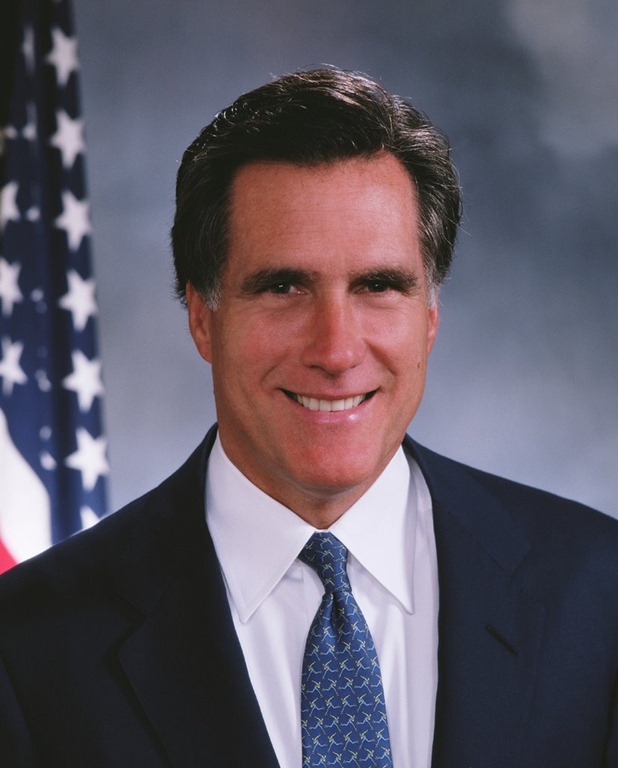
Mitt Romney wants to be president; that much is clear. He says he wants to save our Mitt-Romney-2756economy and create jobs, but he refuses to let me in on the details of how he plans to do that. And it’s not that I expect him to have a perfect plan he can turn on and walk away from; I know circumstances will change and he will have to adapt. But I need more than a knowing wink and a “just trust me on this,” particularly when the record shows Romney’s vibrant history of changing his positions on issues—and not changing just because he’s become wiser with age, but changing in order to win popular support…and later changing back again if need be. I don’t know what he really stands for, what he really wants to do, and I have no reason to trust that he has any other core interest at heart beyond his desire to win an election.

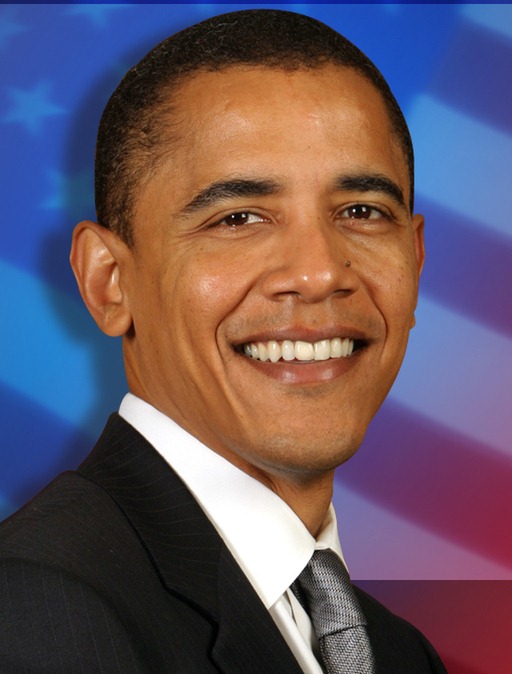
I believe Barack Obama wants to do what’s best for America, and that he has done good in his first term evenobama though some of that has led to an increase in the national debt—he had to try something to stem the economy’s slide into the worst recession of most of our lifetimes. I don’t buy the argument that he’s a failure because he didn’t do all the things he promised four years ago, because I know he’s had an immoveable object in his way. Since before he took office Republicans in the House and Senate have been in opposition: not just opposing ideas they don’t agree with but opposing ideas they do agree with, because they declared quite publicly, and with no little glee, that preventing Obama’s re-election was their top priority; they would go to any length at all to ensure that he had no achievements of which to boast…and then argue against his re-election because of his failure to work productively with Congress.

Think I’m overstating the case? Courtesy of The Daily Show, click the pic for a reminder of a small part of the catalogue of plagues that the Right has warned us were inevitable if Barack Obama was elected (none of which came true). And keep in mind: either these people really believed everything they were saying, or they thought we were just scared enough or stupid enough to believe anything they said…then imagine what might happen if these Republican obstructionists operating on behalf of their American Taliban brain trust were to have a president of their own party, one carefully crafted to avoid any pesky checks and balances…

image

It’s still the economy, stupid

Any system that tries to make candidates for public office come together in one place to talk about what they intend to do if elected is a positive for civic discourse. This week the two major party candidates for president of the United States met on a stage in Denver to talk about domestic issues and that meant, mostly, our country’s economy. They kinda sorta agreed that the fiscal situation is bad and something should be done, and yet the only thing we clearly remember out of the exchange is a lame crack about Big Bird? This is why we have a problem.

Our government’s fiscal affairs are a mess, but the only talk that gains any traction is about something that doesn’t really make a difference. Business columnist Loren Steffy calls it the Big Bird Syndrome, “when politicians imply they will fix the country’s massive fiscal problems by eliminating what amounts to chicken feed in federal spending.” Even though we all agree that a federal deficit exceeding $1 trillion must be reduced—for our own good—the people sucking around for our votes are too afraid of losing support to be serious and specific about how they propose to solve the problem. So they tentatively nibble around the edges:

Perhaps we need to cut these programs because they’re inefficient or we don’t believe government should fund them or we simply don’t like them. But as a deficit reducer, it’s like throwing a few grains of sand over the rim of Grand Canyon and saying you’re fighting erosion.

There are thousands of variables in this equation—spending programs, entitlements, tax rates, deductions, exemptions—and the Simpson-Bowles Commission did a great job envisioning how they might all be leveraged to make progress in reducing the deficit. That framework is still over there on the shelf waiting to be tried if anyone is interested…in Denver both candidates “praised the deficit-cutting framework” without “embrac[ing] the politically unpopular choices” it offered. (What, were the politically popular choices already taken?)

The U.S. government budget works the same as your personal budget and mine; it’s on an entirely different scale, but the basic principles are consistent. From time to time your family and mine spend more than we make, just like Washington, and it’s not always a bad thing: that’s how we pay for houses and cars and educations for our children, for disaster relief and war mobilization. But when we do it as a matter of course, as a way to pay for the “nice to haves” in our lives, and do it over and over for a long enough time, it pushes us into a pit that is damn hard to climb out of.

In that pit, we spend more and more of whatever money we make to repay the interest on the money we borrowed to buy the things we couldn’t afford but thought would be nice to have as well as the borrowed money itself. As the percentage of our income required to pay for the borrowing gets larger, the percentage available to pay for today’s needs gets smaller, and if we don’t reduce our spending to match the available income we have to borrow more to keep up. If there’s no increase in income, or no reduction in expenses, the process repeats and repeats and we spin further and further into debt. This is how banks and credit card companies and loan sharks get rich.

Paying back the loans is hard. Assuming you have no lottery windfall, it probably means doing without or with less for a while (but after you pay back the loan you have more money to spend on what you need or what you want or to save for future spending). That’s not to advocate for trying to pay off the entire national debt right away, but we can’t keep having such a high percentage of our income committed to paying interest—that keeps us from paying for other things that we decide are worth doing, or from reducing the tax burden (hey, how about that concept!). We can’t keep borrowing forever. Growth in the economy will contribute to more revenue without raising tax rates, but the economy isn’t growing fast enough today to make a dent.

This is still the most important issue facing the president and Congress, without exception. But I didn’t hear anyone on that stage in Denver suggest that you or me need to act like responsible adults and do the hard work that’s required: they have plans with lower tax rates (yeah!) and shrinking deficits (wowser!), with milk and cookies served all along the primrose path to solvency!!

They’re telling us what they think we want to hear. They believe we won’t vote for them if they tell us the truth: the economy is a sand castle near the water’s edge, and the tide is coming in…we all have to pitch in, sacrifice some, to protect and strengthen its foundation before the damn thing collapses of its own weight. And, they vaguely promise they have the road map to a solution, and drop only subtle hints about the condition of the road we’ll have to take to get there.

The next two “debates” between the candidates for president and vice president offer another opportunity for some straight talk on this subject. We, and the people who’ll actually be doing the asking in Danville and Hempstead, should be insisting that they give it to us.