
Guns spelled backwards is snug, and other thoughts on guns

I’ve been thinking about guns and gun control and the Second Amendment since the school shootings in Newtown, Connecticut, but today I found a guy who’s done a much better job of it than me.

I’m not a gun guy; never have been.  I was born in New York City to parents who’d been born and raised in the city, whose own parents and grandparents had lived their whole lives in New York, or Baltimore or Boston, or in Ireland and Wales in the mid-19th Century and on back…we just weren’t gun people.  What I know about actually shooting guns is what any kid from the Houston suburbs learns at a Central Texas summer camp or from going out to “the country” with his teenaged friends.   Not afraid of guns,  but not interested in them, either; I’ve thought more about guns and gun rights from the perspective of the U.S. Constitution than I ever have from a personal point of view.

My non-legal-scholar’s interpretation of the words of the Second Amendment is that it was plainly the intent of the authors to preserve the right of citizens to bear arms so that they could all participate in the common defense.  (And if you want to hunt for food or shoot for sport, fine.)  I’m aware that this interpretation is not universally accepted.  My non-mental-health-professional’s interpretation of some of the most extreme anti-gun-control arguments of the National Rifle Association and other ”gun rights” groups is that paranoia is a powerful affliction indeed.  This interpretation is not universally accepted, either.

I agree that guns don’t kill people; people using guns do kill people, though, with relative ease, and since the Second Amendment doesn’t identify a right to bear arms only for the clear-headed and law-abiding but not for the crazy or the lawless, we rightly pass laws in an effort to provide some security for all while not violating the basic rights of all.

I think most of the people who own guns are fine with that setup, and aren’t fretting away their days with worrying about having to use their guns to defend themselves from their own government.  I imagine they’re thinking some of the same things that Walter Kirn has written in The New Republic this week:

Growing up around guns and owning them as an adult affords a person memories and experiences that strangers to guns may have trouble understanding. The divide is phenomenological, not political (or not political until it gets to be), like the gulf between those who’ve had sex and those who haven’t or those who smoke and those who’ve never lit up. Pulling a trigger and being prepared to do so cuts patterns in the self. Depending on the nature of your social life, which time around guns can shape and color in ways that I’ll describe, you might forget that these patterns are even there, because you’re surrounded by people who share them—until someone or some event challenges you to answer for your thinking.

(snip)

When the time to lay blame for the [Aurora, Colorado] massacre arrived, it wasn’t Americans’ easy access to firearms that I found myself deploring, but a depraved, unbalanced culture of splatter-fest games and other dark entertainments. I blamed the potential for gruesome fame nurtured by the Internet, as well as a mental health system that’s not a system.

But then, soon enough, another mass shooting occurred, at the Sikh temple in Wisconsin. And then another, at Sandy Hook Elementary. The crimes were no longer discrete abominations but one continuous siege, it seemed, broken only by pauses for reloading. This was a war that warranted wartime thinking; cultural criticism could go to hell. The hour of reckoning had come, particularly for gun owners like me who’d never thought clearly about where we stood, only that it was somewhere between the militants and the innocents—a dangerous spot, since both sides felt attacked.

(snip)

My friend, an Army captain, a tall West Pointer, was just back from Iraq. He’d had a tough time there. We were wrapping Christmas presents. He asked me if I’d ever heard of a law passed under President George W. Bush (he called it a new “order,” actually) that established a formal military command, USNORTHCOM, over the country itself. His tone was dark, insinuating, and I looked at him, concerned. PTSD. We’re all hip to its signs (at least in others), and a moment ago my friend had asked me (oddly, I thought) to turn off a ceiling fan whirling above our heads whose blades kept distracting him as he tied ribbons.

When I asked my friend what bothered him about the Northern Command, his answer, as I half-feared, boiled down to this: Americans beware America. I pressed him. Did he seriously, genuinely believe that soldiers, our soldiers, soldiers much like himself, could possibly be prevailed upon to intimidate or attack their fellow citizens?

Affirmative. If ordered to. They’re soldiers.

(snip)

Statistics on the dangers guns pose to the health of their owners and those who live with them suggest that I’d be safer selling my guns than reserving them for Tombstone II. Trouble is, in an armed showdown, statistics tend to lose. In those who’ve learned to imagine assailants everywhere and may even have faced a real assailant, guns encourage a sense of personal exceptionalism. It’s the essence of their magnetism. Firearms exist to manage situations where rationality has failed, so thinking rationally about them can be hard.

(snip)

Will there be fewer murders with tighter gun laws—the modest laws that might actually materialize rather than the grand ones that probably won’t but will surely rev up the rhetoric and the hoarding—or only fewer or smaller massacres? Can we expect less violence altogether or merely less outrageous acts of violence? And if the answer is fewer catastrophes, fewer Auroras and Sandy Hooks, would that be a worthwhile accomplishment in itself? I think so. Horror and panic themselves are forms of violence, and diminishing them, restricting their dimensions, is itself a civilizing act.

(snip)

Of the five or six guns I’ve gathered over the decades (IF YOU KNOW HOW MANY GUNS YOU HAVE, YOU DON’T HAVE ENOUGH read a t-shirt I saw once) only one is designed to use on human beings: a .38 revolver of the type that burdened policemen’s sagging belts once, before the adoption of sleeker 9mms. The gun is a stodgy old classic, Smithsonian-worthy, that evokes the Made-in-USA age and also speaks of my distance, I like to think, from the cult of maximum firepower that draws harder-boiled folks to stores and gun shows to handle Bushmasters and similar weapons with death-dealing, quasi-military designs. Such ominous firearms hold no allure for me, in part because I doubt they’d do much good against a maniac carrying one or a hypothetical goon squad equipped with their vastly superior big brothers. Ban those guns. Neuter them. I’m fine with it. I can hunt with my shotguns and my deer gun (although I’ve grown tired of hunting), and I can protect myself from miscreants with my trusty .38.

To some in the gun-owning fraternity, this view makes me a traitor. So be it; I think they’re wrong. As they have repeatedly pointed out themselves, and as even Wayne LaPierre might agree, assault rifles are functionally similar to ordinary semi-automatic rifles, differing chiefly in their sinister cosmetics, not in their underlying ballistics. This being the case, what will be lost by giving them up? Nothing but their destabilizing allure for the grandiose, image-obsessed mass killers who favor them—and whose crimes represent a far greater risk to gun rights than does the perceived hostility of certain politicians. By assenting to such a ban, the gun-owning community can demonstrate precisely the sort of reasonable public-mindedness of which some believe it to be incapable. Otherwise, the showdown will go on and we will have only ourselves to blame if our self-destructive intransigence leaves us despised and cornered, with no way out.

I’ve quoted extensively, but please go read the rest—it’s a great, thoughtful essay that offered me, the non-gun guy,  a valuable perspective on some of what gun guys are thinking.  I already know what Tom the Dancing Bug is thinking…

td130104

(Thanks, TtheDB and GoComics.com)

and what the gun control people are thinking:

So let’s state the plain facts one more time, so that they can’t be mistaken: Gun massacres have happened many times in many countries, and in every other country, gun laws have been tightened to reflect the tragedy and the tragic knowledge of its citizens afterward. In every other country, gun massacres have subsequently become rare. In America alone, gun massacres, most often of children, happen with hideous regularity, and they happen with hideous regularity because guns are hideously and regularly available.

The people who fight and lobby and legislate to make guns regularly available are complicit in the murder of those children. They have made a clear moral choice: that the comfort and emotional reassurance they take from the possession of guns, placed in the balance even against the routine murder of innocent children, is of supreme value. Whatever satisfaction gun owners take from their guns—we know for certain that there is no prudential value in them—is more important than children’s lives. Give them credit: life is making moral choices, and that’s a moral choice, clearly made.
A thought for the day, every day

“Each time we gather to inaugurate a president, we bear witness to the enduring strength of our Constitution. We affirm the promise of our democracy. We recall that what binds this nation together is not the colors of our skin or the tenets of our faith or the origins of our names. What makes us exceptional – what makes us American – is our allegiance to an idea, articulated in a declaration made more than two centuries ago:

We hold these truths to be self-evident, that all men are created equal, that they are endowed by their Creator with certain unalienable rights, that among these are Life, Liberty, and the pursuit of Happiness.

Today we continue a never-ending journey, to bridge the meaning of those words with the realities of our time.”

–Barack Obama, Second Inaugural Address, January 21, 2013

For me, there’s really only one choice

Four nights of debates, finally over; I slouched in my comfy recliner with a determination to listen to what was said rather than make clever refutations or point out logical missteps (I was mostly successful) because I wanted to hear their arguments from their own mouths, to see if they could persuade me.

An American president has so many responsibilities to fulfill that no person can be expected to have expertise in all the necessary areas, so I’m looking for a candidate who can convince me that he or she understands what’s going on and what’s at stake, who can manage the day to day responsibilities of government, who has a plan for responding to current needs and the agility to respond to new crises as they develop, and who is willing to listen to new ideas and to respect and work in concert with members of Congress for the good of the entire nation.

Any candidate put forth by today’s Republican Party starts at a disadvantage in my eyes. The party of Abraham Lincoln and Theodore Roosevelt and Dwight Eisenhower and Richard Nixon—the one that believed in a strong defense, in law and order, in limited government that still supports the weakest among us, in free market capitalism with common sense regulation to encourage broad growth that strengthens us all—that party has been eaten alive from the inside, leaving a shell that still wears a nametag reading “GOP,” but the ideas in its head and its heart today are foreign to that legacy.

To win the support of today’s Republican Party, candidates must bow to a combination of economic extremists who don’t believe in raising taxes to pay the bills but refuse to cut back the programs that are running the bills up, and evangelical extremists who are working to make America the Christian nation they claim it was always meant to be, despite the evidence of the First Amendment to the contrary; they must deny objective fact and scientific evidence when it doesn’t support their position, and cast aspersions on the sanity and motives of anyone who dares object; they must be encouraging of those who insist their “conservatism” is an indication of greater virtue as a person and a citizen, albeit ones who must bravely shoulder the burden of the so-called Americans who are just waiting for their entitlements to roll in.

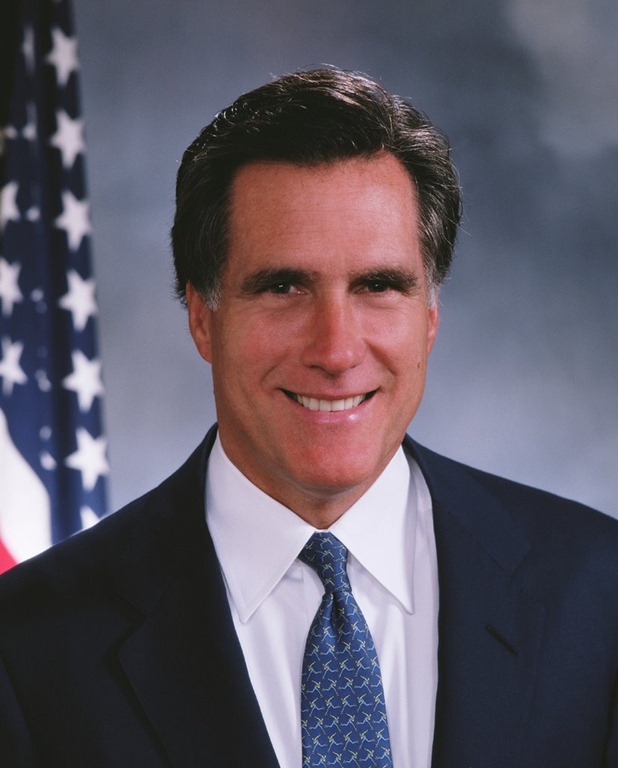
Mitt Romney wants to be president; that much is clear. He says he wants to save our Mitt-Romney-2756economy and create jobs, but he refuses to let me in on the details of how he plans to do that. And it’s not that I expect him to have a perfect plan he can turn on and walk away from; I know circumstances will change and he will have to adapt. But I need more than a knowing wink and a “just trust me on this,” particularly when the record shows Romney’s vibrant history of changing his positions on issues—and not changing just because he’s become wiser with age, but changing in order to win popular support…and later changing back again if need be. I don’t know what he really stands for, what he really wants to do, and I have no reason to trust that he has any other core interest at heart beyond his desire to win an election.

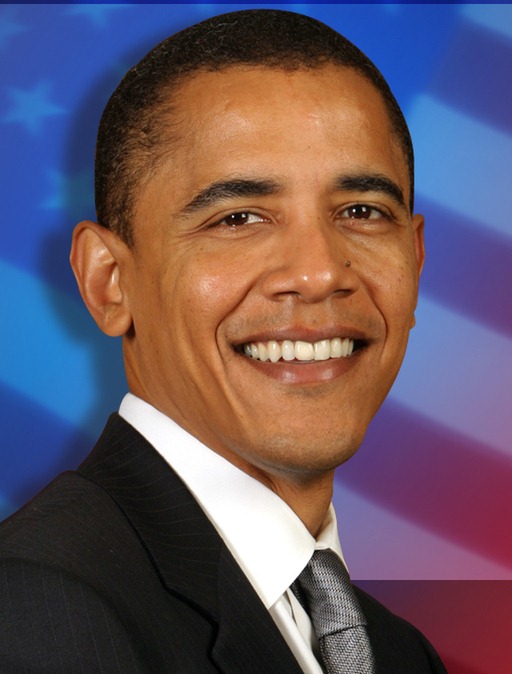
I believe Barack Obama wants to do what’s best for America, and that he has done good in his first term evenobama though some of that has led to an increase in the national debt—he had to try something to stem the economy’s slide into the worst recession of most of our lifetimes. I don’t buy the argument that he’s a failure because he didn’t do all the things he promised four years ago, because I know he’s had an immoveable object in his way. Since before he took office Republicans in the House and Senate have been in opposition: not just opposing ideas they don’t agree with but opposing ideas they do agree with, because they declared quite publicly, and with no little glee, that preventing Obama’s re-election was their top priority; they would go to any length at all to ensure that he had no achievements of which to boast…and then argue against his re-election because of his failure to work productively with Congress.

Think I’m overstating the case? Courtesy of The Daily Show, click the pic for a reminder of a small part of the catalogue of plagues that the Right has warned us were inevitable if Barack Obama was elected (none of which came true). And keep in mind: either these people really believed everything they were saying, or they thought we were just scared enough or stupid enough to believe anything they said…then imagine what might happen if these Republican obstructionists operating on behalf of their American Taliban brain trust were to have a president of their own party, one carefully crafted to avoid any pesky checks and balances…

image

“American Taliban”

From time to time I find something I think is worth recommending that other people check out; I found such a thing last week.

This is about politics; this is about the people I’ve accused of hijacking the Republican Party and turning it into a secular curtain that they hide behind in their fight to impose their religious beliefs on all Americans through civil law, despite what the First Amendment says about that in this country (“Congress shall make no law respecting an establishment of religion, or prohibiting the free exercise thereof…”); this is about us all getting a clear look at what’s going on back there behind that curtain.

Political parties are not mentioned in the United States Constitution; they don’t exist as a part of government to promote the common good, they exist as private organizations to promote themselves and those who support them.  In the last generation, the Republican Party of Lincoln and Reagan has been take over by people who played the political game according to the rules, who participated and organized and worked their asses off, until they were in a position to control the outcomes of party primaries.  Today, anyone who wants to be the Republican candidate for anything has to please a small group of religious extremists, even when doing so means abandoning their own political heritage.

Some Republican candidates these days are true believers; others sell a bit of their soul in hopes of winning an election so they can do some good, and maybe someday move beyond the control of the extremists.  But make no mistake, the radicals are in charge of the GOP.  And they are now passing “voter ID” laws in most of the country to prevent voting fraud, laws that, arguably, have the real world effect of limiting voter participation by people in groups that have historically been reliable voters for Democratic Party candidates.  Pretty smart, and sneaky: no one can be in favor of voter fraud…but what they don’t like you to realize is that the incidence of actual voter fraud is on the order of 4/100,000ths of one-percent, or just 86 cases out of 196,000,000 votes cast over a five-year period of the early 2000s.  Thirty-three states have passed voter ID laws; in 32 of those states, the laws were proposed by Republican lawmakers and passed by Republican-controlled legislatures and signed by Republican governors.  If there’s no significant voter fraud to stop, then what are they after?

The people who control today’s Republican Party have been as successful as they have because (1) some Americans agree with their goals, (2) most Americans aren’t paying attention, and (3) the news media is too occupied with what David Shaw in the Los Angeles Times called “the four horsemen of the journalistic apocalypse: superficiality, sensationalism, preoccupation with celebrity, and obsession with the bottom line.”  So, we have to rely on fictional journalists to do the heavy lifting:

“American Taliban.”  Yep; that’s perfect.  Spread the word.  And thanks to Upworthy.com for the tip.

Neil Armstrong

Today his family held a private memorial service for Neil Armstrong, who died last week at the age of 82. I’ve read a lot of the tributes to the first man to walk on the moon that have been published in the past week, and have a little to add.

I never met Neil Armstrong, but I’ve always looked up to him. As a kid I paid a lot of attention to the space program, and when my dad was transferred to Houston in mid-1966 I started to feel like I was a part of it since I lived where the astronauts lived, but I really don’t remember Armstrong’s name sticking in my mind until it came time for Apollo 11. I was 12 years old that night in 1969: I was on the floor at home in front of our family’s first color television, straining to comprehend through the static-y images and voices just what was happening as the Eagle landed, and then as Armstrong and Buzz Aldrin stepped out onto the moon. Although that summer I was laser-focused on making the Little League all-star team (I didn’t), as I sat on the floor that night I really felt like I had done something great, had somehow helped make that moon landing possible.

When the ticker tape parades I saw on television were over, Armstrong faded from view; it turns out, that’s what he wanted. And that’s a big part of why I’ve respected him over the years. I realize now that Neil Armstrong probably wasn’t any braver than any of the other astronauts for making that flight—every other astronaut wanted the assignment, and many lobbied for it to have the chance for a prominent place in history. Although he’s been highly praised as being among the finest pilots at NASA, his colleagues weren’t slouches at the stick. But Armstrong wasn’t after glory or recognition: he wanted to fly, to do new things; he wanted to do his job, and he didn’t want to become the center of attention.

He personified the American ideal of the strong, silent type: the guy who was the best at what he did and loved doing it, who wanted to make a contribution to society, who didn’t want to brag about it later or feel like he was taking too much credit. Highly talented, well educated, capable and confident, with a sense of adventure and a sense of humor, and not an overinflated sense of himself. I have always been proud that it was that kind of man, that kind of American, who took the symbolic step into the future on behalf of the rest of us, from all the scientists and engineers who made it happen to all the 12-year-olds who felt like they were making that first step themselves.

So today—ironically, the day of an actual Blue Moon—on the day his family says farewell to him, I want to say thank you to Neil Armstrong for his part in opening up the future for our species, and for being the kind of man and leader in whom our country can take quiet pride. And I plan to follow his family’s honest and good-humored suggestion about how to honor him:

For those who may ask what they can do to honor Neil, we have a simple request. Honor his example of service, accomplishment and modesty, and the next time you walk outside on a clear night and see the moon smiling down at you, think of Neil Armstrong and give him a wink.