
I have hope. Is that misplaced?

Sometimes this blog receives comments which deserve space to breathe.  This one is from an old friend of mine: Pascal Piazza and I met on the first day of the 9th grade, at our alphabetically-assigned lockers in the hall of the 300 building of Houston’s George W. Strake Memorial Jesuit College Preparatory for Young Christian Gentlemen (which, of course, we were).  Since then he became a respected lawyer, and has been admitted to practice in all Texas courts including the state’s supreme court, the Supreme Court of the United States and the U.S. Circuit Court of Appeals for the Fifth Circuit, and enough federal district courts and bankruptcy courts in this part of the world to make your eyes bug out.  He’s been generally and repeatedly frustrated by some actions and inactions of the Supremes in recent cases (you’ll recognize which ones), and finally took it out on his keyboard.  PR

To the Honorable Justices of the Supreme Court of the United States:

As a citizen, a retired attorney of 40 years, and a native Texan, I adopt the personal privilege to comment, in a colloquial manner, on two potentially very divisive issues which, when resolved by the application of the plain text of the Joint Resolution Annexing the State of Texas and the 14th Amendment to the Constitution of the United States, respectively, need not be divisive and will restore the rule of law.  Both issues are easy to decide.  The parties may try to complicate them, but y’all can follow the easy, established, and time-honored path.

It’s About the Joint Resolution Annexing the State of Texas.

You will be asked by attorneys acting for the Governor of Texas to allow Texas to implement certain means (e.g., installing razor wire or deploying roving private militias) to try to prevent undocumented persons from crossing into Texas through its southern border of the Rio Grande, and further to prevent the U.S. from entering land along that border or to interfere with or remove the mitigating means, solely on the grounds of Texas’s perceived “right of public defense.”  Curiously, y’all will be asked to rule on this issue by the same Texas officials who’ve already suggested they don’t have to comply with any of your rulings that they do not like, because they elevate their perception of the sovereignty of Texas over all else.  There is, however, no need for the issue of Texas’s perceived right of public defense to escalate into accelerating tensions, to revive the nullification doctrine, or to precipitate something worse.  Instead, y’all sit at the forefront to show that Texas, like all states and persons, has the right to redress in the courts under the rule of law, and to remind the state that Texans are known for living up to their word of honor regardless of party affiliation or political persuasion.  Y’all have an easy task before you; only you can make it difficult.  Here’s a path to the easy way instead of the hard way.

The U.S. and Texas, by mutual consent, defined the right of public defense back in 1845, at the time the U.S. annexed Texas by means of a joint resolution of the U.S. Congress which was accepted by the Republic of Texas.  That right of public defense was an integral part of the unambiguous text of annexation.  Y’all need only follow that text without gloss.

Joint ResolutionThe text of the Joint Resolution Annexing Texas to the United States provides that Texas cedes to the U.S. “…all public edifices, fortifications, barracks, ports and harbors, navy and navy-yards, docks, magazines, arms, armaments, and all other property and means pertaining to the public defence belonging to said Republic of Texas.” [Emphasis added]  It does not say that Texas cedes “all other property and means pertaining to the public defence” only when Texas agrees with federal policy.  It does not state that Texas can craft its own public defense.  Texas was not given a veto power.  Texas was not given a right to repudiate or breach the plain terms, which vest all property and means pertaining to public defense to the U.S., whether listed or not.  Texas consented to these terms.

Let’s then give these words their plain meaning.  When it comes to providing for the public defense, the U.S. solely may determine whether to install razor wire or take it down, whether to use mobile militias or not, whether to enter the lands along the border or not, where or how to intercept persons crossing the border, whether to administer medical care or not, and whether to implement or pursue particular actions that Texas wants pursued.  You resolve this issue by giving effect to the plain text and thereby ensuring the fully intentional, consented-to, and coordinated sovereignty of Texas and the U.S.

There is no need to look beyond that plain text defining the public defense.  But the plain text of the remainder of the sentence defining the public defense affirms that the exclusive grant to the U.S. was intentional and was an essential part of the unique compromise that secured the required votes for passage of the Joint Resolution for Annexation after the prior Treaty for Annexation never could be ratified by the Senate.  Texas exclusively granted the U.S. the means and property rights for public defense in exchange for Texas keeping its public lands (and what would be multiple millions of dollars in oil and gas royalties) to pay off its debts.  Texas is the only state that was allowed to keep its public lands.  The U.S. gave up ownership of the public lands in Texas.  Those lands would yield multi-millions of dollars in revenue from the oil and gas found there.  Those lands could be sold off generating significant revenues, as was the practice in 19th century America.  President Polk won election over Henry Clay in 1844 based upon his vision of westward expansion into the valuable lands of Texas, which he felt had been squandered by Spain and then Mexico.  The U.S. received the right of public defense in exchange.  That is what is at issue now.

The then-new state of Texas understood the plain meaning.  I understand that the parties to an agreement cannot define meaning by how they perceive the meaning, but the first post-annexation Texas Constitution instructs y’all that Texas understood that the plain terms mean what the plain terms mean.  That constitution confirmed that the sovereignty of Texas over its soil was secure, except for what it ceded in the Joint Resolution for Annexation or otherwise in the U.S. Constitution.  It knew that the property and means of public defense, by consent, vested in the U.S.

Therefore, under the text of the Joint Resolution for Annexation, Texas occupies a unique position.  It should now – as all true Texans do – stand on its word, even if it is a handshake deal.  Of course, there is much more here than just a handshake.

Y’all will hear that Texas has some natural or inherent right of public defense.  Regardless of whether such a right does or does not exist, Texas ceded it to the U.S. when the state was annexed in 1845.

Y’all may then ask whether Article I, Section 10, clause 3 of the U.S. Constitution grants Texas some right of public defense in case it is ever invaded, whether the U.S. consents at the time or not.  Well, under Texas’s unique position, the text of the Joint Resolution for Annexation still is the starting point.  In addition, the text of Article I, Section 10, clause 3 does not mention public defense, does not mention any of the means that Texas wants to implement or adopt, does not provide that Texas can exclude the U.S. from areas occupied by Texas, does not provide that Texas can interfere with the conduct of the U.S., and does not permit Texas to breach the compromise (which a true Texan would never do).  Texas appears before y’all bound by its agreement and by the consent of Texas and the U.S. as to how the public defense plays out.  Today, Texas assumes that this is a situation where there is no consent by the U.S., yet Texas and the U.S. consented in 1845 for the U.S. to have exclusive power over public defense, whether there is an invasion or not.  Texas cannot repudiate that consent to try to go back on its word.

Some have even suggested that Texas would never have entered the Union had it known, or could have foreseen, that it did not preserve a right of public defense or could not use all land and other means for public defense.  Well, that’s what Texas did – in writing.  In Texas, we stand on our word.

It’s About the Eligibility Requirements in the U.S. Constitution

Let’s start by applying the text of the 14th Amendment as written.  Do not apply some theory of construction.  Do not apply fears of political reprisals.  Do not adopt a result and then read the words to yield your desired result.  It does not make a difference who may be ruled eligible or ineligible.  If the issue were the age of the candidate in question, you would consider only the text; y’all would not consider who the candidate is or whether your ruling would upset or even enrage the masses.

This led me to read opinions offered by distinguished retired federal judges covering the entire political spectrum based upon the text of the 14th Amendment.  How is it that these numerous distinguished federal district court judges have followed the text and find that the 14th Amendment does apply to determine eligibility?  The answer is that they followed the plain text.  Your questions to the parties during oral arguments last week indicate y’all may not agree with those opinions; I hope that your questions were meant to test the attorneys, and do not reflect your belief of what the plain text actually means.

Some advocates will claim that the president, whose position is defined in the U.S. Constitution, is not an “officer.”  However, the U.S. Constitution, at Article II, Section 1, states that the executive powers shall be vested in the president who holds his office over a four-year term.  The dictionary defines an officer as one who holds an office.  Therefore, the president is an officer as he holds the office of the president.  Yet, some of your questions indicated that you may have a problem accepting this syllogism.  Hopefully, you exercised your right during questioning during oral argument to test ideas rather than reveal your own conclusions.  The text of the 14th Amendment covers a person seeking to be “… a Senator or Representative in Congress, or an elector of President and Vice President, or hold any office, civil or military, under the United States.”  [Emphasis added]  The text, therefore, covers one who seeks to hold a federal office which, constitutionally, includes someone wanting to be the president.  This wording in the 14th Amendment does not amend the other Constitutional text that defines the president as the holder of an office (i.e., an officer).

Y’all selectively like to cite portions of the Federalist Papers or other outside writings of the Framers to try to change the otherwise unambiguous meaning of the text of the Constitution.  Please stick to the text when it is unambiguous, as in the case of the 14th Amendment, so that the inquiry ends there.  The other words of the Framers are interesting historically and allow us now to assess how brilliant they were, but those words do not comprise the text of the U.S. Constitution.  It is the text of the Constitution that matters, not what any Framer may have wanted to include in the text but failed to win approval for.  Y’all cannot import into the text of the Constitution any words which the Framers failed to include.

Public policy cannot be the tail that wags the jurisprudential dog.  If you want to make policy, then run for office.  Otherwise, honor your oath.  Your failure to honor your oath will cause more dissension and disruption to this country than following the text.  I was taught on the first day of my Constitutional Law class that y’all like to make public policy.  Just because y’all have done it before does not justify doing it anymore.

Some advocates have asked questions about states trying to impose requirements on the federal election.  Colorado and Maine are simply applying the eligibility requirements as they already exist in the U.S. Constitution.  They could do it, and have done it, regarding the minimum age to be the president.  I again hope you were just asking questions during oral argument and not revealing your conclusions when there was a perceived concern for the states trying to impose state requirements on a federal election.

A majority of the Justices currently claim that unstated rights and conditions may not be imported into the text.  So, where is the textual basis to claim that the 14th Amendment’s eligibility threshold requires Congressional action?  One opinion by one U.S. Supreme Court justice sitting as a circuit judge does not make a consensus or anything but one opinion.

The same majority of Justices also currently claim that the text of the U.S. Constitution, including the 14th Amendment, must be construed based upon the meaning of words in 1787 and 1868, respectively.  If so, the consensus of distinguished historians is that the 14th Amendment does apply as Colorado and Maine have held.  Y’all can’t ask to consult history but then reject the consensus of historians.  Y’all still should just stick to the unambiguous text.

Some advocates feign the downfall of judicial process through a fear of a multiplicity of state-based lawsuits if states seek to apply the text of the 14th Amendment.  So, does this mean that states should not seek to enforce the text of the U.S. Constitution when it applies to the duties of the states?  Could not the states seek to enforce the minimum age eligibility requirement?  When did filing suits seeking to apply the 14th Amendment become a bad thing?  Under this argument, should former Vice President Pence not have certified the last presidential election results because it led to 60 some-odd lawsuits?

Thank you.

–Pascal Paul Piazza
Courting trouble for the former guy

Former President I Will Not Be Ignored got a little more of what he’s been begging for yesterday: attention from our nation’s judicial system.  In response to his ridiculous-on-its-face insistence that former presidents enjoy lifelong complete criminal immunity from prosecution for actions taken while in office, lest they be indicted by forces of the opposing party the instant they leave office, a federal appeals court panel ruled – unanimously – that he is off his rocker.  Essentially.  In a legal sense.

At public arguments in January, the three judges expressed concern over the most extreme implications of Trump’s view, with one suggesting it would allow a future president to order the assassination of a political rival. But in their opinion Tuesday, they said it is Trump’s own alleged crimes — “an unprecedented assault on the structure of our government” — that threaten democracy if left beyond the reach of criminal prosecution.

“We cannot accept former President Trump’s claim that a President has unbounded authority to commit crimes that would neutralize the most fundamental check on executive power — the recognition and implementation of election results,” the judges wrote. “Nor can we sanction his apparent contention that the Executive has carte blanche to violate the rights of individual citizens to vote and to have their votes count.”

When he “warns” that all political parties would legally attack former leaders from other parties if those leaders did not enjoy legal protection, it’s a textbook example of the projection associated with his narcissism: in fact, such a thing has never happened in the past, but it is something that he himself has already promised he will do if he becomes president again next year.  This case could still go to the Supreme Court; we will know within weeks.  But we do know that the Supremes will be hearing a Trump case tomorrow, a case over his Constitutional eligibility to ever become president again.

The Supreme Court will hear oral arguments on Thursday in what is shaping up to be the biggest election case since its ruling nearly 25 years ago in Bush v. Gore. At issue is whether former President Donald Trump, who is once again the front runner for the Republican nomination for president, can be excluded from the ballot because of his role in the Jan. 6, 2021, attacks on the U.S. Capitol. 

Although the question comes to the court in a case from Colorado, the impact of the court’s ruling could be much more far-reaching. Maine’s secretary of state ruled in December that Trump should be taken off the primary ballot there, and challenges to Trump’s eligibility are currently pending in 11 other states. Trump warns that the efforts to keep him off the ballot “threaten to disenfranchise tens of millions of Americans” and “promise to unleash chaos and bedlam if other state courts and state officials follow Colorado’s lead.” But the voters challenging Trump’s eligibility counter that “we already saw the ‘bedlam’ Trump unleashed when he was on the ballot and lost.”

At issue is a section of the 14th Amendment to the Constitution, approved in the years following the Civil War to prevent former rebels from entering government and continuing their rebellion.  Paraphrasing here, it prohibits anyone who’d previously been a U.S. government official, and then later “engaged in insurrection or rebellion” against the Constitution, from later serving in government again.  Pretty sensible, right?  In other words, among the requirements to be president, one must be at least 35 years old and not have previously been a traitor.

Trump’s arguments that the 14th Amendment doesn’t apply to him are from the same book as his “presidents need to be able to commit crimes with impunity” arguments in the immunity case he’s currently losing.

Trump’s first, and main, argument is that Section 3 does not apply to him because the president is not an “officer of the United States.” In other provisions of the Constitution where the phrase “officer of the United States” appears, Trump notes, it does not apply to the president – for example, the clause that requires the president to “Commission all the Officers of the United States” and the impeachment clause, which lists the president and vice president separately from “civil Officers of the United States.” Moreover, Trump adds, the Supreme Court in 2010 indicated that the phrase applies only to federal officials who are appointed; it does not extend to elected officials like the president.

The voters dismiss this argument, countering that the president has been called the “chief executive officer of the United States” since long before the 14th Amendment was drafted. As with the phrase “office under the United States,” they say, Section 3 simply uses the phrase “of the United States” to distinguish between federal offices, such as the presidency, and state officers.

The voters also discount Trump’s reliance on other provisions of the Constitution. They note that although the appointments clause requires the president to appoint some “officers of the United States,” it also indicates that the Constitution provides for the appointment of other “officers of the United States” – including the president and vice president – by the electoral college. And the impeachment clause, they reason, provides for the impeachment of the president and vice president separately from “all civil Officers of the United States” because (unlike other officials) the president and vice president play both civil and military roles.

Section 3 also does not apply to him, Trump continues, because when he is sworn in the president pledges to “preserve, protect and defend the Constitution” – rather than “support” it, as Section 3 requires.

The voters contend, however, that “Section 3 is about violation of a sworn duty, not about pedantic wordplay.” The oath that the president takes to “preserve, protect and defend” the Constitution is an oath to support the Constitution, they insist.

The voters add that an interpretation of Section 3 that excludes the president, while still applying to all other officials – including “postmaster or county sheriff” – who took an oath to support the Constitution and then engaged in insurrection would be at odds with the purpose of the provision. Moreover, they suggest, it would be an exception that would apply only to Trump, because “every other President (except, of course, George Washington) had previously sworn a constitutional oath in some other federal or state capacity.”

Trump pushes back against any suggestion that it would be inconsistent with the purpose of Section 3 to hold that the president falls outside its scope. When the 14th Amendment was ratified, he contends, there weren’t any former presidents who had supported the Confederacy, so the drafters would not have had any reason to exclude the president from serving again.

There are a couple of schools of thought among Never Trumpers and other reasonable people: is it better to invoke the Constitution to keep the former guy from being on the ballot for president this year and not take a chance that he wins, or just let the election runs its course and have him suffer electoral defeat?  Of course, we’ve seen what happens when he loses an election fair and square, and we’ve seen what happens when he wins.  I found E.J. Dionne’s argument of how his mind has changed on this question to be persuasive.

Though I agreed that Trump had, indeed, engaged in insurrection, I thought it would be best for the country to have him go down to defeat again in a free and fair election. Keeping him on the ballot so voters could decide was the path to long-term institutional stability and might finally force a reckoning in the Republican Party.

Many people I respect continue to hold versions of this view. But the more I read and listened, the clearer it became that Section 3 was directed against precisely the conduct Trump engaged in. [Emphasis added] Its purpose is to protect the republic from those who would shred the Constitution and destroy our system of self-government. What Trump did in advance of the attack on the Capitol and on Jan. 6, 2021, legally disqualifies him from the presidency.

The record is clear that the legislators who wrote and enacted the amendment in the wake of the Civil War were not just thinking of the Confederacy’s leaders but also of “the leaders of any rebellion hereafter to come.”

Those are the words of John B. Henderson, a Republican senator from Missouri, when he cast his vote for the amendment in 1866. They are recorded in a powerful amicus brief filed with the Supreme Court by a distinguished group of historians of the era: Jill Lepore, David Blight, Drew Gilpin Faust and John Fabian Witt.

The amendment’s authors, they argue, “hoped not only to prevent a resurgence of secessionism but also to protect future generations against insurrectionism.” It was intended “to bar anyone who has betrayed an oath to uphold the Constitution from becoming President of the United States.”

(snip)

And to argue that barring Trump from the ballot is “antidemocratic,” wrote professors Carol Anderson and Ian Farrell in another brief, is “ironic … as he bears by far the most responsibility for attempting to subvert democracy on Jan. 6.” An effort to overthrow constitutional procedures, wrote [Sherrilyn] Ifill, should be distinguished from political protests, even those “accompanied by sporadic acts of violence.” Demonstrators are not the same as a mob trying to hijack the government.

(snip)

Throwing Trump off the ballot would seem, on its face, the opposite of democracy. Yet the whole point of Section 3 is to protect constitutional democracy from anyone who has already tried to destroy it. If its provisions don’t apply to Trump, they don’t apply to anyone. The court would not be disqualifying him. He disqualified himself.

The court convenes at 10 a.m. ET tomorrow; you can listen live to the arguments here or download the clip later.

ALSO: The Washington Post’s Aaron Blake with insight into the damage done to Trump by the loss in his immunity claim case.

A little something for the holidays

Let’s play a holiday game: I’ll describe someone we all know without using their name, and you see if you can guess who I’m talking about.

Crybaby.  Coward.  Liar.  Loser.  Cheater.

YES!  You got it…who else do we all know who can be recognized by all of those descriptive nouns?  I found a fun story about the first of them in today’s Chicago Sun-Times where columnist Gene Lyons cites the former guy’s “holiday message,” hoping that several adversaries would “rot in hell,” as another indication that he is “the world’s biggest crybaby.”

Donald Trump’s MAGA movement is fundamentalist at its core — with fundamentalism being understood as a psychological rather than a religious concept.

Pretty much every large-scale public movement, secular or sacred, has its share of extremists, and as the religious columnist Paul Prather has argued: “Remove the labels, close your eyes and quickly the fundamentalists in one group start sounding uncannily like the fundamentalists in all other groups, as if they were reading from the same script.”

It’s another word for fanatic.

Most Trumpists call themselves “conservative,” which used to signify a belief in limited government, low taxes, free trade and freedom of conscience but which under Trump signals tribal loyalty and revenge.

This explains what some see as the central paradox of the MAGA movement: that a congenital braggart who embodies what Christianity has traditionally called the seven deadly sins — greed, lust, envy, sloth, gluttony, pride and wrath — has come to seem the totem of faith for millions of Republican evangelicals.

(snip)

Prather credits David French with defining fundamentalism’s essential nature. French argues that whether religious or political, all fundamentalist cultures exhibit “three key traits: certainty, ferocity and solidarity.” He says certainty is the key to the other two traits.

“The fundamentalist mind isn’t clouded by doubt,” French has written. “In fact, when people are fully captured by the fundamentalist mind-set, they often can’t even conceive of good-faith disagreement. To fundamentalists, their opponents aren’t just wrong but evil. Critics are derided as weak or cowards or grifters. Only a grave moral defect can explain the failure to agree.”

To add to the many examples (very many) of the former guy’s cowardice, add this one: the recent cancellation of his planned campaign appearance by an Iowa college – an Iowa Christian college, mind you – was because he refused to take questions directly from the students:

[Dordt University] opted to cancel the event after the Trump campaign disagreed about what the format for the event should be, according to a statement released Thursday.

The university opens events up to all presidential candidates, regardless of their political affiliation, to allow students to engage in a questions-and-answer style forum with candidates during the primaries. However, the Trump campaign desired a format similar to a traditional presidential rally, according to the statement released by the university.

“These events are intended to be educational in nature, including questions directly from Dordt students to the candidates. The Trump campaign started the process of lining up a campaign stop but desired a rally format,” the statement reads.

It’s not hard to find long lists of words used to describe you-know-who, but I was happily surprised to discover this list from Rupert Taylor on Soapboxie in which he reminds us of that famous, insightful visionary presidential musing: “I know words.  I have the best words.”

As a professional writer for more than 50 years, I also know words and have written several articles here about words for each letter of the alphabet. Those previous offerings have featured random words; this time out they are themed around TFP and they are not intended to praise him.

A is for … agnotology. TFP would frequently refer to everybody not him as that body part hidden between the butt cheeks, but we can do better than that. Abrasive, absurd, and abysmal come to mind. But here comes “agnotology,” for which TFP would be a prime exhibit under the microscope. Agnotology is the study of ignorance about provable things for which doubt has been spread by misinformation.

B is for … bankruptcy. Our subject has developed an extraordinary skill at taking $413 million from his father, according to the New York Times, and turning it into six bankruptcies.

(snip)

D is for … dog-whistle politics. TFP is skilled at sending disguised messages to white supremacists that he is on their side.

E is for … epizeuxis. The forceful repetition of a word or phrase is a favourite of TFP’s rally pronouncements. “The election was stolen.” No it wasn’t.

F is for … falsiloquence. We will set aside TFP’s favourite off-camera F-word when dealing with his staff and go for something more eloquent. Falsiloquence is the use of deceitful and lying speech. “I won the 2020 election in a landslide.” “We had the biggest audience in the history of inaugural speeches.” “I am a very stable genius.” Plus 30,570 other falsehoods during a four-year presidency.

The list goes on; do yourself a solid and have a look.  And in the meantime, here are a few nuggets I’d like to share.  Happy holidays!

https://twitter.com/AnnieForTruth/status/1740370002094821884

https://twitter.com/kangaroos991/status/1732868491504734318

https://twitter.com/jilevin/status/1732476044643364910

https://twitter.com/AnnieForTruth/status/1732403223519260843

https://twitter.com/kangaroos991/status/1739075321918628305

Tick tick tick

Most of the people I know are tired of talking about you know who, the former president who does dare to speak his name.  I know I am, despite the evidence that indicates I am lying to myself and to you when I say that.  But I keep doing it because it does not seem to me that enough people are sufficiently aroused to the danger he still poses…that we are acting, as Pamela Paul writes in the New York Times, as if we are unaware that there is a bomb under the tale at which we sit.

Alfred Hitchcock explained the nature of cinematic terror with a story about the bomb under the table. People are sitting around a table having a mundane conversation about baseball when — boom! — a bomb goes off, instantly killing everyone. You’ve momentarily surprised the audience.

But what if, Hitchcock asked, we are shown beforehand that the bomb is there?

“In these conditions this same innocuous conversation becomes fascinating because the public is participating in the secret,” Hitchcock explained to his fellow director François Truffaut. While everyone is just sitting around chatting, the viewer wants to shout: “Don’t sit there talking about baseball! There’s a bomb!”

“The conclusion,” Hitchcock said, “is that whenever possible the public must be informed.”

I bring this up because we know there’s a bomb under the table — the threat of a second Donald Trump presidency. And we have a fairly good idea of the crippling destruction that will ensue. Yet here we are, still talking about baseball.

We’re less than a year from the next presidential election – just months from the party primaries and caucuses that will do most of the choosing of the candidates who will run in that election.  We’re running out of time to make choices that could protect our future from a second term of office for TFG.  And protection is what we all need.  In today’s Washington Post, Robert Kagan of the Brookings Institution does a thorough job of laying out the dangers on a “path to dictatorship.”  It’s worth your time to read it all, but here are some of the bullet points.

The magical-thinking phase is ending. Barring some miracle, Trump will soon be the presumptive Republican nominee for president. When that happens, there will be a swift and dramatic shift in the political power dynamic, in his favor. Until now, Republicans and conservatives have enjoyed relative freedom to express anti-Trump sentiments, to speak openly and positively about alternative candidates, to vent criticisms of Trump’s behavior past and present. Donors who find Trump distasteful have been free to spread their money around to help his competitors. Establishment Republicans have made no secret of their hope that Trump will be convicted and thus removed from the equation without their having to take a stand against him.

All this will end once Trump wins Super Tuesday. Votes are the currency of power in our system, and money follows, and by those measures, Trump is about to become far more powerful than he already is. The hour of casting about for alternatives is closing. The next phase is about people falling into line.

(snip)

No doubt Trump would have preferred to run for office without spending most of his time fending off efforts to throw him in jail. Yet it is in the courtroom over the coming months that Trump is going to display his unusual power within the American political system.

It is hard to fault those who have taken Trump to court. He certainly committed at least one of the crimes he is charged with; we don’t need a trial to tell us he tried to overturn the 2020 election. Nor can you blame those who have hoped thereby to obstruct his path back to the Oval Office. When a marauder is crashing through your house, you throw everything you can at him — pots, pans, candlesticks — in the hope of slowing him down and tripping him up. But that doesn’t mean it works.

Trump will not be contained by the courts or the rule of law. On the contrary, he is going to use the trials to display his power. That’s why he wants them televised. Trump’s power comes from his following, not from the institutions of American government, and his devoted voters love him precisely because he crosses lines and ignores the old boundaries.

(snip)

The likeliest outcome of the trials will be to demonstrate our judicial system’s inability to contain someone like Trump and, incidentally, to reveal its impotence as a check should he become president. Indicting Trump for trying to overthrow the government will prove akin to indicting Caesar for crossing the Rubicon, and just as effective. Like Caesar, Trump wields a clout that transcends the laws and institutions of government, based on the unswerving personal loyalty of his army of followers.

(snip)

If Trump does win the election, he will immediately become the most powerful person ever to hold that office. Not only will he wield the awesome powers of the American executive — powers that, as conservatives used to complain, have grown over the decades — but he will do so with the fewest constraints of any president, fewer even than in his own first term.

What limits those powers? The most obvious answer is the institutions of justice — all of which Trump, by his very election, will have defied and revealed as impotent. A court system that could not control Trump as a private individual is not going to control him better when he is president of the United States and appointing his own attorney general and all the other top officials at the Justice Department. Think of the power of a man who gets himself elected president despite indictments, courtroom appearances and perhaps even conviction? Would he even obey a directive of the Supreme Court? Or would he instead ask how many armored divisions the chief justice has?

Will a future Congress stop him? Presidents can accomplish a lot these days without congressional approval, as even Barack Obama showed. The one check Congress has on a rogue president, namely, impeachment and conviction, has already proved all but impossible — even when Trump was out of office and wielded modest institutional power over his party.

(snip)

Trump’s ambitions, though he speaks of making America great again, clearly begin and end with himself. As for his followers, he doesn’t have to achieve anything to retain their support — his failure to build the wall in his first term in no way damaged his standing with millions of his loyalists. They have never asked anything of him other than that he triumph over the forces they hate in American society. And that, we can be sure, will be Trump’s primary mission as president.

Having answered the question of whether Trump can win, we can now turn to the most urgent question: Will his presidency turn into a dictatorship? The odds are, again, pretty good.

It is worth getting inside Trump’s head a bit and imagining his mood following an election victory. He will have spent the previous year, and more, fighting to stay out of jail, plagued by myriad persecutors and helpless to do what he likes to do best: exact revenge.

(snip)

What will that look like? Trump has already named some of those he intends to go after once he is elected: senior officials from his first term such as retired Gen. John F. Kelly, Gen. Mark A. Milley, former attorney general William P. Barr and others who spoke against him after the 2020 election; officials in the FBI and the CIA who investigated him in the Russia probe; Justice Department officials who refused his demands to overturn the 2020 election; members of the Jan. 6 committee; Democratic opponents including Rep. Adam B. Schiff (Calif.); and Republicans who voted for or publicly supported his impeachment and conviction.

But that’s just the start. After all, Trump will not be the only person seeking revenge. His administration will be filled with people with enemies’ lists of their own, a determined cadre of “vetted” officials who will see it as their sole, presidentially authorized mission to “root out” those in the government who cannot be trusted. Many will simply be fired, but others will be subject to career-destroying investigations.

(snip)

And who will stop the improper investigations and prosecutions of Trump’s many enemies? Will Congress? A Republican Congress will be busy conducting its own inquiries, using its powers to subpoena people, accusing them of all kinds of crimes, just as it does now. Will it matter if the charges are groundless? And of course in some cases they will be true, which will lend even greater validity to a wider probe of political enemies.

Will Fox News defend them, or will it instead just amplify the accusations? The American press corps will remain divided as it is today, between those organizations catering to Trump and his audience and those that do not. But in a regime where the ruler has declared the news media to be “enemies of the state,” the press will find itself under significant and constant pressure. Media owners will discover that a hostile and unbridled president can make their lives unpleasant in all sorts of ways.

Indeed, who will stand up for anyone accused in the public arena, besides their lawyers? In a Trump presidency, the courage it will take to stand up for them will be no less than the courage it will take to stand up to Trump himself. How many will risk their own careers to defend others?

I wanted to embed a Tweet here which contains a great video abnout TFG…but X refuses to connect for a video it has labelled as “sensitive content.” OK, try looking at it directly.

Same song, next verse

When I was a college student in the capital city of Texas, the mayor once held his regular weekly news conference and was asked to comment on the fact that the state legislature was about to begin another biennial session under the big pink dome.  His immediate reaction was to say “Lock up the kids and dogs.”

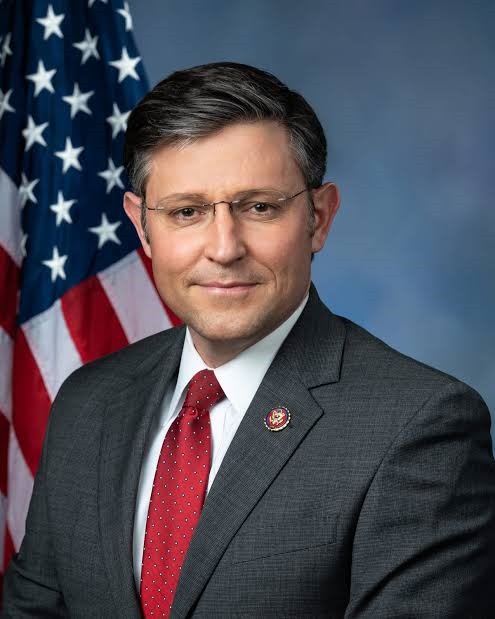
America, your legislature is back in business: the House of Representatives has selected Mike Johnson of Louisiana as its new speaker.  Who is that, you ask, and what does he believe in?  Among other things, he

So, we got that going for us…which is not nice.  Ruth Marcus writes in the Washington Post that any sense of relief you might be feeling that a well-known extremist like Jim Jordan was not elected by Republicans in Congress is misplaced.

For Jordan’s shirt sleeves demeanor and wrestler’s pugnacity, substitute a bespectacled, low-key presentation, a law degree and an unswerving commitment to conservative dogma and former president Donald Trump.

This is not an upgrade. It is Jordan in a more palatable package — evidently smoother, seemingly smarter and, therefore, potentially more effective.

Johnson, now serving his fourth term in Congress, was the moving force behind aSpeaker Johnson Supreme Court brief that helped lay the shoddy intellectual groundwork for Jan. 6, 2021. In December 2020, he rallied fellow Republican lawmakers to support Texas’s brazen bid to overturn the election results. In a lawsuit that fizzled almost as soon as it was filed, Texas Attorney General Ken Paxton sought to have the Supreme Court intervene in the election by blocking the certification of electoral college votes in four swing states — Pennsylvania, Georgia, Michigan and Wisconsin — where voting rules had been changed in the course of the election and voters, not coincidentally, had favored Joe Biden. The justices swiftly rejected the case, tartly noting that, “Texas has not demonstrated a judicially cognizable interest in the manner in which another State conducts its elections.”

(snip)

The Johnson brief was a full-throated endorsement of the “independent state legislature” theory, ultimately rejected by the Supreme Court in 2023’s Moore v. Harper. The brief asserted that under the terms of the Constitution, only state legislatures — without any review by state courts or involvement of other state parties — have power to set rules for choosing presidential electors. “The clear authority of those state legislatures to determine the rules for appointing electors was usurped at various times by governors, secretaries of state, election officials, state courts, federal courts, and private parties,” the brief argued.

(snip)

The Texas episode was of a piece with Johnson’s conservative worldview. Before being elected to Congress, he was a senior lawyer and national spokesman for the Alliance Defending Freedom, a conservative group that opposes abortion, same-sex marriage and LGBTQ+ rights.

Running for Congress in 2016, he described himself as “a Christian, a husband, a father, a lifelong conservative, constitutional law attorney and a small business owner in that order, and I think that order is important.” Johnson said he had been “called to legal ministry and I’ve been out on the front lines of the ‘culture war’ defending religious freedom, the sanctity of human life, and biblical values, including the defense of traditional marriage, and other ideals like these when they’ve been under assault.”

We shall see how well Johnson does in leading the House, or at least its too-small-for-comfort Republican majority, in handling upcoming issues like a possible government shutdown in three weeks, or requests for more aid to Israel and Ukraine, or any of the other normal kinds of business which members of Congress are supposed to take care of on our behalf.  But given his still-declared support of Trump, it’s unlikely Johnson will be much of a leader when it comes to the reality of the need to work with Democrats to get things done: as David Frum wrote in The Atlantic earlier this month, “The rules of contemporary Republican politics make it had to accept reality.  Reality is just too awkward.”

In reality, Trump has been a big vote loser for Republicans. He fluked into the presidency with a Dukakis-like share of the vote in 2016, then lost his party its majority in the House in 2018. Trump got decisively booted from the presidency in 2020; rampaged illegally on January 6, 2021; and then cost his party its Senate majority in the January 2021 runoff elections. His election-denier message damaged his party further in the elections of 2022. His demand for a Biden investigation and impeachment in 2023 is producing an embarrassing fiasco. But no Republican leader dares say these things out loud.

Most taboo of all is working with Democrats, on any terms other than total, one-sided domination: We win, you lose. So [then-Speaker Kevin] McCarthy just had to press ahead, acting as if he commanded a majority when he did not; insulting and demeaning the minority, even though he had to know that he might need their help at any minute.

That minute came. McCarthy sought Democratic votes to save him from his own refractory members, and in return he offered nothing. Not even politeness.

That proposition did not produce the desired results, and so here we are.

Where we are is a country with a solid anti-Trump majority confronting a pro-Trump minority that believes it has a right to rule without concession or compromise.

The only way to produce a stable majority in the House is for the next Republican leader to reach a working agreement with the Democrats to bypass the nihilists in the GOP caucus. But that agreement will have to be unspoken and even denied—because making agreements that show any respect for the other side will be seen by Republican partisans as betrayal. The price of GOP leadership is delivering delusions and fantasies: the delusion and fantasy that Trump won in 2020, the delusion and fantasy that the Republicans did not lose in 2022.

“Delusion and fantasy” might well stand as a new motto for the remnants of a once proud GOP: in the Public Religion Research Institute’s annual American Values Survey, one-third of Republicans believe that “because things have gotten so far off track, true American patriots may have to resort to violence in order to save our country,” almost half think we need a strong leader who is willing to break some rules to get things done, and 29% are strong believers in the QAnon conspiracy movement. In the Washington Post, Jennifer Rubin writes:

Most frightening is how many Republicans buy into white Christian nationalism, a racist ideology that rejects the basic premise of our democracy: “All men are created equal.” One-third of Americans but 52 percent of Republicans agree that “God intended America to be a new promised land where European Christians could create a society that could be an example to the rest of the world.” The number is even higher among White evangelical Protestants (54 percent). Americans who subscribe to white Christian nationalism are more than twice as likely as other Americans to say true patriots might have to resort to violence to save the country.

In a related question, 75 percent of Republicans think the Founders wanted America to be a Christian nation with Western European values.

Rubin also identifies a “positive sign of public sanity” across the ideological spectrum.

Overwhelming majorities of Americans today support teaching the good and the bad of American history, trust public school teachers to select appropriate curriculum, and strongly oppose the banning of books that discuss slavery or the banning of Advanced Placement (AP) African American History.” Moreover, “A solid majority of Americans also oppose banning social and emotional learning programs in public schools.” Though some Republicans have made “anti-wokeism” a key requirement of their political identity, their message is deeply unpopular. “Fewer than one in ten Americans favor the banning of books that include depictions of slavery from being taught in public schools (7%), compared with 88% who oppose such bans.”

Sixty percent say abortion should be legal in most or all cases, compared with 37 percent who say it should be illegal in most or all cases. In a political reversal, “Democrats are now significantly more likely than Republicans to say their support for a candidate hinges on the candidate’s position on abortion,” 50 percent vs. 38 percent.

(snip)

Taking a step back, the overall picture here is a country that is inclusive, respectful of religious differences, pro-democracy and supportive of women’s rights — except when it comes to the largely Republican, mostly White evangelical Christians who reject these fundamental ideas.

When a sizable portion of one of the major political parties, aided by a right-wing propaganda machine and infused with religious fervor, rejects the basis for multiracial, multicultural democracy, we face a severe crisis. Even if Trump does not return to the White House, this radicalized segment will not disappear. How we reintegrate millions of Americans into reality-based, pro-democracy politics in a diverse country remains the great challenge of our time.