Hey, I was thinking the same thing…but I can’t draw a face full of hate like that

I am sooo tired of hearing political arguments that are based primarily, if not entirely, on what side of the issue God has taken.  Arguments made by people who, apparently, know where God stands on the issues of the day here in America.  Are extreme conservatives the only people who are plugged in to God’s position on the issues?  Or the only ones who find that argument a persuasive one?

Last month I wrote about the echo of today’s extreme conservative message in the language of  long-ago memorials to Confederate war dead.  Today, I note that Doonesbury sees some of the same thing, but makes the point better than I did (or could).

db131110

I couldn’t be more pleased to be sharing a point of view with a comic strip, or more disheartened about the intellectual quality of modern American political rhetoric.

Thanks to Doonesbury, Slate, and GoComics.com

SCOTUS dumps DOMA: fair, simple, American

Brown v. Board of Education; United States v. Windsor: do they belong together?  Yes they do: today’s U.S. Supreme Court ruling in the Windsor case is just that historic.  In a very specific and non-technical way Justice Anthony Kennedy’s opinion makes clear what the 5-4 court ruling says the Constitution requires: the “[Defense of Marriage Act] is unconstitutional as a deprivation of the equal liberty of persons that is protected by the Fifth Amendment.”  You can read the professional reports on the decisions announced today here and here, and elsewhere, but here’s my take:

All people deserve equal treatment under the law.  If the federal government grants certain legal privileges to dual-sex couples who are legally married under the laws of their state, the same privileges must be available to single-sex couples who are legally married under the laws of their state.  Equal treatment; fairness.  The court did not rule on the constitutionality of gay marriage today; it ruled on an issue of equality before the law.  In refusing to rule on the Hollingsworth case regarding California’s Proposition 8, which outlawed gay marriage in the state, it sidestepped ruling one way or another on the constitutionality of gay marriage…perhaps another day.  But that decision does have the effect of re-legalizing gay marriage in California, making it state #13.

In practical terms the Windsor ruling means same-sex couples should be treated the same way as opposite-sex couples when it comes to federal tax law and Social Security and insurance and immigration, all that federal stuff.  In fact there are more than a thousand benefits coming into play here, and McClatchy does a good job summarizing that here.  And for fun, TV Guide summarizes the celebrity reaction to the rulings here.

This is not about what one religion or another teaches about homosexuality; this is about how the civil law treats American citizens regardless of their religious belief, or their gender or their race or national origin.  A religion is free to believe and teach what it wants about the morality of homosexual behavior or same-sex marriage, and its teachings and laws are important to the members in good standing of that particular faith.  But those teachings are not binding on Americans who are not members of that denomination.  The civil law, which orders how we all deal with one another in the secular society outside the confines of our many private clubs, is blind to such moral questions.  States have the right to decide who can “marry” and who can’t, and the federal government has to treat all “married” couples in the same way, regardless of the gender of the spouses.  Simple, really.  Fair.  American.  Congratulations, U.S.A., on another successful day at the office.

Gay marriage news, the Anglo-American edition

It was only in passing that I mentioned last month’s election results that put another four states on the side of the angels in the fight to legalize gay marriage. There’s been an important development since then: the U.S. Supreme Court’s decision to hear arguments in two cases on the issue, opening the possibility of a legal precedent that will apply to every state in the union.

Supporters of giving same-sex couples the right to marry are enthused, since this decision comes in relatively close proximity to (1) President Obama announcing his support for gay marriage, (2) another appeals court overturning the Defense of Marriage Act (Windsor v. United States), and (3) people in more states voting in favor of same-sex unions. Emily Bazelon writes in Slate with some great background on the two cases themselves, and offers a warning: don’t assume that because four justices agreed to hear the cases that there are five of them who will rule in favor of gay marriage. Conventional wisdom has it that the court follows the people, but I’m trying not to get overly optimistic: it could be that the justices who said yes to taking up the matter are predisposed to uphold the Defense of Marriage Act or to defer to states on the whole thing…and 39 of them have outlawed gay marriage either by statute or in their constitutions.

I wish we could get some of those states, or Congress, to think about this issue in the way Britain’s government proposes: legalize same-sex marriage in civil law, and make the clear stipulation that religions which object cannot be forced to perform gay weddings.

Face it: most of the objection to same-sex marriage in our country claims a basis in religious teaching. I sympathize with people who are afraid that legalizing a practice condemned by their religion would somehow infringe on their own religious freedom, although I don’t think that would happen in this case. But the core issue as I see it is not one of religious freedom, it’s a question of equal protection under the law. To try to put it simply, it’s not fair that only some citizens can enjoy the benefits of being married under law; if it’s OK for some it must be OK for all, assuming it doesn’t hurt society at large. And let’s don’t get sidetracked on age limits—we already prohibit minors from entering contracts—or possible plural marriages or bigamies, which might be seen to have built-in disincentives and punishments. (Remember the old joke—what’s the penalty for bigamy?  Two wives.)

Think of any given religion as a private club: no one of us is required to join that club but we each have the freedom to do so, and those who do join should be prepared to follow the club’s rules. If one club’s rules prohibit same-sex marriage, that is the club’s prerogative; but the rules of any one club or other are not binding on those of us who didn’t join the club.

The civil law is what’s binding on everyone in the civil arena, and it must be applied equally and fairly to all. The British plan makes it clear that each club/religion retains the right to apply its own rules to its members while inside its clubhouse, but that there is a civil law applicable on the broader scale to the rest of society regardless of the rules inside Club A or Club B.

So, there’s a lot to keep an eye out for on this issue, what with the courts and the lawmakers getting involved. There’s one more front, too, but in this case there’s a possibility that America’s emerging embrace of same-sex marriage, and perhaps of homosexuality in general, could have unintended and disastrous consequences. I refer, of course, to Choire Sicha’s discovery of just how gay marriage could lay waste to the quaint vacation industry:

Yes, America will have to rise up against the menace of bearded gay schoolteacher couples who like to weekend and all those inn-going lesbians with lawyers. With the end of small businesses in America, we’ll just go state-by-state and repeal these gay marriages and everything will be fine. That’s exactly how this will shake out.

For me, there’s really only one choice

Four nights of debates, finally over; I slouched in my comfy recliner with a determination to listen to what was said rather than make clever refutations or point out logical missteps (I was mostly successful) because I wanted to hear their arguments from their own mouths, to see if they could persuade me.

An American president has so many responsibilities to fulfill that no person can be expected to have expertise in all the necessary areas, so I’m looking for a candidate who can convince me that he or she understands what’s going on and what’s at stake, who can manage the day to day responsibilities of government, who has a plan for responding to current needs and the agility to respond to new crises as they develop, and who is willing to listen to new ideas and to respect and work in concert with members of Congress for the good of the entire nation.

Any candidate put forth by today’s Republican Party starts at a disadvantage in my eyes. The party of Abraham Lincoln and Theodore Roosevelt and Dwight Eisenhower and Richard Nixon—the one that believed in a strong defense, in law and order, in limited government that still supports the weakest among us, in free market capitalism with common sense regulation to encourage broad growth that strengthens us all—that party has been eaten alive from the inside, leaving a shell that still wears a nametag reading “GOP,” but the ideas in its head and its heart today are foreign to that legacy.

To win the support of today’s Republican Party, candidates must bow to a combination of economic extremists who don’t believe in raising taxes to pay the bills but refuse to cut back the programs that are running the bills up, and evangelical extremists who are working to make America the Christian nation they claim it was always meant to be, despite the evidence of the First Amendment to the contrary; they must deny objective fact and scientific evidence when it doesn’t support their position, and cast aspersions on the sanity and motives of anyone who dares object; they must be encouraging of those who insist their “conservatism” is an indication of greater virtue as a person and a citizen, albeit ones who must bravely shoulder the burden of the so-called Americans who are just waiting for their entitlements to roll in.

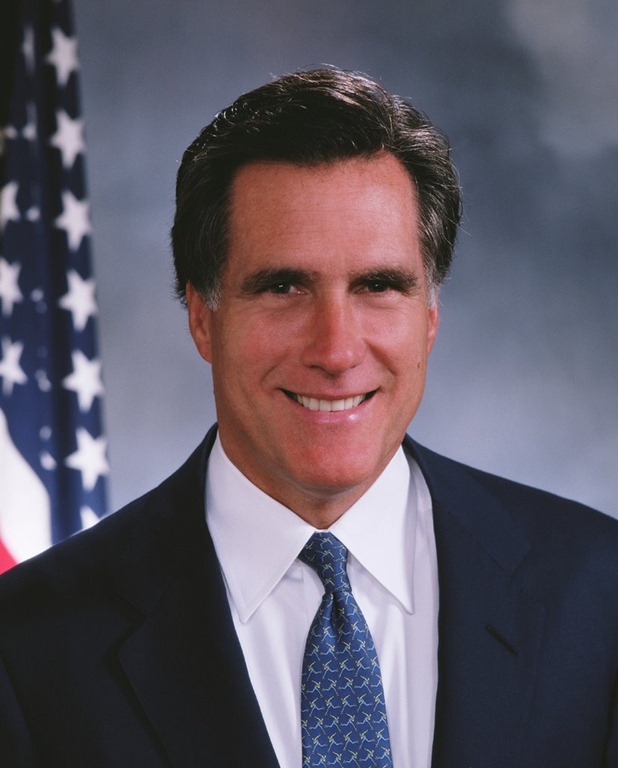
Mitt Romney wants to be president; that much is clear. He says he wants to save our Mitt-Romney-2756economy and create jobs, but he refuses to let me in on the details of how he plans to do that. And it’s not that I expect him to have a perfect plan he can turn on and walk away from; I know circumstances will change and he will have to adapt. But I need more than a knowing wink and a “just trust me on this,” particularly when the record shows Romney’s vibrant history of changing his positions on issues—and not changing just because he’s become wiser with age, but changing in order to win popular support…and later changing back again if need be. I don’t know what he really stands for, what he really wants to do, and I have no reason to trust that he has any other core interest at heart beyond his desire to win an election.

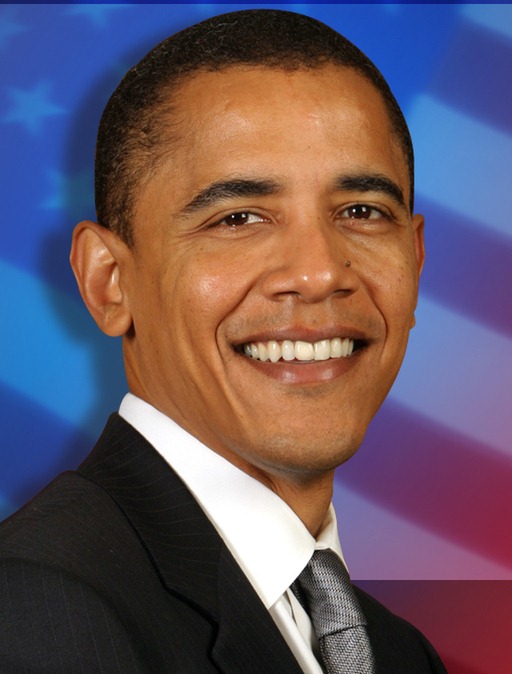
I believe Barack Obama wants to do what’s best for America, and that he has done good in his first term evenobama though some of that has led to an increase in the national debt—he had to try something to stem the economy’s slide into the worst recession of most of our lifetimes. I don’t buy the argument that he’s a failure because he didn’t do all the things he promised four years ago, because I know he’s had an immoveable object in his way. Since before he took office Republicans in the House and Senate have been in opposition: not just opposing ideas they don’t agree with but opposing ideas they do agree with, because they declared quite publicly, and with no little glee, that preventing Obama’s re-election was their top priority; they would go to any length at all to ensure that he had no achievements of which to boast…and then argue against his re-election because of his failure to work productively with Congress.

Think I’m overstating the case? Courtesy of The Daily Show, click the pic for a reminder of a small part of the catalogue of plagues that the Right has warned us were inevitable if Barack Obama was elected (none of which came true). And keep in mind: either these people really believed everything they were saying, or they thought we were just scared enough or stupid enough to believe anything they said…then imagine what might happen if these Republican obstructionists operating on behalf of their American Taliban brain trust were to have a president of their own party, one carefully crafted to avoid any pesky checks and balances…

image

It’s the right thing to do…and now we have data!

Today’s the day we can celebrate the first anniversary of the demise of the “don’t ask don’t tell” policy that pushed 13,000 homosexual soldiers, sailors, airmen and Marines out of the armed forces of our country and forced untold thousands of others to lie about their sexual orientation in order to continue to serve.  How has the republic fared?

You’ll recall that some opponents of the repeal warned of dire consequences should we choose to stop discriminating against homosexuals who wanted to serve their country; well OK, let’s assess the fallout now, a year removed from the heat of the moment.  Nathaniel Frank today in Slate:

During the debate over “don’t ask, don’t tell”—which ended one year ago this week—Sen. John McCain insisted that ending the gay ban would do “great damage” to the military, and the commandant of the Marine Corps said it could “cost Marines’ lives.” One think-tanker agreed that we’d be taking “a risk with our lives, property and freedom.” Another declared breathlessly that, “ultimately all of civilian life will be affected.” Then there was the dire prediction that one-quarter of the military, or 500,000 troops, might quit in protest.

(snip)

A new UCLA study, which I co-authored with other academics including military professors from all four U.S. military service academies, has assessed whether ending the gay ban has indeed harmed the armed forces. It hasn’t. Our conclusion is that ending the policy “has had no negative impact on overall military readiness or its component parts: unit cohesion, recruitment, retention, assaults, harassment or morale.”

(snip)

But we found we could go beyond that: We can also report that after the military ended the gay ban, the institution itself improved, and not just for gay people but for the overall force. Lifting the ban, we found, improved the ability of the military to do its job by removing needless barriers to peer bonding, effective leadership and discipline.

Surprised?  I’m not.  I did then and do now have confidence in the Pentagon’s ability to carry out its orders; I did then and do now have faith that most American men and women, in and out of the armed forces, believe in the American values of equality, fairness and tolerance; I did then and do now believe that the remaining barriers of prejudice are best overcome by exposure to the unknown.

And I believe that ending policies and practices that discriminate against homosexuals will have the same effect in other areas of life as it’s had for the military, because I believe most American men and women, despite the teachings of some religions to the contrary, know in their hearts that it’s the right thing to do.

Mark your civil rights calendar: the gay marriage issue could get to the Supreme Court before the end of the current term.