Just shut up and let me do the talking

It’s about damn time that the public reports about the private negotiations on the federal budget had some good news: Speaker Boehner and President Obama have gotten everyone else to leave the room!

Since the election last month there’s been plenty of balloon juice about how to avoid running the federal budget over a “fiscal cliff,” which is just an agreement made last year between Congress and the administration on a set of tax increases and budget cuts that would go into effect at the first of next year unless they took some other action on taxes and spending by that deadline. Remember when they said that Washington had “kicked the can down the road?” Well, this is where that can stopped; it was kicked to here so the issue wouldn’t inconveniently get noticed while America was paying attention during the fall election campaigns.

You’d like to think that there would have been some effort underway all along during the past year and a half to find a compromise on ways to strengthen the economy and reduce the government’s budget deficit, but to all appearances there wasn’t. The people we elected to go to Washington to use their judgment and wisdom in the best interests of our communities and our states and our country couldn’t climb down off their talking points long enough to get anything constructive accomplished. They could, however, make a lot of noise about the virtuousness of their own moral and political philosophies, and by extension if not by direct accusation the seditious intentions of their “friends across the aisle.” Perfect way to prepare the ground for fruitful negotiation over disagreements, right?

You don’t have to be a political scientist to know that any honest effort to come to a compromise on a course of action regarding a disputed issue isn’t aided by (1) having too many negotiators at the table, and (2) conducting the negotiations in public. The more people that are involved, the harder it is to get everyone to agree on anything. And the more the people who are involved do their talking in public and make great political show of what they will and will not accept, the harder they make it on themselves to come to a compromise without seeming to lose face in public or run the risk of being bashed as surrender monkeys or traitors to some cause or other. So it seems to me to be a thoroughly sensible decision that Boehner has asked the Senate leaders and the House Democratic leader to step back, and that “White House aides and the speaker’s staff, by mutual agreement, have largely shut down public communication about the talks” in the hope that some real progress can be made.

Now for the entertainment portion of today’s post: since I’m not one to overlook an opportunity to point out stupidity where it exists, I should highlight this. The Times story notes that as the president reaffirmed his position that the tax rate on incomes above $250,000 must go up…

On Capitol Hill, Senator Mitch McConnell of Kentucky, the Republican leader, moved Thursday to vote on Mr. Obama’s proposal, in his broader deficit package, to permanently diminish Congress’s control over the federal government’s statutory borrowing limit, assuming that Democrats would break ranks and embarrass the president. Instead, Democratic leaders did a count, found they had 51 solid votes, and took Mr. McConnell up on what Senator Harry Reid of Nevada, the Senate majority leader, called “a positive development.”

Mr. McConnell then filibustered his own bill, objecting to a simple-majority vote and saying a change of such magnitude requires the assent of 60 senators.

“I do believe we made history on the Senate floor today,” Mr. [Richard] Durbin said.

History indeed: had to filibuster his own bill to keep it from being passed! I’m thinking that Ashley Judd might be just the thing the U.S. Senate and the people of Kentucky need.

Here’s where your argument falls to the ground

I’m having trouble sorting out the competing arguments on this whole “fiscal cliff” thingy: either we’ve got to prevent going over it, or it’s OK to go over it a little, or it’s not really a cliff at all but more like a slope; and if the far right criticizes Speaker Boehner’s plan and so does the president, does that mean the far right agrees with the president?

You may suffer from the same problem: from time to time and no matter the topic, there are those days when each argument advanced sounds pretty good, but then someone else opens up their piehole and I don’t know what to think anymore except that maybe I am too stupid to live. How, my friends, how are we to sort out the good from the bad, the sound from the unsound, the wheat from the chaff…the flotsam from the jetsam, the Hatfields from the McCoys? How indeed!

With thanks for the tip to the fine folks at Upworthy.com, behold the world’s handiest tool for cutting through the crap: an interactive website which “offers definitions and examples of the most common logical fallacies plaguing our debates today.”

image

AND, they’ve got free posters available for download—looks like the perfect stocking stuffer, and such a thoughtful gift at this special time of year.

Congratulations, America

We did some good things out there in those little voting booths yesterday…most of us…but a hearty “good on ya” to everyone who took the trouble to participate in the process beyond just running their mouths (or their typing fingers).  And as my old high school biology teacher (and football coach) used to say each Monday morning in the fall, “I’d like to say jest a few words about the happ’nins of last week.”

Light bulbThis morning McClatchy ran a pretty good early analysis of why a president who seemed to be in a neck and neck race for re-election ended up winning so decisively.

…Democrats say [President Barack] Obama was able, despite the sluggish economy, to point to achievements. He trumpeted success at preventing the economy from hitting bottom with a stimulus plan that plowed government dollars into hiring. He achieved long-sought health care legislation, enacted a firewall to prevent a relapse of the Wall Street fiasco, backed a federal bailout to save auto industry jobs, ended the war in Iraq and oversaw the raid that ended in the death of Osama bin Laden.

“Osama bin Laden is dead and General Motors is alive,” Vice President Joe Biden suggested as an Obama campaign bumper sticker. “That about sums it up, man.”

At the close of the election, Obama was boosted by a crisis beyond any candidate’s control. As the massive storm Sandy barreled up the East Coast, Obama suspended his campaign appearances to tend to the emergency response, projecting an air of confidence and compassion and avoiding the criticism that plagued former President George W. Bush in the wake of Hurricane Katrina.

Light bulbOh, and on that neck and neck thing: Nate Silver of The New York Times 538 Blog, the target of a lot of conservative venting over his analysis of state by state polls which predicted that Obama had a way better than 50-50 chance of winning, is the smartest man on the planet today: if by now we know that Obama won Florida, Silver picked every. state’s. outcome. correctly.

“Journalists who professed to be political experts were shown to be well connected, well-informed perhaps, but – on the thing that ultimately decided the result: how people were planning to vote – not well educated. They were left reporting opinions, while Nate Silver and others reported research.”

Light bulbPolitico has a list of the dozen things we learned yesterday.

7. The Bush problem lingers

Romney’s refusal to triangulate away from President George W. Bush is one of the stranger decisions he made in this political climate.

Exit polls from Tuesday night show that a majority of voters still blame Bush for the weak economy.

This could be cause for concern for former Florida Gov. Jeb Bush, who is widely viewed as a potential 2016 hopeful and is a middle-of-the-road voice on immigration reform. It’s also an issue in terms of some of the Republicans’ top figures, such as Crossroads co-founder and former Bush political strategist Karl Rove.

How the Republicans deal with this in the next two years will be telling as their chances of reclaiming the White House next time around.

Light bulbOne more thing I learned is that Mitt Romney, though clearly in emotional pain when he took the stage in Boston, was incredibly gracious in defeat, setting a terrific example when he said “This is a time of great challenge for America, and I pray that the president will be successful in guiding our nation.”  Compare that to the creepily gleeful declaration from Republican leaders four years ago that their highest priority was to make Obama a one-term president, a priority they pursued with no discernible concern for the impact of their actions on the nation they claimed to love and swore to serve.  Those among them who don’t try to live up to Romney’s “come together” example are giving us a glimpse of their true motivations.

Light bulbSpeaking of their motivations, LZ Granderson thinks the president has won some vindication from those who’ve been clamoring to “take our country back” and have never seemed to have been able to give Obama credit for anything he’s done.

So when he was awarded the Nobel Peace Prize, his critics spent more time discrediting the importance of the award than congratulating him for winning it.

When unemployment fell under 8%, they accused the Obama administration of fixing the numbers.

When the president opted to campaign instead of surveying the damage caused by Hurricane Isaac sooner, he was called selfish. When Obama left the campaign trail to survey the damage caused by Hurricane Sandy, former FEMA Director Michael Brown criticized him for responding too quickly.

Nothing he did was good enough for them.

But on Tuesday, it was good enough for the majority of real Americans.

Light bulbThe drive to extend equal protection of the law to homosexual citizens and give them the right to marry under civil law cleared another hurdle: for the first time, voters have said yes to same-sex marriageLots of them, in fact.

Light bulbThe extremists who shanghaied the once-proud Republican Party must consider if they will moderate their views on many issues to broaden their appeal or if they’d rather defend those cherished beliefs…and lose election after election because, inconvenient though it may be to admit, most Americans just don’t agree with what they seem to stand for.

Light bulbMeanwhile, the president and the current Congress must pick up the can they kicked down the road a year ago and find an answer to correcting our government’s budget deficit: if they take no action at all, there will be massive cuts to discretionary spending at the first of the year that may well push the economy into another recession.  Swell.

OK then…let’s talk about something else for awhile, OK?

For me, there’s really only one choice

Four nights of debates, finally over; I slouched in my comfy recliner with a determination to listen to what was said rather than make clever refutations or point out logical missteps (I was mostly successful) because I wanted to hear their arguments from their own mouths, to see if they could persuade me.

An American president has so many responsibilities to fulfill that no person can be expected to have expertise in all the necessary areas, so I’m looking for a candidate who can convince me that he or she understands what’s going on and what’s at stake, who can manage the day to day responsibilities of government, who has a plan for responding to current needs and the agility to respond to new crises as they develop, and who is willing to listen to new ideas and to respect and work in concert with members of Congress for the good of the entire nation.

Any candidate put forth by today’s Republican Party starts at a disadvantage in my eyes. The party of Abraham Lincoln and Theodore Roosevelt and Dwight Eisenhower and Richard Nixon—the one that believed in a strong defense, in law and order, in limited government that still supports the weakest among us, in free market capitalism with common sense regulation to encourage broad growth that strengthens us all—that party has been eaten alive from the inside, leaving a shell that still wears a nametag reading “GOP,” but the ideas in its head and its heart today are foreign to that legacy.

To win the support of today’s Republican Party, candidates must bow to a combination of economic extremists who don’t believe in raising taxes to pay the bills but refuse to cut back the programs that are running the bills up, and evangelical extremists who are working to make America the Christian nation they claim it was always meant to be, despite the evidence of the First Amendment to the contrary; they must deny objective fact and scientific evidence when it doesn’t support their position, and cast aspersions on the sanity and motives of anyone who dares object; they must be encouraging of those who insist their “conservatism” is an indication of greater virtue as a person and a citizen, albeit ones who must bravely shoulder the burden of the so-called Americans who are just waiting for their entitlements to roll in.

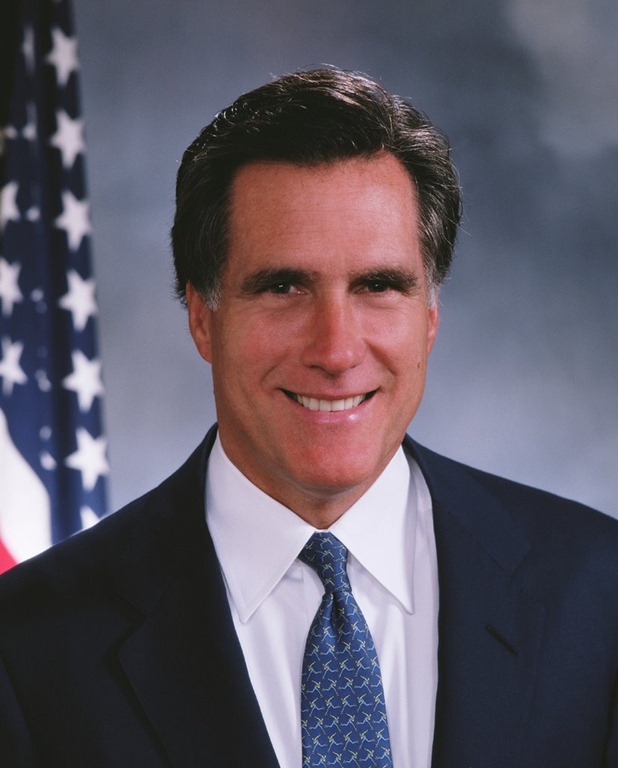
Mitt Romney wants to be president; that much is clear. He says he wants to save our Mitt-Romney-2756economy and create jobs, but he refuses to let me in on the details of how he plans to do that. And it’s not that I expect him to have a perfect plan he can turn on and walk away from; I know circumstances will change and he will have to adapt. But I need more than a knowing wink and a “just trust me on this,” particularly when the record shows Romney’s vibrant history of changing his positions on issues—and not changing just because he’s become wiser with age, but changing in order to win popular support…and later changing back again if need be. I don’t know what he really stands for, what he really wants to do, and I have no reason to trust that he has any other core interest at heart beyond his desire to win an election.

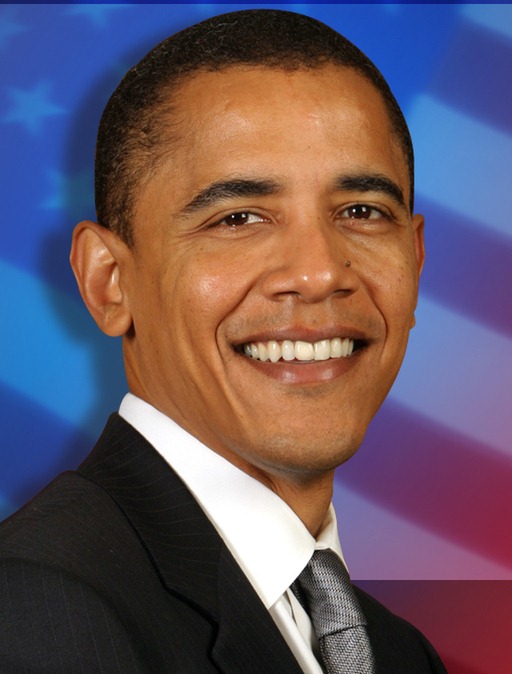
I believe Barack Obama wants to do what’s best for America, and that he has done good in his first term evenobama though some of that has led to an increase in the national debt—he had to try something to stem the economy’s slide into the worst recession of most of our lifetimes. I don’t buy the argument that he’s a failure because he didn’t do all the things he promised four years ago, because I know he’s had an immoveable object in his way. Since before he took office Republicans in the House and Senate have been in opposition: not just opposing ideas they don’t agree with but opposing ideas they do agree with, because they declared quite publicly, and with no little glee, that preventing Obama’s re-election was their top priority; they would go to any length at all to ensure that he had no achievements of which to boast…and then argue against his re-election because of his failure to work productively with Congress.

Think I’m overstating the case? Courtesy of The Daily Show, click the pic for a reminder of a small part of the catalogue of plagues that the Right has warned us were inevitable if Barack Obama was elected (none of which came true). And keep in mind: either these people really believed everything they were saying, or they thought we were just scared enough or stupid enough to believe anything they said…then imagine what might happen if these Republican obstructionists operating on behalf of their American Taliban brain trust were to have a president of their own party, one carefully crafted to avoid any pesky checks and balances…

image

You’ll never see the debates the same way ever again

…after you have a look at this from Bad Lip Reading:

“Eye of the Sparrow” indeed–hilarious!