
This is EXACTLY what the First Amendment protects us from

In the dark reality of the second Trump Administration and its near-daily attacks on the legal and Constitutional protections of the American way of life, I’ve resolved not to be that guy with the kneejerk rapid response to every “outrageous” action dreamed up by the Christian nationalist lawyers who plan and execute TFG’s official agenda.  Because if I did, there wouldn’t be enough time left in the day for sleeping late or watching TV, for playing golf or doing any of the things I like to do; sounding the warning about you know who is a thing I am increasingly uninspired about.  I figure, those who know the threat already know; those who know and don’t care aren’t listening anyway; the rest can’t read, I guess.

But our government blatantly violated the First Amendment to the Constitution yesterday, and I felt the need to say something even though others have and will say this, but I want to say it too.

Since the Bill of Rights was ratified December 15, 1791, my favorite Constitutional amendment has protected our basic freedoms: “Congress shall make no law respecting an establishment of religion, or prohibiting the free exercise thereof; or abridging the freedom of speech, or of the press; or the right of the people peaceably to assemble, and to petition the Government for a redress of grievances.”  When it comes to free speech, what it means is that we can say we want (within some limits) without censorship by the government.  It doesn’t mean that your boss or your church or your spouse can’t punish you for what you say, or that your friends can’t ostracize you from the group chat or not invite you to the neighborhood barbecue; it means you have “the right to articulate opinions and ideas without interference, retaliation or punishment from the government.”  As explained in an article by the Ronald Reagan Presidential Library, freedom of speech

…has long since been interpreted by the Supreme Court to mean that all American speech can not be infringed upon by any branch or section of the federal, state, or local governments. Private organizations however, such as businesses, colleges, and religious groups, are not bound by the same Constitutional obligation. The First Amendment experienced a surge in support and expansion in the 20th century, as Gitlow v. New York (1925) determined that the freedoms promised in it are applicable to local, state, and the federal governments. Further, subsequent Supreme Court decisions from the 20th century to the early-21st century have determined that the First Amendment protects more recent and advanced forms of art and communication, including radio, film, television, video games, and the Internet. Presently, the few forms of expression that have little to no First Amendment protection include commercial advertising, defamation, obscenity, and interpersonal threats to life and limb.

Yesterday we all learned that the ABC television network, a division of the Walt Disney Company, announced an indefinite suspension of “Jimmy Kimmel Live!”  That decision was announced after Nexstar Media Group announced it would preempt Kimmel on the 23 ABC-affiliated stations it owns due to comments Kimmel made “concerning the killing of Charlie Kirk”.  Nexstar owns and/or operates more than 200 local TV stations across the country, and it has every right to decide which programs it will air and which it will not.  As the possessor of a government license to operate a broadcast outlet, it actually has a responsibility to do that.  Whether or not you or I agree with Nexstar’s stated reason for deciding to pull Kimmel, that decision is entirely within the law and does not violate anyone’s First Amendment rights.  And if ABC pulled the show from the network as a means to try to placate a large business partner, that’s perfectly legal, too.  A little cowardly, maybe, but not illegal.

Now, just as background, be aware that both Nexstar and Disney are in line to get government approval for separate planned deals: Disney’s ESPN is trying to acquire the NFL Network, and Nexstar still needs final approval to buy Tegna, which owns 64 stations in 51 markets across the country.  Hmm, seems familiar: Paramount, which owns CBS, was awaiting government approval on a merger…then it settled a meritless $20 BILLION suit filed against it by Trump (for $16 million) and that led to the “big fat bribe” comment on “The Late Show with Stephen Colbert,” and then CBS cancelled Colbert (ten months in the future).  Paramount received the merger approval three weeks later.  But back to our current story.

You see, before Nexstar made its announcement yesterday and before ABC then followed up with its announcement, the chairman of the Federal Communications Commission appeared on a podcast and criticized Kimmel’s comments.  That’s cool.   Brendan Carr said the FCC “has a strong case for holding Kimmel, ABC and network parent Walt Disney Co. accountable for spreading misinformation.”  Uh, I guess that’s OK if he means the agency responsible for regulating the use of public airwaves won’t permit the misuse of that shared resource.  But then Carr said “We can do this the easy way or the hard way. These companies can find ways to take action on Kimmel or there is going to be additional work for the FCC ahead.”

That doesn’t sound very much like the government threatening a business over its exercise of free speech, does it?  Take care of it…or else. ( Hey, nice network ya got there; be a shame if anything happened to it.)

The point of free speech is that you can say what you want and not face “intimidation, retaliation or punishment” from the government.  Like, say, the FCC chairman (a Trump sycophant) threatening the licenses of ABC affiliates who air Kimmel because he (and Trump) don’t like what Kimmel says.

FCC Commissioner Anna Gomez criticized the administration for “using the weight of government power to suppress lawful expression” in a post on X.

“Another media outlet withered under government pressure, ensuring that the administration will continue to extort and exact retribution on broadcasters and publishers who criticize it,” said Ari Cohn, lead counsel for tech policy at the Foundation for Individual Rights and Expression. “We cannot be a country where late-night talk show hosts serve at the pleasure of the president.”

Like, the president who said “as he flew home on Air Force One on Thursday…networks that give him bad publicity should “maybe” have their licenses taken away. (The FCC regulates local TV station licenses, not networks.)”  Proving beyond all question that he really does not understand the role of the press in America.

Bill Carter, an editor-at-large at LateNighter who has spent 40-plus years covering late-night comedy and the television industry, said “nothing even remotely like it has ever happened before.” Calling the Trump administration’s recent actions an “affront to the Constitution,” Carter stressed the role previous late-night stars like Johnny Carson played in public discourse.

Carson “spoke comedy to power,” Carter said. “And that’s what late-night shows have done ever since.”

Other expressions of shock and anger rolled through the Hollywood Hills and Capitol Hill on Thursday, as concerns mounted about a new era of government censorship.

“This is beyond McCarthyism,” Christopher Anders, director of the Democracy and Technology Division for the American Civil Liberties Union, said in a statement. “Trump officials are repeatedly abusing their power to stop ideas they don’t like, deciding who can speak, write, and even joke. The Trump administration’s actions, paired with ABC’s capitulation, represent a grave threat to our First Amendment freedoms.”

“Jimmy Kimmel has been muzzled and taken off the air,” comedian Marc Maron said in an Instagram video posted early Thursday morning. “This is what authoritarianism looks like right now in this country … This is government censorship.”

“This isn’t right,” actor and director Ben Stiller wrote on X.

Damon Lindelof, the writer-producer of the hit TV show “Lost,” vowed to take action against ABC’s owner, Disney. “I can’t in good conscience work for the company that imposed [Kimmel’s suspension],” he said.

There are many more reactions in this story, including from that fun couple Barack Obama and Roseanne Barr.  Click the (gift) link above to read them all.

My point is, this action – a government official threatening government action against a company over speech he (claims he) finds offensive – is as stark an example as I can imagine of what the First Amendment does not allow.  And, it’s just the latest example of what seems to be a top goal of the thinnest-skinned man ever to be our president: to punish any and all who would dare criticize his any or every action. (Gift article, too)

Billionaires are accelerating their efforts to consolidate control over media platforms and the president is eager to help them do so, provided they shut down his critics. If they don’t, he threatens to use the levers of government — particularly those designed to remain independent — to financially punish them. None of this is secret; the brazenness is, at least partly, the point.

(snip)

The systematic effort to censor American media isn’t exactly subtle. The president has not disguised his intentions or his reasons. He has gone to some trouble to emphasize that he wants to control who’s on television and what they say. (And in newspapers too — in the past two months, he has filed lawsuits against the Wall Street Journal and the New York Times.) When Colbert’s “Late Night (sic) with Stephen Colbert” was canceled in July, Trump posted “It’s really good to see them go,” “and I hope I played a major part in it!”

For some valuable perspective on this big Constitutional issue, and the tiny-fisted tyrant at the center of the storm, I close with this:

David Letterman, the king of a previous generation of late-night TV hosts, spoke about Kimmel’s suspension at the Atlantic Festival in New York on Thursday. He said that as host of “Late Night With David Letterman,” he had mocked presidents across six administrations without fear of retribution.

We “attacked these men mercilessly,” Letterman told Atlantic editor Jeffrey Goldberg. “Beating up on these people, rightly or wrongly, accurately or perhaps inaccurately in the name of comedy, not once were we squeezed by anyone from any governmental agency, let alone the dreaded FCC.”

“The institution of the President of the United States ought to be bigger than a guy doing a talk show. You know, it just really ought to be bigger,” Letterman added. “By the way, I have heard from Jimmy. He was nice enough to text me this morning, and he’s sitting up in bed taking nourishment. He’s going to be fine.”

As the coach used to say each Monday, let’s talk a bit about the happenings of last week

It was the best of times, it was the worst of times… (Been done.)

It was the worst night of my entire life… (Take it easy, Princess.)

What in the actual f**k were you people thinking… (Leave that approach to Jon Stewart.  How about this:)

I am very disappointed with the result of the presidential election, and I’m concerned about what’s going to happen starting next year.  (OK…keep going.)

It’s not that I was firmly convinced that Kamala Harris was going to win and am now staring at the returns in disbelief.  I definitely wanted her to win, but wasn’t deluded into thinking there was only one possible outcome.  I am bewildered to think that more than 73 million Americans think the former guy – now the once and future guy, I guess? – is the best person for the job.  Unless they really don’t think that at all.

Now I’m reading (see the reading list below, and thanks to everyone who kept this such a secret until after the whole thing was over) that Trump, as opposed to Harris or Joe Biden or apparently any other Republican, represents a dramatic change from a system that these people do not trust.  Strenuously do not trust.  The theory is that Trump voters don’t really agree with everything that comes out of his mouth; some things, sure, but not everything.  But they do want a major change from the status quo.  They want to throw out the scoundrels of the political establishment, and they trust that anything is better than what we have right now.  Even crazy, lying, fascist Trump is, they think, preferable to more of the same old same old.

While recognizing that all of us only have two real choices in this race by the time we get to November, I’m still surprised that so many people would vote for Trump.  A guy who lies to us so profoundly and so often, who is a convicted criminal, who has shamelessly used public office to enrich himself; who offers a plan to fight inflation and lower prices with tariffs that will undoubtedly raise prices instead, who promises to deport tens of millions of people in a plan that will be enormously expensive and disruptive to the labor force and economy as well as probably inhumane, who promises the unattainable instantly (end the wars in Ukraine and Gaza?  Easy peasy) with no clear plan of action.  Or any plan at all.

I’m worried about what’s going to happen next.  We were surprised in 2017 when he didn’t become more presidential or tone down the rhetoric or act more like what we were used to, but this time no one should be surprised if he does some of the out-there things he promised to do.

–he promised massive tariffs on foreign goods; we’ll all pay higher prices for those goods because the higher prices will be passed along to us by the seller.

–he promised (allegedly) vaccine denier Robert F. Kennedy, Jr. control of our public health agencies; yeah, what could go wrong there.

–he promised to jail his critics; First Amendment, Schmirst Amendment.  Stand by for other protected rights to be ignored.

–he promised the largest mass deportation in American history; waiting now for the (multi-million dollar) plans to construct a new generation of internment camps while he strong-arms our allies to accept repatriation.

–he promised to settle the wars in Gaza and Ukraine; stand by for “America First” plans that will provoke Iran, threaten Ukraine’s sovereignty (to the benefit of Russia), and put the NATO alliance in jeopardy.

You get the picture.  If Republicans end up with control of the House of Representatives as well as the Senate, we’ll also see Trump’s sudden support for Project 2025 and any other effort to push the Christian nationalist agenda to remake America civil society in their image.  And he’ll do it all while, as he did the first time, illegally enriching himself (hello, Emoluments Clause, my old friend).

Oh yeah, there’s this result, too:

image


FOR MORE INFORMATION:

To those thinking, how could Trump possibly win – that’s not who we are: Michelle Goldberg makes the case that maybe it is:

“Trump’s first election felt like a fluke, a sick accident enabled by Democratic complacency. But this year, the forces of liberal pluralism and basic civic decency poured everything they could into the fight, and they lost not just the Electoral College but also quite likely the popular vote. The American electorate, knowing exactly who Trump is, chose him. This is, it turns out, who we are.”

The polls say Trump won big with male voters; Elizabeth Spiers explores just which men they mean: Trump’s appeal to men was

“a regressive idea of masculinity in which power over women is a birthright. That this appealed in particular to white men was not a coincidence — it intersects with other types of entitlement, including the idea that white people are superior to other races and more qualified to hold positions of power, and that any success that women and minorities have has been unfairly conferred to them by D.E.I. programs, affirmative action and government set-asides. For men unhappy with their status, this view offers a group of people to blame, which feels more tangible than blaming systemic problems like rising economic inequality and the difficulty of adapting to technological and cultural changes.”

Bernie Sanders’ take:

“It should come as no great surprise that a Democratic Party which has abandoned working class people would find that the working class has abandoned them…First, it was the white working class, and now it is Latino and Black workers as well. While the Democratic leadership defends the status quo, the American people are angry and want change. And they’re right.”

David French calls the vote a revolt against the ruling class and a faithful effort by those who believe Trump fulfills a prophecy.  (Honest to God)

Democratic mega-donor (and one-time candidate himself) Michael Bloomberg wonders how Democrats could possibly lose to such a bad candidate.

Just for fun, here’s a “deep dive” (as the kids say) on the scary details of Project 2025; Christian nationalists are unlikely to let this opportunity pass.

Same song, next verse

When I was a college student in the capital city of Texas, the mayor once held his regular weekly news conference and was asked to comment on the fact that the state legislature was about to begin another biennial session under the big pink dome.  His immediate reaction was to say “Lock up the kids and dogs.”

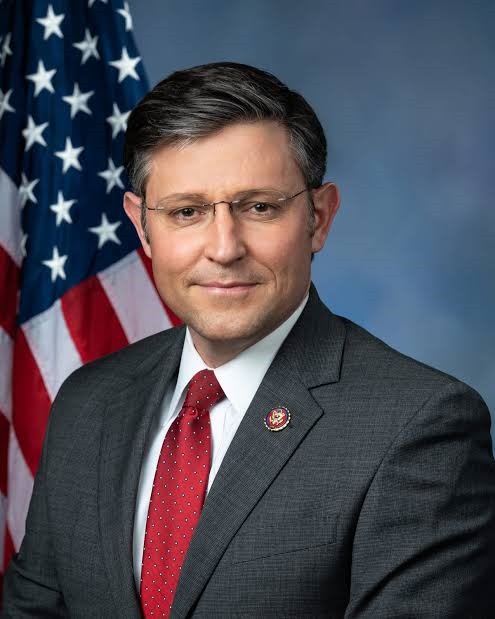
America, your legislature is back in business: the House of Representatives has selected Mike Johnson of Louisiana as its new speaker.  Who is that, you ask, and what does he believe in?  Among other things, he

So, we got that going for us…which is not nice.  Ruth Marcus writes in the Washington Post that any sense of relief you might be feeling that a well-known extremist like Jim Jordan was not elected by Republicans in Congress is misplaced.

For Jordan’s shirt sleeves demeanor and wrestler’s pugnacity, substitute a bespectacled, low-key presentation, a law degree and an unswerving commitment to conservative dogma and former president Donald Trump.

This is not an upgrade. It is Jordan in a more palatable package — evidently smoother, seemingly smarter and, therefore, potentially more effective.

Johnson, now serving his fourth term in Congress, was the moving force behind aSpeaker Johnson Supreme Court brief that helped lay the shoddy intellectual groundwork for Jan. 6, 2021. In December 2020, he rallied fellow Republican lawmakers to support Texas’s brazen bid to overturn the election results. In a lawsuit that fizzled almost as soon as it was filed, Texas Attorney General Ken Paxton sought to have the Supreme Court intervene in the election by blocking the certification of electoral college votes in four swing states — Pennsylvania, Georgia, Michigan and Wisconsin — where voting rules had been changed in the course of the election and voters, not coincidentally, had favored Joe Biden. The justices swiftly rejected the case, tartly noting that, “Texas has not demonstrated a judicially cognizable interest in the manner in which another State conducts its elections.”

(snip)

The Johnson brief was a full-throated endorsement of the “independent state legislature” theory, ultimately rejected by the Supreme Court in 2023’s Moore v. Harper. The brief asserted that under the terms of the Constitution, only state legislatures — without any review by state courts or involvement of other state parties — have power to set rules for choosing presidential electors. “The clear authority of those state legislatures to determine the rules for appointing electors was usurped at various times by governors, secretaries of state, election officials, state courts, federal courts, and private parties,” the brief argued.

(snip)

The Texas episode was of a piece with Johnson’s conservative worldview. Before being elected to Congress, he was a senior lawyer and national spokesman for the Alliance Defending Freedom, a conservative group that opposes abortion, same-sex marriage and LGBTQ+ rights.

Running for Congress in 2016, he described himself as “a Christian, a husband, a father, a lifelong conservative, constitutional law attorney and a small business owner in that order, and I think that order is important.” Johnson said he had been “called to legal ministry and I’ve been out on the front lines of the ‘culture war’ defending religious freedom, the sanctity of human life, and biblical values, including the defense of traditional marriage, and other ideals like these when they’ve been under assault.”

We shall see how well Johnson does in leading the House, or at least its too-small-for-comfort Republican majority, in handling upcoming issues like a possible government shutdown in three weeks, or requests for more aid to Israel and Ukraine, or any of the other normal kinds of business which members of Congress are supposed to take care of on our behalf.  But given his still-declared support of Trump, it’s unlikely Johnson will be much of a leader when it comes to the reality of the need to work with Democrats to get things done: as David Frum wrote in The Atlantic earlier this month, “The rules of contemporary Republican politics make it had to accept reality.  Reality is just too awkward.”

In reality, Trump has been a big vote loser for Republicans. He fluked into the presidency with a Dukakis-like share of the vote in 2016, then lost his party its majority in the House in 2018. Trump got decisively booted from the presidency in 2020; rampaged illegally on January 6, 2021; and then cost his party its Senate majority in the January 2021 runoff elections. His election-denier message damaged his party further in the elections of 2022. His demand for a Biden investigation and impeachment in 2023 is producing an embarrassing fiasco. But no Republican leader dares say these things out loud.

Most taboo of all is working with Democrats, on any terms other than total, one-sided domination: We win, you lose. So [then-Speaker Kevin] McCarthy just had to press ahead, acting as if he commanded a majority when he did not; insulting and demeaning the minority, even though he had to know that he might need their help at any minute.

That minute came. McCarthy sought Democratic votes to save him from his own refractory members, and in return he offered nothing. Not even politeness.

That proposition did not produce the desired results, and so here we are.

Where we are is a country with a solid anti-Trump majority confronting a pro-Trump minority that believes it has a right to rule without concession or compromise.

The only way to produce a stable majority in the House is for the next Republican leader to reach a working agreement with the Democrats to bypass the nihilists in the GOP caucus. But that agreement will have to be unspoken and even denied—because making agreements that show any respect for the other side will be seen by Republican partisans as betrayal. The price of GOP leadership is delivering delusions and fantasies: the delusion and fantasy that Trump won in 2020, the delusion and fantasy that the Republicans did not lose in 2022.

“Delusion and fantasy” might well stand as a new motto for the remnants of a once proud GOP: in the Public Religion Research Institute’s annual American Values Survey, one-third of Republicans believe that “because things have gotten so far off track, true American patriots may have to resort to violence in order to save our country,” almost half think we need a strong leader who is willing to break some rules to get things done, and 29% are strong believers in the QAnon conspiracy movement. In the Washington Post, Jennifer Rubin writes:

Most frightening is how many Republicans buy into white Christian nationalism, a racist ideology that rejects the basic premise of our democracy: “All men are created equal.” One-third of Americans but 52 percent of Republicans agree that “God intended America to be a new promised land where European Christians could create a society that could be an example to the rest of the world.” The number is even higher among White evangelical Protestants (54 percent). Americans who subscribe to white Christian nationalism are more than twice as likely as other Americans to say true patriots might have to resort to violence to save the country.

In a related question, 75 percent of Republicans think the Founders wanted America to be a Christian nation with Western European values.

Rubin also identifies a “positive sign of public sanity” across the ideological spectrum.

Overwhelming majorities of Americans today support teaching the good and the bad of American history, trust public school teachers to select appropriate curriculum, and strongly oppose the banning of books that discuss slavery or the banning of Advanced Placement (AP) African American History.” Moreover, “A solid majority of Americans also oppose banning social and emotional learning programs in public schools.” Though some Republicans have made “anti-wokeism” a key requirement of their political identity, their message is deeply unpopular. “Fewer than one in ten Americans favor the banning of books that include depictions of slavery from being taught in public schools (7%), compared with 88% who oppose such bans.”

Sixty percent say abortion should be legal in most or all cases, compared with 37 percent who say it should be illegal in most or all cases. In a political reversal, “Democrats are now significantly more likely than Republicans to say their support for a candidate hinges on the candidate’s position on abortion,” 50 percent vs. 38 percent.

(snip)

Taking a step back, the overall picture here is a country that is inclusive, respectful of religious differences, pro-democracy and supportive of women’s rights — except when it comes to the largely Republican, mostly White evangelical Christians who reject these fundamental ideas.

When a sizable portion of one of the major political parties, aided by a right-wing propaganda machine and infused with religious fervor, rejects the basis for multiracial, multicultural democracy, we face a severe crisis. Even if Trump does not return to the White House, this radicalized segment will not disappear. How we reintegrate millions of Americans into reality-based, pro-democracy politics in a diverse country remains the great challenge of our time.

Know your enemy

On Friday morning, after a night of insomnia fueled by worries about raising children in a collapsing society, I opened my eyes, started reading about efforts by Wisconsin Republicans to seize control of the state’s elections, then paused to let my tachycardiac heartbeat subside. Marinating in the news is part of my job, but doing so lately is a source of full-body horror. If this were simply my problem, I’d write about it in a journal instead of in The New York Times. But political despair is an issue for the entire Democratic Party.

It’s predictable that, with Donald Trump out of the White House, Democrats would pull back from constant, frenetic political engagement. But there’s a withdrawal happening right now — from news consumption, activism and, in some places, voting — that seems less a product of relief than of avoidance. Part of this is simply burnout and lingering trauma from Covid. But I suspect that part of it is about growing hopelessness born of a sense that dislodging Trump has bought American democracy only a brief reprieve.

One redeeming feature of Trump’s presidency, in retrospect, was that it was possible to look forward to the date when Americans could finish it. Covid, too, once seemed like something we’d be able to largely put behind us when we got vaccinated. Sure, Trumpism, like the virus, would linger, but it was easy to imagine a much better world after the election, the inauguration and the wide availability of shots.

Now we’re past all that, and American life is still comprehensively awful. Dystopia no longer has an expiration date.

Last week in the New York Times, Michelle Goldberg worried about the future of our American democracy.  Like thousands/millions of others, I share her concern, and so should you.

The problem isn’t just that polls show that, at least right now, voters want to hand over Congress to a party that largely treats the Jan. 6 insurrectionists as heroes.

(snip)

What’s terrifying is that even if Democrats win back public confidence, they can win more votes than Republicans and still lose. Gerrymandering alone is enough to tip the balance in the House.

(snip)

Meanwhile, Republicans are purging local officials who protected the integrity of the 2020 election, replacing them with apparatchiks. It will be hard for Republicans to steal the 2024 election outright, since they don’t control the current administration, but they can throw it into the sort of chaos that will cause widespread civil unrest. And if they win, it’s hard to imagine them ever consenting to the peaceful transfer of power again.

(snip)

I look at the future and I see rule without recourse by people who either approve of terrorizing liberals or welcome those who do. Such an outcome isn’t inevitable; unforeseen events can reshape political coalitions. Something could happen to forestall the catastrophe bearing down on us.

Here’s a hopeful sign: two long-time contributors to Fox News giving a thorough and public explanation of why they just can’t take it any more.

…there are still responsible conservatives [at Fox News] providing valuable opinion and analysis. But the voices of the responsible are being drowned out by the irresponsible.

A case in point: Patriot Purge, a three-part series hosted by Tucker Carlson.

The special—which ran on Fox’s subscription streaming service earlier this month and was promoted on Fox News—is presented in the style of an exposé, a hard-hitting piece of investigative journalism. In reality, it is a collection of incoherent conspiracy-mongering, riddled with factual inaccuracies, half-truths, deceptive imagery, and damning omissions. And its message is clear: The U.S. government is targeting patriotic Americans in the same manner —and with the same tools—that it used to target al Qaeda.

(snip)

This is not happening. And we think it’s dangerous to pretend it is. If a person with such a platform shares such misinformation loud enough and long enough, there are Americans who will believe—and act upon—it.

This isn’t theoretical. This is what actually happened on January 6, 2021.

Over the past five years, some of Fox’s top opinion hosts amplified the false claims and bizarre narratives of Donald Trump or offered up their own in his service. In this sense, the release of Patriot Purge wasn’t an isolated incident, it was merely the most egregious example of a longstanding trend. Patriot Purge creates an alternative history of January 6, contradicted not just by common sense, not just by the testimony and on-the-record statements of many participants, but by the reporting of the news division of Fox News itself.

There are still many real conservatives who recognize that the Orange Emperor has no clothes, and who have not drunk the toxic brew that has let so many Republicans (and others) show true feelings they have always keep secret, until now.  Jennifer Rubin is one.

When Donald Trump ran for president in 2016, Never Trumpers (now largely ex-Republicans) warned that he would corrupt the party in every way imaginable. His misogyny would morph in the party’s toxic masculinity and degradation of women, they cautioned. His infatuation with brutality and violence (boasting he would kill terrorists’ families, exhorting his supporters to slug protesters) would metastasize to the party as a whole. Boy, did those predictions pan out.

You only have to look at the vicious imagery showing the murder of Rep. Alexandria Ocasio-Cortez (D-N.Y.) deployed by Rep. Paul A. Gosar (R-Ariz.), the verbal attack on her from Rep. Louie Gohmert (R-Tex.) last year — and Republicans’ defense of both — to understand that their refusal to dump Trump after the “Access Hollywood” tape came to light was merely the prelude to an era of normalizing violence (especially against women), culminating in the Jan. 6 violent insurrection, which many Republicans, including Trump, tried to paint as nonviolent.

Threats and portrayals of violence against women have turned into a badge of honor for a party in which traditional notions about gender (back to the 1950s!) have become a key predictor of Republican support. Casting men (even a Supreme Court nominee) as victims of aggressive, “nasty” or unhinged women accusing them of wrongdoing has become standard fare in the Trump party.

Rubin cites Robert P. Jones, CEO and founder of Public Religion Research Institute, who is willing to lay the blame for the violence we’re seeing now at the core of Republican party voters: White evangelicals.

Today, for an alarming number of white conservative Christians, the mark of Christian faithfulness is not a love that inspires them to lay down their lives for their friends, but a defensiveness that lures them to take the lives of their fellow citizens.

The anti-democratic and white supremacist core of this worldview snaps into focus as soon as we ask just one question: What is the “America” they are saving? This question is at the heart of the MAGA ideology that has now fully overtaken one of our two major political parties.

That second “A,” for “again,” is the hermeneutical key that unlocks the obfuscation.  This nostalgia for a White Christian America has become the weapon of choice in the culture wars. In that vision of the country, white law and order reign, and with refreshments and pats on the back, white vigilantes are informally deputized as partners. And Black people protesting in the streets or even shopping in the local CVS are seen as suspect for not playing their properly deferential roles or staying in their assigned subservient places.

If Trump has done anything for us, he has peeled back a thin veneer of patriotic- and Christian-sounding words to reveal the core claim underneath it all: That God intended America to be a white Christian nation. That claim has literally generated—for those among the chosen— a license to kill anyone who threatens that norm and the confidence that those actions will not only be free of negative consequences, but be rewarded both here on earth and in heaven.

“Christian nationalism” is the threat.  Let’s start by defining the terms, thanks to Paul D. Miller at Christianity Today.

There are many definitions of nationalism and an active debate about how best to define it. I reviewed the standard academic literature on nationalism and found several recurring themes. Most scholars agree that nationalism starts with the belief that humanity is divisible into mutually distinct, internally coherent cultural groups defined by shared traits like language, religion, ethnicity, or culture. From there, scholars say, nationalists believe that these groups should each have their own governments; that governments should promote and protect a nation’s cultural identity; and that sovereign national groups provide meaning and purpose for human beings.

What is Christian nationalism?

Christian nationalism is the belief that the American nation is defined by Christianity, and that the government should take active steps to keep it that way. Popularly, Christian nationalists assert that America is and must remain a “Christian nation”—not merely as an observation about American history, but as a prescriptive program for what America must continue to be in the future. Scholars like Samuel Huntington have made a similar argument: that America is defined by its “Anglo-Protestant” past and that we will lose our identity and our freedom if we do not preserve our cultural inheritance.

Christian nationalists do not reject the First Amendment and do not advocate for theocracy, but they do believe that Christianity should enjoy a privileged position in the public square. The term “Christian nationalism,” is relatively new, and its advocates generally do not use it of themselves, but it accurately describes American nationalists who believe American identity is inextricable from Christianity.

What is the problem with nationalism?

Humanity is not easily divisible into mutually distinct cultural units. Cultures overlap and their borders are fuzzy. Since cultural units are fuzzy, they make a poor fit as the foundation for political order. Cultural identities are fluid and hard to draw boundaries around, but political boundaries are hard and semipermanent. Attempting to found political legitimacy on cultural likeness means political order will constantly be in danger of being felt as illegitimate by some group or other. Cultural pluralism is essentially inevitable in every nation.

Is that really a problem, or just an abstract worry?

It is a serious problem. When nationalists go about constructing their nation, they have to define who is, and who is not, part of the nation. But there are always dissidents and minorities who do not or cannot conform to the nationalists’ preferred cultural template. In the absence of moral authority, nationalists can only establish themselves by force. Scholars are almost unanimous that nationalist governments tend to become authoritarian and oppressive in practice. For example, in past generations, to the extent that the United States had a quasi-established official religion of Protestantism, it did not respect true religious freedom. Worse, the United States and many individual states used Christianity as a prop to support slavery and segregation.

There is much more here you should read.  Know your enemy, while there is still time to win the fight.

This is not about all Christians, or even all Christian evangelicals.  But those who think “freedom of religion” means everyone is free to practice their particular strain of Christian faith in their houses of worship and through the imposition of their religious beliefs in secular law, those who harbor a “nostalgia for White Christian America,” and who have been succeeding politically at achieving their goals since at least the days of the Moral Majority, those are the political enemies we need to get serious about defeating.  Right now, political despair be damned.

The winter of my discontent has spilled over into the spring

You’d have thought that two months would have been plenty of time.  Time for Americans to take a calming breath, relax a bit, and let the radicalization of thought and action spurred by “the former guy” just naturally subside.  Time for passions to cool.  Time for the recognition of fact versus fiction.

Nope.

Four years of cognitive dissonance generated by the primary source of fake news in our lives reached its crescendo in early January when thousands of people claiming to hold an unwavering belief in law and order ignored the provable facts and attacked the seat of government of the country they swore they loved.  Hundreds of law enforcement officers were injured by the “patriots” who took the law into their own hands that day and tried to overturn the results of a free and fair election because they didn’t like the result.

The man impeached for inspiring that assault has left office, but the “the crazy” is still in the house.  He wasn’t the cause, it turns out; just a catalyst.

I daresay we all know at least a few of these people.  The stone cold racists.  The Christian Nationalists trying to make the United States a “Christian nation” even though the Constitution prohibits that.  The self-styled “conservatives” for whom anything can be said if it annoys their political opponents and inspires their own supporters, with adherence to actual accuracy or consistency with their own past statements not required.

They took advantage of having a mainstream leader—it don’t get any mainstreamer than the White House—who was willing to support their radical beliefs to force a massive change in the course of American society.  For four years, it was working.  They didn’t count on Dear Leader being so thoroughly self-absorbed and delusional that he refused to lead the country against the ravages of a global pandemic, a failure which generated enough antagonism that it inspired the record voter turnout that caused his defeat.

MAGA nation has always been there; it came out of the shadows in 2016, and it’s not done.

For those with no self-esteem and no affinity for truth, the blatant and self-serving lying is still going strong.  (Recent examples here and here.)  The flow of ludicrous conspiracy theories and disinformation is unrestrained—such as Wisconsin’s Ron Johnson, “an all-access purveyor of misinformation on serious issues such as the pandemic and the legitimacy of American democracy, as well as invoking the etymology of Greenland as a way to downplay the effects of climate change.”  The absence of any need for intellectual consistency has never been more apparent: a lawyer who is being sued for defamation by a voting machine company she trashed for weeks is defending herself by claiming that “no reasonable person” would have believed the things she claimed in an actual legal filing were actually true!

Many Republicans across the country acknowledge that they have a problem: there are too many Americans who have not drunk the kool-aid and are not voting for Republicans. So they are taking action to make it harder for those people to vote at all.

More than 250 bills have been introduced in 43 states that would change how Americans vote, according to a tally by the Brennan Center for Justice, which backs expanded voting access. That includes measures that would limit mail voting, cut hours that polling places are open and impose restrictions that Democrats argue amount to the greatest assault on voting rights since Jim Crow.

First across the finish line is the great state of Georgia.  In the state where a Republican secretary of state effectively told a sitting president soliciting his cooperation in voting fraud to shove it, the Republican legislature passed and the Republican governor signed an “overhaul of state elections that includes new restrictions on voting by mail and gives the legislature greater control over how elections are run.”

Among other things, the law requires a photo ID in order to vote absentee by mail, after more than 1.3 million Georgia voters used that option during the COVID-19 pandemic. It also cuts the time people have to request an absentee ballot and limits where ballot drop boxes can be placed and when they can be accessed.

Democrats and voting rights groups say the law will disproportionately disenfranchise voters of color. It is part of a wave of GOP-backed election bills introduced in states around the nation after former President Trump stoked false claims that fraud led to his 2020 election defeat.

The effort in Georgia and elsewhere—including my state of Texas, sad to say—are marketed as laws designed to provide greater ballot security and give voters reassurance about the integrity of election outcomes.  This presupposes your belief in the old GOP chestnut that elections now are not secure and that the outcomes are not legitimate.  Which, of course, is untrue—look at the literally dozens of lawsuits pursued across the country by Republicans trying to change the outcome of the presidential race last year, which could not prove voter fraud sufficient to have changed any results.  No one can reasonably argue that there is no election fraud, ever, anywhere, but there has never been evidence of the kind of massive voter fraud—ever, anywhere—that Republicans falsely assert as reason to make voting harder.  Even to the extent, in Georgia, of making it illegal to give a bottle of water to anyone waiting in line to vote.

Republicans who recognize actual truth understand this: their party controls the legislatures in 30 of the 50 states, and thus the redistricting process in those states, which goes a long way to perpetuate their electoral strength in legislative and congressional elections despite their national weakness.  (Democrats redistrict to their own benefit, of course, but they don’t have as many opportunities.)  In the 2020 election for president, 84.1 million Americans voted for someone other than the Republican incumbent, and another 80.8 million Americans didn’t vote at all, so nearly 70% of Americans who are eligible to vote turned thumbs down at another four years of Republican control of the White House.  In an election where more Americans voted than ever voted before, less than one-third of Americans voted Republican at the top of the ballot.  If Republicans want to hold on to power, they know they had better use their majorities while they still have them.

So must the Democrats in Congress.  The For the People Act, passed by the House of Representatives and awaiting action in the Senate, is an effort to negate the Republican attempts to make voting more difficult: it would expand voting rights, and limit gerrymandering, and take precedence in these areas over any laws passed in the states.  We’ll see.

Meanwhile, Republicans and conservatives seem intent on amusing us with their crying and whining.  The party that used to be all about personal responsibility can’t shut up about being the victims of cancel culture when they get caught doing the very things for which they criticize others.

https://twitter.com/richardmarx/status/1376031116868509697

https://twitter.com/RealRBHJr/status/1376201570925359110

https://twitter.com/CollierForTexas/status/1375828780980314113

https://twitter.com/BetteMidler/status/1376040337823518721