
The TV news is an ass, the sequel

I failed to give credit where it was due when I wrote early yesterday about how television “news” ignored the dramatic events at the Texas state capitol.  There was a filibuster-to-adjournment over a bill that would drastically reduce the availability of abortions in Texas and that caused citizens to fill the galleries, and later to express their anger when they saw, plain as day, the lieutenant governor and his supporters try to railroad the process, and at one point saw that an official record of a vote had been changed.  I was annoyed that I couldn’t follow the story on television–it was not being covered on any of my local stations in Houston nor on any of the national cable “news” channels.  I was keeping up on Twitter.

What I neglected to do was to consult other avenues available on the Inter-Webs, and I was reminded of that today by Time and by Rachel Sklar.  The state senate was live-streaming itself, and the big show was available on other live streams, too, with some great work done by the Austin American-Statesman.  Congratulations to them all for recognizing a newsworthy event when they saw one and doing something to let the rest of us keep up.

Time: “As protesters massed in the gallery, the GOP majority attempted to close debate and bring a vote, and Democrats maneuvered to stall after their rivals forced [Senator Wendy] Davis to stop speaking on procedural grounds, well over 100,000 YouTube viewers were tuned to the channel–closer to 200,000 as zero hour approached. That’s a six-figure viewership, after primetime in most time zones, watching legislators argue over Robert’s Rules of Order and who properly held the floor.”

Sklar: “The clock struck midnight. Victory! They had run out the clock! The chants continued. Twitter exploded. But that was weird, it seemed like that vague roll call was still going on. What, exactly, was going on in that huddle by the Chair?

This is what was going on: They were taking the vote. It was after midnight, and suddenly that strict adherence to rules didn’t seem so strict anymore. Whispers were trickling out, confirmed by the AP: SB5 had passed, 17-12.

Twitter was going bananas. I checked the networks again. CNN was re-running Anderson Cooper. MSNBC was re-running Lawrence O’Donnell. Fox was re-running Greta van Susteren. Journalist Lizzie O’Leary tweeted, ‘Interesting choice you made tonight, cable news executives.'”

By now you’ve heard how it turned out: the good old boys intent on changing a law that most Texans thought didn’t need changing (and despite having failed in their effort to change the law during the regular session, by the way) were gobsmacked at the reaction of the crowd, yet tried to push ahead and took a vote on the bill after the deadline and declared victory, only to be confronted with not only the evidence of their failure to act within the rules of the chamber but evidence that someone messed with the records (Anthony De Rosa posted screenshots of the evidence, here and then here) and ultimately conceded defeat of the bill on other technical grounds.  And just as expected, Governor Haircut issued a call for another special session starting next week so legislators can have a third bite at the apple.

Yeah, but we didn’t need to see any of that live as it happened, did we…

UPDATE 6/28 8:00 am CT: Patti Kilday Hart at Houston’s Leading Information Source solves the mystery over the conflicting reports of when the Texas Senate voted on the abortion restriction bill, and it turns out there was no hanky-panky.  The respected secretary of the Senate Patsy Spaw explains that the vote started before the special session ended at midnight–she knows because it’s her job to check the clock before starting the roll call–and the rules allow such a vote to count; because of the noise in the chamber the staffer charged with recording the vote had to leave her desk to hear the result, and it was past midnight when she returned to her workstation to enter the result; someone later manually changed the date in the system to reflect the correct date of passage.  But the bill ultimately was not passed legally because, as Lt. Gov. Dewhurst said at the time, it hadn’t been signed by the presiding officer “in the presence of the Senate” as required by the state constitution: all official action of the special session ended the moment the senators left the chamber (because of the noise) after midnight, and could not resume when they returned some time later Wednesday morning.
Meet Ed Snowden, and other notes from a remarkable week in privacy and espionage‏

As they used to say on every Top 40 rock ‘n’ roll station ever, the hits just keep on comin’:


After a stunning one-two punch of secret spying revelations last week, one thing that I hadn’t really counted on happened right away: a voluntary and fairly proud confession from the guy who says he turned over the secret documents to the reporters.  Meet Ed Snowden, and read the Washington Post reporter’s sidebar describing what it was like to communicate with Snowden, who knew that he had turned himself into a marked man.


Last week someone (I forget who) noted, possibly on Twitter, the irony that we as a nation feel confident in farming out our National Security Agency work to companies like Snowden’s employer, Booz Allen Hamilton, which didn’t know that he was gathering up documents and talking to reporters, but the job of groping us in airports is so critical that only a government employee will do.  Oh, by the way, in a classic horse/barn door kinda thing, Booz Allen finally got around to firing Snowden


I also expected this sooner: the ACLU is suing the government alleging violation of its rights of free speech, association, and privacy:

As an organization that advocates for and litigates to defend the civil liberties of society’s most vulnerable, the staff at the ACLU naturally use the phone—a lot—to talk about sensitive and confidential topics with clients, legislators, whistleblowers, and ACLU members. And since the ACLU is a VBNS [Verizon] customer, we were immediately confronted with the harmful impact that such broad surveillance would have on our legal and advocacy work. So we’re acting quickly to get into court to challenge the government’s abuse of Section 215.


One of the most fun things here has been that the secret court orders forcing telephone and Internet companies to turn over information are so secret that the companies aren’t even allowed to discuss the orders, and the news has made it look like the companies have been happily cooperating with the feds in violating their customers’ privacy.  For anyone who still thinks there is no presumption of privacy anymore, consider this: Google is asking government permission to spill the beans and tell its customers what it has done, in order to “to ease public concerns about the privacy and security of users’ data.”

Google’s inability to disclose “the number of FISA national security requests that Google receives, as well as the number of accounts covered by those requests” fuels speculation that the company has given the U.S. government free access to all its users’ data. That speculation, [Google chief legal officer David] Drummond wrote, is “simply untrue.”


What about our national leaders, the men and women to whom we look for guidance and wisdom on such occasions…what do they have to say about this whole invasion of privacy/government spying on Americans thing?  Fortunately, some have been right on top of things, speaking out in favor of a national discussion about the proper balance of safety versus privacy; some have taken some time to think things over before coming to a conclusion about Snowden, and most are waiting for the polls to come in.


OK then, here’s the first poll: Americans tell the Pew Center that they’re pretty much OK with their government spying on them

The latest national survey by the Pew Research Center and The Washington Post…finds no indications that last week’s revelations of the government’s collection of phone records and internet data have altered fundamental public views about the tradeoff between investigating possible terrorism and protecting personal privacy.

Currently 62% say it is more important for the federal government to investigate possible terrorist threats, even if that intrudes on personal privacy. Just 34% say it is more important for the government not to intrude on personal privacy, even if that limits its ability to investigate possible terrorist threats.

Not everyone thinks that, though, me included.  But I’ve already had my say this past week; I recommend taking a look at Emily Bazelon’s thoughts on government abuse of power

The government has admitted to unconstitutional NSA spying before—last year. The existence of these newly reported databases should be worrisome because once the information is collected, it is so much easier for the government to misuse it. The more data mining, the more it becomes routine and the more tempting to come up with more uses for it. If you trust President Obama and his people not to go too far, what about the next president, or the one after that? We have now had a Republican and a Democrat administration sign up for a broad expansion of warrantless wiretapping and other surveillance, and bipartisan support in Congress for the tradeoffs we have struck. And yes, there is more to the current revelations than we know—in particular, the rationale for the FISA court’s long-standing order for the phone data, and the rationale for PRISM. Let’s concede that a terrorist attack somewhere has probably been prevented as a result of these efforts. So how do we ever go back?

We probably don’t. And someday, the abuses will begin, in all likelihood long before we know about them. I’m not usually moved by slippery slope arguments. But this one looks so very easy to slide down.

…and Charles Cooke’s consideration of a simple historical lesson on personal privacy in a free society:

The adult truth, as ever, is that being free means accepting the negative consequences of being free. I daresay that if cameras were installed in every one of the Republic’s private bedrooms and monitored around the clock by well-meaning sentinels, then the rates of both domestic violence and spousal murder would decrease dramatically. But a free people must instinctively reject such measures as a profound threat to their liberty and, in doing so, accept the risks of unregulated home life. Alas, the story of the last century is the tale of a gradually diminishing tolerance for risk. “I would rather be exposed to the inconveniences attending too much liberty than to those attending too small a degree of it,” wrote Thomas Jefferson. In almost all areas, our modern calculation is quite the opposite.

(snip)

The Fourth Amendment exists now for precisely the same reason that it existed in 1791: to ensure that, in the absence of extremely compelling situations, Americans are not subject to casual government scrutiny. Its authors understood that knowledge is power, and that, as there is no justification for the state to have too much power over you, there is also no justification for the state to have too much knowledge about you


I hope that as this story continues in the months to come, people will give it the serious thought that it deserves.  For those having a tough time getting a handle on what all the furor is about, try this as a starting place: would you feel the same way you do now about the actions of the U.S. government if the last president were still in the White House?

Anger is an appropriate response when Big Brother goes too far‏

Some bullet-pointed thoughts while trying to digest the news that the government has apparently been logging all of my phone calls for years now…all of yours, too and reading my email and thumbing through my pictures and videos.  And yours, too.

  • It’s quite proper for some arms of our government to investigate potential threats and suspected wrongdoers, which is why we have laws that allow them to get a court’s permission to spy on certain people when they can show there’s good reason to be suspicious and have a need to gather more information.  The do not have the right, or should not have the right, to spy on the entire citizenry on general principle.  But that appears to be the wrong-headed interpretation of a portion of The Patriot Act that’s led to this secret court order: the government can track every phone call you make, you and every other American citizen, including the 99 and 44/100ths percent of us who not only aren’t guilty of any crime but who aren’t even suspected of having committed a crime nor of having been complicit in the commission of a crime, all in order to protect us from some generalized threat of a terrorist attack.  Asinine.
  • The judge who approved this order needs to have his head examined.
  • Think about the quantity of data this order would generate…on a daily basis!  What is the FBI doing with it?

Former FBI Assistant Director Tom Fuentes, a CNN contributor, suggested one way such an order might help fight terrorism.

“If a phone number comes up being connected to someone of suspicion, then (investigators) can go back and look at all of the numbers that phone number called or was called by, how long the calls were, what location the calls were made from, that type of information,” he said on CNN’s “Starting Point.”

“It’s not that someone or some group of analysts can sit there and monitor 50 million phone calls going through the computers. But it would create the ability to go back and see if you could connect phone calls.”

  • There are plenty of people inside the government who think this domestic intelligence gathering is a good thing, and has been useful in thwarting attacks.  Even if that’s so, I’m still opposed: I’m not so naïve that I think the data will sit safe and undisturbed until the day some investigator just happens to ID a suspicious phone number and needs to find out what other numbers that number talked to.
  • We cannot be such a craven and cowardly people that we’re willing to let our government spy on us constantly and record our activities and our associations in the name of protecting us from terrorist threats.  If that’s true, then not only have the terrorists already won but the American example of an open and free society is lost.  What the hell would the Founding Fathers think of us if they knew we were willing to abandon our liberty to a government that assured us it is only looking over our shoulders and listening to our phone calls for our own good?
  • The secret court order says the order itself won’t be declassified for 25 years; the order even orders that no one who knows about the order can confirm the existence of the order.  But, we know about it because a journalist did his job.  Is there a more clear and dramatic example of the value of journalism serving a free society?

And now, evidence of PRISM, in which the government has been “tapping into the central servers of nine leading U.S. Internet companies, extracting audio, video, photographs, e-mails, documents and connection logs that enable analysts to track a person’s movements and contacts over time.”  The companies in question “participate knowingly” in the program.  Are you OK with that, too?

The only “real” reality show is just too depressing to watch

Americans today “are turned off and tuned out of the sequestration mess in Washington. To a person, they are sick of the antics of those to whom they have entrusted enormous power.”  So begins David Gergen in his column today, and I can’t find anything in his argument with which to disagree.

The clowns we elected to represent us in Washington—and in many many cases, re-elected…shame on us—have failed to take care of one of the most fundamental things we send them to Washington to do: set a budget for the operation of our government.  Actually, as Gergen correctly notes, they have failed to do that one thing for four years running—so far.  Back in the summer of 2011 they set a trap to force themselves to act, promising across the board budget cuts at the end of 2012 at such a severe level that it was inconceivable they wouldn’t act to stop them from going into effect; when they still couldn’t beat that deadline they passed a law giving themselves two more months to wrap it up.  Well, here we are, two months later, but this time there doesn’t even seem to be the possibility that they can get together to give themselves more time.  The ineptitude is astounding!

It’s not unusual to have the legislative and executive branches of government  disagree about taxes or spending or any other policy issue; historically, someone on one side or the other finds a way to force a resolution.  But as Gergen points out, “we have a rare moment when both Congress and the president are retreating from their responsibilities. It’s hard to recall a time when we were so leaderless.”  The Republicans and the Democrats, the president and Congress, everyone is busy running from microphone to microphone insisting that there’s nothing they can do about it.  And the whole argument has become so tiresome that even in the face of budget cuts that threaten basic services, things we can all pretty much agree that government should be taking care of, a lot of Americans are just yawning and looking the other way.  How many times can the boy cry “wolf” before the villagers ignore the call?

Let’s hope we haven’t thrown in the towel yet, because this sequestration circle jerk isn’t the end of the line: whether these cuts go into effect this Friday or not, there’s a potential government shutdown only four weeks down the road if there’s no agreement on new spending authorization.  If we don’t dig up some leadership somewhere, what’s been going around for the last few years is going to come around again and again and again.  No winners here, America, not if we aren’t willing to find a compromise that keeps the whole thing from crashing down on our heads.

Thoughts on the Baseball Hall of Fame election on the occasion of really caring about the results for the first time

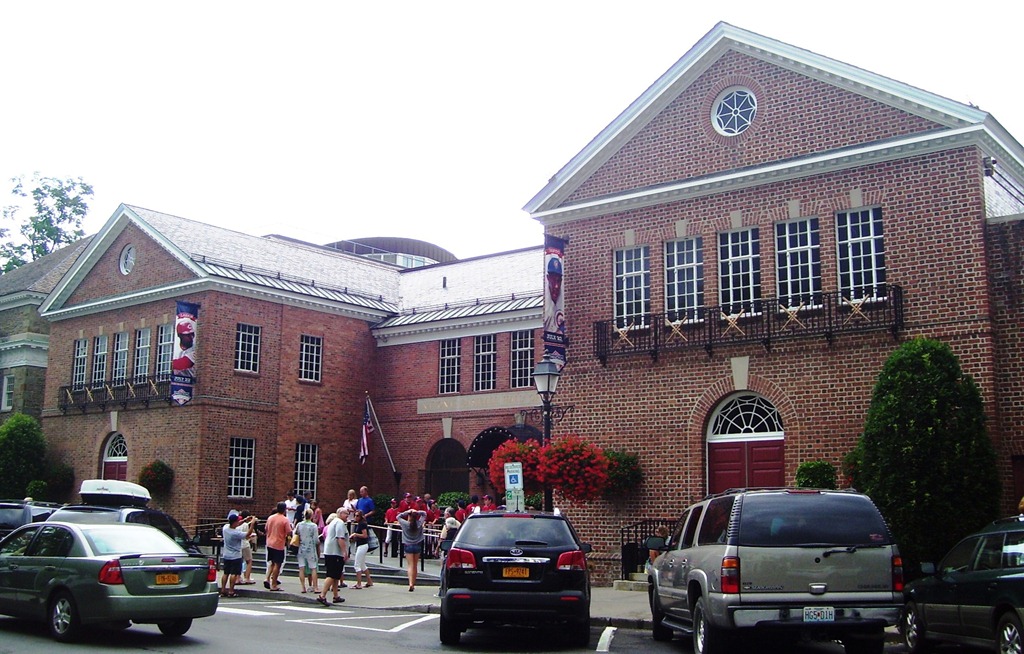
As a kid I thought all the players in the Baseball Hall of Fame, by definition, National_Baseball_Hall_of_Fame_and_Museumwere great players and great guys. It’s not so, but I was just a kid; now that I know better I still want it to be true; I want things to be simple. For the most part, anyone who’s followed baseball for years just knows who’s a Hall of Famer and who’s not, and can make an elevator argument for their guys. And that’s fun, when people who love baseball talk about the shared past from their different perspectives. For what it’s worth, here are the only guidelines handed to the voters as they consider the choices.

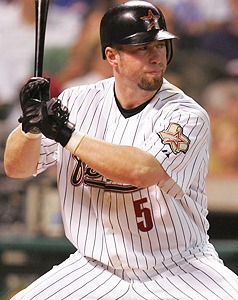
Most of us who grew up in a big league city grew up rooting for the hometown team, and I’ve been in Houston since I was nine. Today is the first time in all those years that players who spent most (or in this case, all) of their Major League careers with the Houston Astros have a real chance (or in this case, two chances) of getting in. So, yeah, it’s exciting to be waiting for the news: will Craig Biggio and Jeff Bagwell make it?

(I don’t know how those of you who didn’t grow up in a big league city picked your favorite team: was it the nearest big league team? The one that had a minor league team in or near your town? The team that had your favorite player? Your dad’s favorite player?)

My guess is, Bagwell won’t make it anmlb_g_bagwell_sy_576d Biggio will. Bagwell’s got the numbers, but I think the doubts about his alleged-but-unproven use of steroids are what’s keeping his vote short. Biggio has no steroid shadow over his career; he’s got more than 3000 hits; he was multiple times an All-Star at two different positions, and a multiple times Gold Glove and Silver Slugger winner; he’s in.

Let’s see if I’m right. (BTW, this is the first time ever that I’ve stopped whatever else I was doing to try to hear the HOF announcement live…always interested before, but never in quite this way.)


OK then, the headline is: NOBODY was elected to the HOF this year! First time that’s happened since 1996, only the eighth time since they started voting for the HOF in 1936.

The subhead: Barry Bonds and Roger Clemens and Sammy Sosa and the other strongly-suspected steroid users didn’t even come close—seven-time Cy Young Award winner Clemens had 37.6% of the vote, all-time home run king Bonds 36.2%.

The sub-subhead: it turns out my feelings weren’t far off the mark. Craig Biggio was the top vote-getter with 68.2%, just 39 votes short of the 75% needed to be elected. And Jeff Bagwell was third at 59.6%. (Jack Morris was second, just behind Biggio at 67.7%.)

My reaction: I’m fine with this.

First, there is no shame—none—for Biggio not to be elected in his first year bw-29-biggio-0627-4_3_r560of eligibility; something like 80% of the players in the Hall weren’t elected in their first year of eligibility. To be the top vote-getter in his first year, and so close to the threshold, means the voters think he’s worthy, and his ultimate election is all but assured. And Bagwell’s vote total improved again: he had 41.7% in his first year, 56% last year and 59.6% this year. He’s going to make it, too.

It would have been great to see either of them, or the two of them together, get this honor, and I’m now even more confident that one day they will. Other HOFers have ties to Houston—Joe Morgan and Nolan Ryan the most prominent—but none of them is wearing an Astros cap on his plaque; Bagwell and Biggio will be the first players from my team to get to the HOF, and I was in the stands to watch them play their entire major league careers, so it will mean something to me when they are recognized as being among the greatest players ever.

The second reason I’m fine with this is, the steroids cheaters were shut out.

Let me start by acknowledging my ambivalence on the subject of steroids. I can accept the scientific evidence that the use of steroids poses a danger to the user, and I’m conformist enough that I have no problem punishing players who broke the rules that prohibited the use of steroids, once those rules were finally put in place. It’s the concept that some performance-enhancing drugs are banned while others are allowed that gives me trouble. Why are antibiotics, protein supplements, vitamins and caffeine OK, but anabolic steroids and amphetamines prohibited? How do we draw the line that says an athlete’s efforts to become the best they can be are to be applauded but only up to this point, and no further?

Second, I think there’s a reasonable argument to be made that baseball writers—the journalists who cover baseball as a news story—shouldn’t be the ones with sole authority over which players get into the Hall of Fame: the people whose job it is to cover the news should not be involved in making the news. (I don’t know who, in the alternative, would select Hall of Famers, but that’s a different question.) In this case, we’re talking about the baseball writers who covered the game in the 1990s and 2000s, who saw the players get freakishly bigger and the old records fall, and decided not to write about the fact that the players breaking the records were taking illegal performance-enhancing drugs.

This Hall of Fame ballot wasn’t the first one to feature prominent players whose careers came during the era of steroid use, but in Bonds and Clemens it had two of the most accomplished players of all time who also happened to be suspected of cheating. Their worthiness to be enshrined in the HOF was judged by the writers who were once complicit with the players and their union and Major League Baseball and its teams in facilitating the use of steroids by players and the subsequent mutilation of the record books that it caused, and who now unapologetically pivot into the role of moral arbiter and protector of the faith to declare that no cheaters shall prosper in Cooperstown. Nice work if you can get it.

The hypocrisy of the writers notwithstanding, the circumstantial evidence of cheating against many of the players, including Bonds and Clemens, is overwhelming, and I’m satisfied at their being rejected this time around; remember, they’ve got 14 more chances, and attitudes are likely to change/soften over the years. Bob Costas suggested that a comparison of next year’s vote totals with today’s for Clemens, Bonds and Sosa will give a real indication of their ultimate chances for getting into the Hall. The vote totals for steroids users like Rafael Palmeiro and Mark McGwire started low and then slipped: Palmeiro (569 homers, 3020 hits) started at 11% in 2011 and was down to 8.8% this year, Mark McGwire (583 homers) got 23.5% in 2007 and this year just under 17%. (And just in case you’re interested, here’s the Mitchell Report on steroids in baseball, with dozens of references to Bonds and Clemens.)

Oh, and one more thing: pitchers and catchers report in just one month!