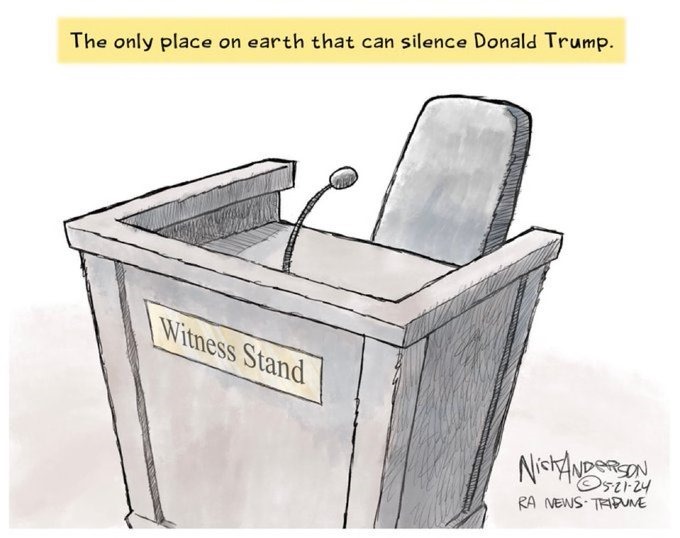
This is not your Founding Fathers’ America

When we feel our treatment by our rulers has become so intolerable, so unjust – so inhumane – that we must declare our independence among the peoples and nations of the world, it just makes sense that we should explain to the rest of the world why we are doing it.  Here goes.

–Pat’s paraphrase of the preamble to the Declaration of Independence

The Founding Fathers then laid out the Declaration of Independence of the 13 “united States of America” which included the self-evident truths of the “unalienable” rights that they believed are the birthright of all humans.  Point by point, they laid out their grievances against George III and insisted they had made every good faith effort to resolve differences peacefully.  They explained that they had appealed to the goodness and mercy of “our British brethren” to end the mistreatment from which they suffered, but found them unresponsive.  And in light of those facts, they declared to the world that they and their fellow Americans were going into business for themselves.  The war that had begun the previous year was concluded by treaty in 1783; by 1787 a new Constitution of the United States was approved on behalf of the people of the new nation “in Order to form a more perfect Union, establish Justice, insure domestic Tranquility, provide for the common defence, promote the general Welfare, and secure the Blessings of Liberty to ourselves and our Posterity…”.

That legal framework set out principles to guide our development and our lives, including the principle that no man is above the law.  That idea had a pretty run there, right up until last Monday when the Supreme Court of the United States decided that presidents and former presidents of this great country were effectively kings or queens.  And despots, if they choose to be.

Immunity from prosecution.  The Justice Department has a policy that no sitting president can be prosecuted while in office, but there was no law that said that, and nothing explicit in the Constitution says a former president is immune from prosecution for officials acts taken while in office.  The high-minded concept was that a president was a person given certain powers to exercise – temporarily – on behalf of his country and in its best interests, and who would then return to his life as a regular citizen.  Would President Gerald Ford have granted Richard Nixon a pardon after his resignation over Watergate crimes if anyone had thought that the former president was immune from prosecution?  No one before has ever had the temerity to claim he had immunity from prosecution…or quite frankly, the need for immunity…before you know who.

A man made famous as much for his over-use and abuse of the legal system as for his dubious business skills that necessitated all the suing and threats of suing had nothing to lose and everything to gain (and no shame) by making an unsupported legal claim that had the desired effect of delaying his trial on felony charges of trying to overturn the legitimate results of the 2020 election.  The trial court judge hearing this case rejected the claim of immunity, so did a unanimous panel of the U.S. Court of Appeals.  The Supreme Court…well, the Supremes (1) surprised many when they agreed to hear the case at all, causing a delay until (2) they heard oral arguments April 24 and then (3) “deliberated” the rest of April, all of May and all of June – more than nine weeks – before issuing the ruling.  Guess it takes a while to create a whole new right not found in the Constitution, especially when you had said yourself, under oath, that such a right did not exist:

Hmmm…same folks who said Roe v. Wade was settled precedent. Interesting…

The idea proposed by Trump lawyers in oral arguments was that immunity is needed to protect former presidents from being corruptly prosecuted by their successors; whether or not that is true, there was no such right in the Constitution until this court created it with this ruling.  When was the last time you saw a former president pursued in the legal system by a previous president?  (If you said Biden is doing it to Trump right now, that is the wrong answer; he’s not.)  You haven’t seen it before: not even the lawless Trump went after Barack Obama or his other predecessors!  The assertion that this is a real and dangerous prospect is based on nothing in law or custom or history; it is a projection from Trump’s narcissistic personality disorder wherein he knows what he wants to do to Joe Biden and to every other perceived enemy, and his fevered brain assumes that’s how everyone else operates, too.

Not only did the court create a right that wasn’t there (don’t you just hate those activist judges that Republicans have been warning us about?) but, as argued by Thomas Wolf of the Brennan Center for Justice, “The Court has created an elaborate system of ambiguous rules that will not only ratchet up the complexity of the case against Trump but also erode the checks on presidential illegality. It is both a roadblock to prosecution and an encouragement to more insurrection.”

The procedures the Court has crafted to go with [the new rule] are pitched in Trump’s favor. Whenever the case returns to Judge Tanya Chutkan’s trial court, Trump will be presumed immune by default; the burden will be on the prosecution to establish that he isn’t. The Court’s definition of “official acts” cuts extremely broadly, stretching to “the outer perimeter of [Trump’s] official responsibility.” (The Court refused to say exactly where that perimeter ends.) The prosecution must show that prosecuting Trump for those official acts “would pose no dangers of intrusion on the authority and functions” of the presidency (emphasis added). The prosecution won’t be able to claim an official act was “unofficial” because of the president’s motives for doing it. (emphasis added) And Trump can seek another round of appellate review if the trial court doesn’t rule him immune. Should the government clear these hurdles, it won’t be able to use the “testimony or private records of [Trump] or his advisors” about official acts to prove his guilt. (emphasis added)

The Court justifies all this new complexity as necessary to protect imaginary future presidents from imaginary future prosecutions. It does not, critically, justify it as a response to the acts of the real and credibly accused former president in the case before it. Just as members of the Court’s conservative supermajority consistently steered the conversation at oral argument away from Trump’s charges, they do not even try to grapple with the bigger implications of applying their new rule to the case in front of them or the consequences if their rule ultimately lets Trump skate. Instead, the Court bows out of the case with the tidy but myopic claim that it “cannot afford to fixate exclusively, or even primarily, on present exigencies,” lest “transient results” threaten “the future of our Republic.”

The Court doesn’t engage with the ramifications of its opinion, because it can’t — at least not without exposing the fundamental bankruptcy of the whole edifice it has just built. The majority’s ruling cannot possibly be the rule for any functioning democracy. Trump has been charged with attempting to overthrow the election that threw him out of office. Any rule that would grant a president immunity for that crime would remove the principal check on presidential abuses of authority in our democratic system: the vote. And it would encourage other losing candidates to try the same in future elections. (emphasis added)  It is in this sense that the Court’s opinion is truly lawless. It does not merely invent constitutional rules that are antithetical to our founding commitments or enduring values. It threatens to free presidents from the constraints of law and democracy. And it paves the way for future presidents to try to make good on the most antidemocratic of all propositions: might makes right.

In reaching to resolve future imagined cases of presidential criminality while downplaying the actual criminality before it, the Court has imperiled accountability for Trump’s wrongs. It has done severe violence to our law. And it has left our democracy exposed.

Look at what Trump did while president – I mean, just the things we know he did – when there was no presumption of immunity from later prosecution; just what the hell do you think he’ll do next time if given the chance?   What about his calls for televised military tribunals of Liz Cheney and other enemies?  Immunity!  What about all the assaults on our system being planned by his supporters behind Project 2025?  Immunity!

And what about this threat from the president of the Heritage Foundation that “We are in the process of the second American Revolution, which will remain bloodless if the left allows it to be.”?  Uh, do what we want and you won’t be hurt?  Really?

And this whole depressing development comes on the heels of a televised “debate” in which we saw one candidate for president lie his ass off for 90 minutes and the other look like an elderly deer caught in the headlights; Biden is now telling Democratic governors he’s fine but needs to stop working by 8 p.m.  I got the feeling this is going to get even weirder.

The center holds, for now

The more things change – a U.S. president convicted of a felony offense for the first time ever – the more they stay the same – Donald “Trump calls trial a ‘scam,’ vows to appeal historic verdict.” 

The verdict in New York yesterday was historic: not only for being the first time an American president or former president was found guilty of having committed a felony, but for the American system of justice demonstrating that any American citizen can be held to account before a jury of his or her peers.  In spite of that citizen’s rank in society, or his attempts to undermine the system itself by waging “an all-out war against the judicial system before the verdict came in, hoping to blunt the political damage and position him[self] as a martyr.”

But amid the relentless offensive by Trump and his allies on the legal infrastructure holding him accountable, the trial came with a substantial cost, according to those who study democracy, with the ultimate impact likely to be measured in November.

(snip)

“The judicial system has taken a body blow from Trump’s assaults,” said Kim Lane Scheppele, a professor of sociology at Princeton University who studies the rise and fall of constitutional government. Forcing him to sit through the trial, follow orders and listen to evidence against himself meant that “his rage at being controlled by others is going to be directed at trying to bring the whole judicial system down with him.”

(snip)

But there was something different about Trump’s repeated complaints about this first criminal jury trial that made them even more potent, experts say. Whenever a politician is brought up on charges, “every single time that leader will scream up and down that this is a politicized process and his political enemies are out to get him,” said Steven Levitsky, a professor of government at Harvard University. “What’s notable here,” said Levitsky, co-author of the book “Tyranny of the Minority: Why American Democracy Reached the Breaking Point,” “is that the entire Republican Party is marching in lockstep, along with right-wing media, claiming that the legal process has been weaponized, and therefore eroding public trust in a really vital institution.”

(snip)

“The problem is that not even the best institutions in the world can function well in the context of extreme polarization, particularly when one party has turned against democratic institutions. And so extreme polarization and extreme radicalization will undermine and destroy even the best of institutions. And that’s what we’re seeing in the United States.” But even if Trump damaged the judicial system’s reputation through his complaints about the trial, to not prosecute “when there’s a strong sense that wrongdoing happened,” Levitsky said, would be more damaging. “That would hold the judicial system and the political system hostage to say that to prosecute will bring more blowback than benefit. If you give in to that, you have no rule of law.”

Did this trial and all the sideshows related to it diminish the American judicial process?  We can each answer that for ourselves.  I think not, and I don’t think it has for the many many millions of Americans who don’t take every childish taunt out of Trump’s mouth as gospel truth.  He was obviously trying to pre-rouse his supporters to doubt and reject any verdict against him, in the same way he tries to get them to believe that any election he loses had to have been rigged; the unfortunate thing is that it appears to work for many many millions of other Americans.  He promised a “news conference” this morning, and it was filled with more of the same lies as came before.  And, he took no questions…which to my mind makes this a campaign speech rather than a news conference.  Trump is not famous for engaging in a vigorous exchange of viewpoints.

(What he is famous for, among some, is being a TV star, and this morning I discovered an article in the Washington Post with some terrific background about that show.  It cites a recent essay in Slate by one of the producers on that show – who has just been released from a non-disclosure agreement and is free to talk about what he witnessed – and Bill “Pruitt describes choices about scripts and editing and challenges as efforts to present a particular, inaccurate image: the show’s star, Donald Trump, as an omniscient business leader. Looking back across the decades since the first season of the show was filmed, Pruitt clearly regrets having helped foster that perception.”  It’s worth your time to read.)

Trump says he will appeal the verdicts and that is certainly his right, but don’t expect that to bring a conclusion to the legal fight any time soon.  Trump is famously litigious when it comes to civil matters that are at bottom just about money; potential appeals in this case – to the trial judge, two levels of state appeals courts and (yes, possibly) the Supreme Court of the United States could take years to conclude.  Not that it matters, though: Trump, the convicted felon, is still allowed by law to run for president and to serve if he is elected.  And the first reaction to the conviction from among MAGA Nation was to shower him with tens of millions of dollars in campaign contributions!

Does this conviction change the course of the presidential election?  No one knows yet, including the talking heads who are acting like they do know.  It seems plain that those who are brainwashed in the MAGA cult either don’t believe he did anything wrong or don’t care what he did, or think this whole thing is more evidence of the anti-Trump Deep State at work.  Those who were never going to vote for Trump before didn’t need this conviction to sway them.  For the rest, this might be what it finally takes for some Trump supporters to change their minds and some undecideds to choose a side.  It sure seems like it should matter, to everyone.  It wasn’t so long ago, I think, that it would have.

Fingers crossed, hoping for the best

A few thoughts while waiting for the New York jury to return a verdict in the business fraud/election interference trial of you know who:

I hate it every time a news report refers to Donald Trump’s “Hush Money Trial.”  Not only is it inaccurate and lazy, but it plays into his overheated claim that he’s being persecuted, that there was no crime committed.

  • It is NOT against the law to have sex with a porn actor.  Of the many things it may be (and you have your own list of the things that it is), “against the law” is not one of them.  I pray we don’t return to an age in this country where it is against the law for consenting adults to engage in some non-hurtful behaviors.
  • It is NOT against the law to pay hush money.  Blackmail is a crime, for the person committing it; it’s not illegal for you to pay money to keep someone from telling a secret about you.
  • It is NOT even a crime to use your private company’s funds to pay that hush money, provided your paper trail does not lie about the use of the money.  Your investors or directors probably won’t like it much and may take action against you, but it’s not business fraud.  (And if Trump is SOOO rich, as he claims, why didn’t he just write a check himself and not get the company money involved?  I know, hindsight is 20/20.)

BUT, if you doctor your company’s books to falsify the record about why the money was spent – like, saying it was “legal fees” when it was really reimbursing an employee for fronting you the hush money to conceal a private matter – that IS a crime.  It is business fraud in New York, and that is the crime the Manhattan district attorney is prosecuting.  It became a major felony when, in this case, the fraud was committed to advance another crime: improperly interfering with the 2016 presidential election by covering up information that could harm Trump’s chances.  (Man, isn’t it hard to get your head around the idea that it was Trump and Republicans who actually were committing the election fraud, not the liberals and the illegals?)

Lately I’ve been running across many clever, funny, and to-the-point posts that take the varnish off of efforts to obscure what Trump has done, and what he promises to do if elected.  On ABC’s This Week George Stephanopoulos had a terrific summary as the current trial began.

GOnN-WNXcAAD5my

Last week Jennifer Rubin had a good roundup of Trump’s pratfall-filled week leading up to the trial’s closing arguments, including his not-unexpected cop-out when it came to fulfilling his repeated promise to testify in his own defense (something that I know no defense lawyer wants a client with a total lack of self-control and a well-documented history of serial lying to do).

Finally, Trump predictably chickened out of testifying. He repeatedly boasted he would testify, but like so many other attempts to look tough, this one fizzled into the ether. The episode underscored his cowardice and fragility. At some level, he likely knew that if he had taken the stand, he would have wound up either perjuring himself, digging his own legal grave or both.

What explains these serial debacles? This is who Trump is. He cozies up to neo-Nazis and white nationalists, so naturally he attracts aides with the mind-set to borrow material from fascists. He has contempt for women and tries to please his white Christian nationalist base at every turn; unsurprisingly, he has no idea where to stop and how far is too far. And he bullies his lawyers, insisting on making dumb arguments and calling witnesses he thinks are swell but who implode under examination. (And because he surrounds himself with disreputable charlatans and yes-men, one can hardly be surprised when they reveal their true character.)

For all Trump’s braggadocio, it may be that he just isn’t all that bright, cannot think strategically beyond the moment and lacks any common sense. Without aides or family members empowered to stop him from colossal missteps, he racks up the blunders. And perhaps like a good many bullies, he really does fear taking a punch.

GONmYbbWgAAAmpP

GOR52y_X0AA1_J_

Trump’s family, which finally began to trickle in to the courthouse to act like they support him, joined in the family business – lying to our faces – when Eric Trump clearly and cleanly misstated the facts:

And beyond the current trial, the situation has become severe enough to get the historian and documentarian Ken Burns off the political sideline; he had this warning to America during a commencement speech at Brandeis University.

Just a couple more..I can’t resist:

No reservations on the crazy train

In the Unofficial Pat Ryan Register of All Things Known and Unknown, there is recent high concern that Donald Trump has dementia.  Or is just batshit crazy.  One or the other is used to explain some of demented and/or hallucinatory things he says at his rallies.  But such concerns aren’t new: in the 2016 campaign it even led to the development of an explanation of a candidate’s speech that you’d never expect to be considered positive: that one should take him seriously but not literally.

At a rally in Ohio earlierGJcwK0kaMAEBJeW this month, in a speech in which he referred to China and automaking, Trump said (amid a typical word salad) there would be a “bloodbath” if he doesn’t win this November; sounds pretty ominous, and the Biden campaign claimed he was threatening actual violence.  But maybe he meant to convey that one result of him losing would be the continuation of Biden policies that would be devastating for the American auto industry.  In February, he told the Black Conservative Federation Gala that Black Americans like him better lately due to the many criminal and civil court cases against him: “I think that’s why the Black people are so much on my side now because they see what’s happening to me happens to them. Does that make sense?”  (No, not really)

One way or another, the listener has to do a lot of work to try to figure out what the speaker really means.  It’s the speaker’s fault if he doesn’t make his message clear enough for the audience to understand it.  (I mean the audience of the general population; his MAGA followers seem to process the dog whistle messages just fine.)

Susan Glasser in The New Yorker: I Listened to Trump’s Rambling, Unhinged, Vituperative Georgia Rally—and So Should You

But there is at least one constant message in Trump speeches lately that doesn’t need much interpretation: his promise to free those convicted of crimes in the January 6 attack on the U.S. Capitol.  Jonathan Chait sets the eerie scene in a great piece in New York Magazine:

At a recent rally in Ohio, Donald Trump stood at formal attention while an announcer instructed the crowd, “Ladies and gentlemen, please rise for the horribly and unfairly treated January 6 hostages.” As Trump saluted, the speakers played a version of the national anthem sung by imprisoned insurrectionists. “They’ve been treated terribly and very unfairly, and you know that, and everybody knows that,” Trump said at the outset of his speech. “And we’re going to be working on that as soon as the first day we get into office. We’re going to save our country, and we’re going to work with the people to treat those unbelievable patriots.”

Over the last year, the insurrection has gradually assumed a more central place in Trump’s campaign. The J6 version of the national anthem has been playing at rallies since March 2023, and Trump has been referring to jailed insurrectionists as “hostages” since November. But the prospect of pardoning them, which he has floated for two years, has in recent days been made his highest priority. Trump’s promise to “save the country,” which before encompassed his array of domestic and international policies, now refers principally to vindicating the militia that tried to illegally install him in power and that more and more has come to resemble a classic paramilitary group in the Trump imaginarium, licensed to carry out extrajudicial violence on his authority alone.

Bad enough that Trump is promising he will ignore/overturn court cases that sent hundreds of domestic terrorists to jail; Chait finds a scarier reason for Trump’s using this new message, one that potentially drives away independents who might vote for him: his desire for a second term in the White House that is unrestrained by conventional politics or judgement.

But there is a perfectly cogent reason why Trump continues to press his most extreme demands, even at the cost of repulsing potential voters. He is no longer willing to accept the alliance of convenience with reluctant partners that held traditional Republicans like Mitch McConnell, Paul Ryan, and Reince Priebus by his side during his first term. Trump has long demanded fealty from his party, which has made it harder to discern the acceleration and intensification of his work in the days since he effectively clinched the Republican nomination on Super Tuesday. Trump’s primary focus is not outward but inward, tightening his control over the GOP to almost unimaginable levels of personal loyalty.

Trump’s elevation of the insurrection to a matter of holy writ within the party is a matter of both conviction and strategy, consistent with his intention to stifle even the quietest forms of dissent. This is why Trump deposed Ronna McDaniel as head of the Republican National Committee in favor of election deniers Michael Whatley and Lara Trump. McDaniel had dutifully jettisoned her maiden name (Romney). She had strongly suggested the 2020 election was stolen, saying the vote tabulations had “problems” that were “concerning” and not “fair,” without quite stating as fact that Trump absolutely won. All her genuflections were not enough.

This is also why Trump is reportedly bringing back Paul Manafort, who served a prison sentence for bank and tax fraud, and witness tampering and obstruction of justice, and whose business partner, Konstantin Kilimnik, was assessed by the FBI to have ties to Russian intelligence. Manafort’s skills are hardly irreplaceable. The point of bringing him back, other than the familiar mob logic of rewarding an underling who took his pinch like a man and refused to rat out the boss, is to signal that loyalty to Trump matters more than any other possible consideration. Normal politicians would distance themselves from staffers who committed crimes, especially crimes on their behalf. Trump regards this as the highest qualification.

(snip)

While Trump touts his first term as a historic success, he and his closest allies view it as largely a failure. Trump, in this view, was manipulated by staffers loyal to the traditional party into letting figures like Robert Mueller and Anthony Fauci undermine him. Mike Pence’s refusal to cooperate in Trump’s plot to steal the election was the ultimate betrayal. Trump’s project is to ensure that a second term faces no sabotage.

An effective Trumpist government has difficulty functioning under the rule of law. If Trump’s staffers and allies believe that carrying out his orders, some of them plainly illegal, will lead to prison or other punishment, they will again hesitate to follow them. That belief is one he has to stamp out, especially as he faces multiple criminal charges for his attempts to steal the election in 2020.

Chait’s conclusion is that Trump’s new focus is meant to shed his movement of all but the true believers; he doesn’t want to build a coalition of various interests and beliefs, he wants only those loyal to the boss, who will support and assist any grift the boss wants.

Among the true-believing Trumpists, there’s no confusion about what Trump’s relentless demands of cultlike submission are trying to accomplish. “The Judas Iscariots of the American Right need to understand that their betrayal comes at a cost,” rails a recent column in American Greatness, one of the new pseudointellectual organs that have sprung up in the Trump era to meet conservative audience demand for sycophantic content. “Excommunication is not enough. Their treachery deserves relentless psychic pain.” It adds that Mike Pence, the New York Times columnist David French, and others “should never be allowed back into respectable conservative company under any circumstances.”

Measured in traditional political terms, January 6 martyrdom may be a disadvantageous message for Trump. The stolen-election lie polls terribly with persuadable voters, and his fixation with it is one reason why Biden’s catastrophic approval ratings have resulted in only a small Trump lead. But by Trumpian logic, it is the perfect campaign theme. It forces his internal critics to swallow their last objection against him. It sends a message to his allies that they can act with impunity. By November, the J6 national anthem will be burned into our brains as deeply as any campaign jingle.

It doesn’t require high-levelGJiBgcnXcAAa-K4 interpretive skills to see the threat posed by a future President Trump in an administration without the likes of John Kelly or Mark Esper around.  They are among 40 of Trump’s 44 one-time Cabinet members who do not support him.  Think about that: of all the people Trump put in positions to lead the government – “the best people” – 10 out of every 11 of them now say no way do they want him in power again.  They haven’t all told us exactly what they saw on the inside of the Trump White House, but it’s enough for them to warn us not to repeat the mistake that was made in 2016.

GIZl3NnXYAAPZwv

I have hope. Is that misplaced?

Sometimes this blog receives comments which deserve space to breathe.  This one is from an old friend of mine: Pascal Piazza and I met on the first day of the 9th grade, at our alphabetically-assigned lockers in the hall of the 300 building of Houston’s George W. Strake Memorial Jesuit College Preparatory for Young Christian Gentlemen (which, of course, we were).  Since then he became a respected lawyer, and has been admitted to practice in all Texas courts including the state’s supreme court, the Supreme Court of the United States and the U.S. Circuit Court of Appeals for the Fifth Circuit, and enough federal district courts and bankruptcy courts in this part of the world to make your eyes bug out.  He’s been generally and repeatedly frustrated by some actions and inactions of the Supremes in recent cases (you’ll recognize which ones), and finally took it out on his keyboard.  PR

To the Honorable Justices of the Supreme Court of the United States:

As a citizen, a retired attorney of 40 years, and a native Texan, I adopt the personal privilege to comment, in a colloquial manner, on two potentially very divisive issues which, when resolved by the application of the plain text of the Joint Resolution Annexing the State of Texas and the 14th Amendment to the Constitution of the United States, respectively, need not be divisive and will restore the rule of law.  Both issues are easy to decide.  The parties may try to complicate them, but y’all can follow the easy, established, and time-honored path.

It’s About the Joint Resolution Annexing the State of Texas.

You will be asked by attorneys acting for the Governor of Texas to allow Texas to implement certain means (e.g., installing razor wire or deploying roving private militias) to try to prevent undocumented persons from crossing into Texas through its southern border of the Rio Grande, and further to prevent the U.S. from entering land along that border or to interfere with or remove the mitigating means, solely on the grounds of Texas’s perceived “right of public defense.”  Curiously, y’all will be asked to rule on this issue by the same Texas officials who’ve already suggested they don’t have to comply with any of your rulings that they do not like, because they elevate their perception of the sovereignty of Texas over all else.  There is, however, no need for the issue of Texas’s perceived right of public defense to escalate into accelerating tensions, to revive the nullification doctrine, or to precipitate something worse.  Instead, y’all sit at the forefront to show that Texas, like all states and persons, has the right to redress in the courts under the rule of law, and to remind the state that Texans are known for living up to their word of honor regardless of party affiliation or political persuasion.  Y’all have an easy task before you; only you can make it difficult.  Here’s a path to the easy way instead of the hard way.

The U.S. and Texas, by mutual consent, defined the right of public defense back in 1845, at the time the U.S. annexed Texas by means of a joint resolution of the U.S. Congress which was accepted by the Republic of Texas.  That right of public defense was an integral part of the unambiguous text of annexation.  Y’all need only follow that text without gloss.

Joint ResolutionThe text of the Joint Resolution Annexing Texas to the United States provides that Texas cedes to the U.S. “…all public edifices, fortifications, barracks, ports and harbors, navy and navy-yards, docks, magazines, arms, armaments, and all other property and means pertaining to the public defence belonging to said Republic of Texas.” [Emphasis added]  It does not say that Texas cedes “all other property and means pertaining to the public defence” only when Texas agrees with federal policy.  It does not state that Texas can craft its own public defense.  Texas was not given a veto power.  Texas was not given a right to repudiate or breach the plain terms, which vest all property and means pertaining to public defense to the U.S., whether listed or not.  Texas consented to these terms.

Let’s then give these words their plain meaning.  When it comes to providing for the public defense, the U.S. solely may determine whether to install razor wire or take it down, whether to use mobile militias or not, whether to enter the lands along the border or not, where or how to intercept persons crossing the border, whether to administer medical care or not, and whether to implement or pursue particular actions that Texas wants pursued.  You resolve this issue by giving effect to the plain text and thereby ensuring the fully intentional, consented-to, and coordinated sovereignty of Texas and the U.S.

There is no need to look beyond that plain text defining the public defense.  But the plain text of the remainder of the sentence defining the public defense affirms that the exclusive grant to the U.S. was intentional and was an essential part of the unique compromise that secured the required votes for passage of the Joint Resolution for Annexation after the prior Treaty for Annexation never could be ratified by the Senate.  Texas exclusively granted the U.S. the means and property rights for public defense in exchange for Texas keeping its public lands (and what would be multiple millions of dollars in oil and gas royalties) to pay off its debts.  Texas is the only state that was allowed to keep its public lands.  The U.S. gave up ownership of the public lands in Texas.  Those lands would yield multi-millions of dollars in revenue from the oil and gas found there.  Those lands could be sold off generating significant revenues, as was the practice in 19th century America.  President Polk won election over Henry Clay in 1844 based upon his vision of westward expansion into the valuable lands of Texas, which he felt had been squandered by Spain and then Mexico.  The U.S. received the right of public defense in exchange.  That is what is at issue now.

The then-new state of Texas understood the plain meaning.  I understand that the parties to an agreement cannot define meaning by how they perceive the meaning, but the first post-annexation Texas Constitution instructs y’all that Texas understood that the plain terms mean what the plain terms mean.  That constitution confirmed that the sovereignty of Texas over its soil was secure, except for what it ceded in the Joint Resolution for Annexation or otherwise in the U.S. Constitution.  It knew that the property and means of public defense, by consent, vested in the U.S.

Therefore, under the text of the Joint Resolution for Annexation, Texas occupies a unique position.  It should now – as all true Texans do – stand on its word, even if it is a handshake deal.  Of course, there is much more here than just a handshake.

Y’all will hear that Texas has some natural or inherent right of public defense.  Regardless of whether such a right does or does not exist, Texas ceded it to the U.S. when the state was annexed in 1845.

Y’all may then ask whether Article I, Section 10, clause 3 of the U.S. Constitution grants Texas some right of public defense in case it is ever invaded, whether the U.S. consents at the time or not.  Well, under Texas’s unique position, the text of the Joint Resolution for Annexation still is the starting point.  In addition, the text of Article I, Section 10, clause 3 does not mention public defense, does not mention any of the means that Texas wants to implement or adopt, does not provide that Texas can exclude the U.S. from areas occupied by Texas, does not provide that Texas can interfere with the conduct of the U.S., and does not permit Texas to breach the compromise (which a true Texan would never do).  Texas appears before y’all bound by its agreement and by the consent of Texas and the U.S. as to how the public defense plays out.  Today, Texas assumes that this is a situation where there is no consent by the U.S., yet Texas and the U.S. consented in 1845 for the U.S. to have exclusive power over public defense, whether there is an invasion or not.  Texas cannot repudiate that consent to try to go back on its word.

Some have even suggested that Texas would never have entered the Union had it known, or could have foreseen, that it did not preserve a right of public defense or could not use all land and other means for public defense.  Well, that’s what Texas did – in writing.  In Texas, we stand on our word.

It’s About the Eligibility Requirements in the U.S. Constitution

Let’s start by applying the text of the 14th Amendment as written.  Do not apply some theory of construction.  Do not apply fears of political reprisals.  Do not adopt a result and then read the words to yield your desired result.  It does not make a difference who may be ruled eligible or ineligible.  If the issue were the age of the candidate in question, you would consider only the text; y’all would not consider who the candidate is or whether your ruling would upset or even enrage the masses.

This led me to read opinions offered by distinguished retired federal judges covering the entire political spectrum based upon the text of the 14th Amendment.  How is it that these numerous distinguished federal district court judges have followed the text and find that the 14th Amendment does apply to determine eligibility?  The answer is that they followed the plain text.  Your questions to the parties during oral arguments last week indicate y’all may not agree with those opinions; I hope that your questions were meant to test the attorneys, and do not reflect your belief of what the plain text actually means.

Some advocates will claim that the president, whose position is defined in the U.S. Constitution, is not an “officer.”  However, the U.S. Constitution, at Article II, Section 1, states that the executive powers shall be vested in the president who holds his office over a four-year term.  The dictionary defines an officer as one who holds an office.  Therefore, the president is an officer as he holds the office of the president.  Yet, some of your questions indicated that you may have a problem accepting this syllogism.  Hopefully, you exercised your right during questioning during oral argument to test ideas rather than reveal your own conclusions.  The text of the 14th Amendment covers a person seeking to be “… a Senator or Representative in Congress, or an elector of President and Vice President, or hold any office, civil or military, under the United States.”  [Emphasis added]  The text, therefore, covers one who seeks to hold a federal office which, constitutionally, includes someone wanting to be the president.  This wording in the 14th Amendment does not amend the other Constitutional text that defines the president as the holder of an office (i.e., an officer).

Y’all selectively like to cite portions of the Federalist Papers or other outside writings of the Framers to try to change the otherwise unambiguous meaning of the text of the Constitution.  Please stick to the text when it is unambiguous, as in the case of the 14th Amendment, so that the inquiry ends there.  The other words of the Framers are interesting historically and allow us now to assess how brilliant they were, but those words do not comprise the text of the U.S. Constitution.  It is the text of the Constitution that matters, not what any Framer may have wanted to include in the text but failed to win approval for.  Y’all cannot import into the text of the Constitution any words which the Framers failed to include.

Public policy cannot be the tail that wags the jurisprudential dog.  If you want to make policy, then run for office.  Otherwise, honor your oath.  Your failure to honor your oath will cause more dissension and disruption to this country than following the text.  I was taught on the first day of my Constitutional Law class that y’all like to make public policy.  Just because y’all have done it before does not justify doing it anymore.

Some advocates have asked questions about states trying to impose requirements on the federal election.  Colorado and Maine are simply applying the eligibility requirements as they already exist in the U.S. Constitution.  They could do it, and have done it, regarding the minimum age to be the president.  I again hope you were just asking questions during oral argument and not revealing your conclusions when there was a perceived concern for the states trying to impose state requirements on a federal election.

A majority of the Justices currently claim that unstated rights and conditions may not be imported into the text.  So, where is the textual basis to claim that the 14th Amendment’s eligibility threshold requires Congressional action?  One opinion by one U.S. Supreme Court justice sitting as a circuit judge does not make a consensus or anything but one opinion.

The same majority of Justices also currently claim that the text of the U.S. Constitution, including the 14th Amendment, must be construed based upon the meaning of words in 1787 and 1868, respectively.  If so, the consensus of distinguished historians is that the 14th Amendment does apply as Colorado and Maine have held.  Y’all can’t ask to consult history but then reject the consensus of historians.  Y’all still should just stick to the unambiguous text.

Some advocates feign the downfall of judicial process through a fear of a multiplicity of state-based lawsuits if states seek to apply the text of the 14th Amendment.  So, does this mean that states should not seek to enforce the text of the U.S. Constitution when it applies to the duties of the states?  Could not the states seek to enforce the minimum age eligibility requirement?  When did filing suits seeking to apply the 14th Amendment become a bad thing?  Under this argument, should former Vice President Pence not have certified the last presidential election results because it led to 60 some-odd lawsuits?

Thank you.

–Pascal Paul Piazza