Furlough Journal: It’s starting to get serious

An update from my little corner of the partial government shutdown: it continues, but I’m just back.  This past week I’ve been on a vacation that was planned and approved well before the PGS began, but I haven’t missed a thing because late last week my employer, a company with a contract to provide certain services to NASA’s Johnson Space Center in Houston, told us it was fine for everyone to use accrued vacation time through October 11, and that if the shutdown continued we’d receive further instructions.  So while some of my colleagues who perform (apparently) essential tasks have been doing their regular work, and other folks have been getting paid for doing other tasks, albeit not from our government offices or using government equipment, I’ve been in a holiday frame of mind and oblivious to the impact of the inaction of our Congress to do its job.  Yesterday evening I checked back in and found those promised “further instructions.”  The tone has changed.

You see, on top of the 800,000 civil servants who were furloughed and aren’t being paid since the shutdown started October 1, part of the real fallout of non-essential elements of the government being shut down is that those government agencies don’t make their scheduled payments to their contractors, who as a result may not have funds available to keep paying their employees.

In our case, as a result of not receiving expected payments from the government our company advises us that as of now we cannot use our accrued vacation hours to keep getting paid; we can, however, take leave without pay.  (Oh goody.)  For those on our contract who are furloughed, the bosses advised them that they will stop accruing vacation as of the start of the new pay period next week and offered them instructions on how to apply for unemployment insurance payments.  Those of us who are (currently) not furloughed will continue to accrue vacation (that we can’t use yet) .  Health insurance benefits remain in effect for all.

But we’re not alone.  This morning Houston’s Leading Information Source offered this front-page localization of the government shutdown story: a prediction that the number of NASA contractors in Houston who are on furlough could triple by the end of next week if Congress doesn’t end the shutdown.  In this case at least—there may be other similar cases—the blame does not rest entirely on the members of Congress who failed to do the job we elected them to do; the bureaucratic mentality that runs our government is responsible for at least part of the pain:

Some of the pain could be eased if NASA paid contractors millions of dollars it owes them for completed work, Mitchell said. Just before payments were to be made to contractors, he said, Elizabeth Robinson, NASA chief financial officer, furloughed workers in the office where checks are written.

“There is no reason NASA can’t pay these small contractors the money due to them,” Mitchell said. “It’s in the bank, it’s due to them, and she’s not paying them because she considers people who pay bills for NASA non-essential.”

Some contractors are owed for as much as two months of work, he said.

Neither Robinson nor a NASA representative could be reached because of the shutdown.

Of course.

Furlough Journal: Here we go…out the door

I really didn’t need all this fuss to let me know that my job is “non-essential,” you know.

Since Congress couldn’t come to an agreement on a new government spending plan by the deadline last night, we have a partial government shutdown and that includes NASA and the Johnson Space Center in Houston, where I work as a contractor in television production for the public affairs office.  Since we’re talking about the federal government, that means there’s bureaucratic silliness involved—we had to come to work this morning in order to be told we had four hours to complete an orderly shutdown and go home.  Ah, just enough time for me to change my voice mail greeting and turn off the TV!

When this happened in 1995 the contractor company for which I worked found something for us all to do, and we didn’t miss a day’s pay.  This time around, I am told, we are not on furlough—only the civil servants are—and we can work, but we cannot work in the government offices or use government equipment; we are also allowed to use vacation hours to avoid missing a paycheck.  I have more than a month’s worth of vacation available, so I’m reasonably confident.  Of course, if reason were to be trusted we wouldn’t have a partial government shutdown now, would we?  This conveys the feeling of some of the people at work this morning:

Khangress

The rest of us are a little less stressed.  I’m headed for lunch and then for the golf course…I could use some time off.

The next time someone says space travel isn’t dangerous…

…suggest that they read this: Italian astronaut Luca Parmitano’s first person account of his most recent spacewalk, during which he nearly drowned inside his helmet.

…just as I’m thinking about how to uncoil the cable neatly (it is moving around like a thing possessed in the weightlessness), I ‘feel’ that something is wrong. The unexpected sensation of water at the back of my neck surprises me – and I’m in a place where I’d rather not be surprised. I move my head from side to side, confirming my first impression, and with superhuman effort I force myself to inform Houston of what I can feel, knowing that it could signal the end of this EVA.Luca-smiling-ESA

(snip)

At first, we’re both convinced that it must be drinking water from my flask that has leaked out through the straw, or else it’s sweat. But I think the liquid is too cold to be sweat, and more importantly, I can feel it increasing. I can’t see any liquid coming out of the drinking water valve either. When I inform Chris and Shane of this, we immediately receive the order to ‘terminate’ the sortie.

(snip)

As I move back along my route towards the airlock, I become more and more certain that the water is increasing. I feel it covering the sponge on my earphones and I wonder whether I’ll lose audio contact. The water has also almost completely covered the front of my visor, sticking to it and obscuring my vision. I realise that to get over one of the antennae on my route I will have to move my body into a vertical position, also in order for my safety cable to rewind normally. At that moment, as I turn ‘upside-down’, two things happen: the Sun sets, and my ability to see – already compromised by the water – completely vanishes, making my eyes useless; but worse than that, the water covers my nose…

(snip)

I try to contact Chris and Shane: I listen as they talk to each other, but their voices are very faint now: I can hardly hear them and they can’t hear me. I’m alone. I frantically think of a plan. It’s vital that I get inside as quickly as possible. I know that if I stay where I am, Chris will come and get me, but how much time do I have? It’s impossible to know.

(snip)

Space is a harsh, inhospitable frontier and we are explorers, not colonisers. The skills of our engineers and the technology surrounding us make things appear simple when they are not, and perhaps we forget this sometimes.

Better not to forget.

Recommended reading: an inside story of the loss of space shuttle Columbia

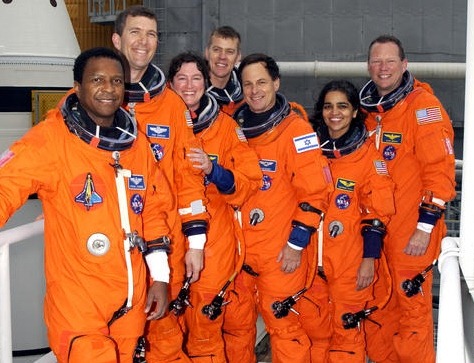
This week, January 16, is the 10th anniversary of the last launch of last launchspace shuttle Columbia. If you’re interested in knowing what happened at NASA leading up to that launch and what happened in Houston during the flight, read Wayne Hale’s Blog. Wayne is retired from NASA now after a 32-year career that saw him rise from flight controller to flight director to posts within the space shuttle program hierarchy and at NASA Headquarters, including Space Shuttle Program Manager after the loss of Columbia and her crew.

Start with his August 14, 2012 entry and read forward in time: he carefully and colorfully sets the stage, introduces the players and fills in shuttle program background; he doesn’t retreat into engineering jargon; he offers his recollections of the most difficult time in the professional lives of many of the people who make up America’s human spaceflight program and doesn’t spare himself from a close look. He writes of “The Tyranny of Requirements” and the warnings that were plainly there in the two previous flights (for any who could see them), of “Counting Down to Disaster” while “Working on the Wrong Problem.”

As someone who worked at Columbia crewNASA then and now, I’ve found his essays both moving and instructive; I don’t know where he’s going with the story exactly, but I’m eager to read each new installment. I can explain to you what happened to that vehicle as it rose to orbit 10 years ago, and what tore it apart and killed its crew as it came home 16 days later, but Wayne’s point of view on what led up to those events—what caused them, what was responsible—is unparalleled in its accessibility and honesty.

In 2002 I thought we were paying the right level of attention to the shuttle. I thought I was paying the right level of attention to the shuttle. I was a Flight Director. I was also a husband and a father and active in my community. I thought I could do it all.

I was wrong.

Later on, I will write about the MLK three day weekend that cost us a crew just because we took three days off. But how can you know in advance where the proper balance is between work and life when you work at extreme risk?


While I can’t cite specific studies, my observation of several major NASA projects that have gotten in trouble over the years shows a high correlation with new, added, late, or poorly defined requirements which caused technical issues, increased the costs, and delayed the schedule. Put simply, a good program manager has got to have the gumption to just say no to changes in requirements – even when they are really good ideas.


In the end, I am convinced that the “relentless budget reduction pressures” were a major cause of the Columbia accident that cost us a crew and an orbiter. Not the only cause, but a major cause.

So where do you draw that line, between prudent and acceptable expenses and extravagance? What do you do when you depend on a vehicle that just flat costs more to fly than you can afford?


The rest of the story is coming soon, but you can get caught up now: the story of space shuttle Columbia on  Wayne Hale’s Blog is worth the effort.

Neil Armstrong

Today his family held a private memorial service for Neil Armstrong, who died last week at the age of 82. I’ve read a lot of the tributes to the first man to walk on the moon that have been published in the past week, and have a little to add.

I never met Neil Armstrong, but I’ve always looked up to him. As a kid I paid a lot of attention to the space program, and when my dad was transferred to Houston in mid-1966 I started to feel like I was a part of it since I lived where the astronauts lived, but I really don’t remember Armstrong’s name sticking in my mind until it came time for Apollo 11. I was 12 years old that night in 1969: I was on the floor at home in front of our family’s first color television, straining to comprehend through the static-y images and voices just what was happening as the Eagle landed, and then as Armstrong and Buzz Aldrin stepped out onto the moon. Although that summer I was laser-focused on making the Little League all-star team (I didn’t), as I sat on the floor that night I really felt like I had done something great, had somehow helped make that moon landing possible.

When the ticker tape parades I saw on television were over, Armstrong faded from view; it turns out, that’s what he wanted. And that’s a big part of why I’ve respected him over the years. I realize now that Neil Armstrong probably wasn’t any braver than any of the other astronauts for making that flight—every other astronaut wanted the assignment, and many lobbied for it to have the chance for a prominent place in history. Although he’s been highly praised as being among the finest pilots at NASA, his colleagues weren’t slouches at the stick. But Armstrong wasn’t after glory or recognition: he wanted to fly, to do new things; he wanted to do his job, and he didn’t want to become the center of attention.

He personified the American ideal of the strong, silent type: the guy who was the best at what he did and loved doing it, who wanted to make a contribution to society, who didn’t want to brag about it later or feel like he was taking too much credit. Highly talented, well educated, capable and confident, with a sense of adventure and a sense of humor, and not an overinflated sense of himself. I have always been proud that it was that kind of man, that kind of American, who took the symbolic step into the future on behalf of the rest of us, from all the scientists and engineers who made it happen to all the 12-year-olds who felt like they were making that first step themselves.

So today—ironically, the day of an actual Blue Moon—on the day his family says farewell to him, I want to say thank you to Neil Armstrong for his part in opening up the future for our species, and for being the kind of man and leader in whom our country can take quiet pride. And I plan to follow his family’s honest and good-humored suggestion about how to honor him:

For those who may ask what they can do to honor Neil, we have a simple request. Honor his example of service, accomplishment and modesty, and the next time you walk outside on a clear night and see the moon smiling down at you, think of Neil Armstrong and give him a wink.