
Furlough Journal: Blaming the guilty

Welcome to the first full day of my unexpected fall vacation.

As a contractor for a federal agency I’m technically not on furlough right now during this partial government shutdown, like my civil service colleagues are, but we can’t use our government offices or any government equipment to do our work, and I’m just not feeling it about doing the work from home.  (Maybe tomorrow, while I wait for the guy to come to service the heater…I, too, have a spouse who has some ideas about the best use of my time!)

First of all, I got to sleep late, and that should never be underestimated as a means of improving your state of mind.  Then I got to read the papers (in print and online) rather than skimming through them.  Not surprisingly, at least in the mainstream press, there seems to be plenty of criticism for the extremist Republicans in Congress who are responsible for more than 800,000 government employees getting some unplanned, unpaid leave.  They constitute well less than one-half of the party that controls one half of one third of the government, and yet their temper tantrum over the Affordable Care Act—a fight they have lost in Congress, at the ballot box, and at the Supreme Court—has brought a good portion of the government to a halt.  On the other hand, it’s bought me extra time for golf, so…

Of particular interest this morning was The Washington Post, where the notoriously-conservative editorial board has finally gotten off the fence and stopped with the “there’s plenty of blame to go around” bull and identified the guilty party: “the Republican leaders of the House of Representatives are failing. They should fulfill their basic duties to the American people or make way for legislators who will.”

Republicans have shut much of the government in what they had to know was a doomed effort to derail the Affordable Care Act. That law, in case you’ve forgotten in the torrent of propaganda, is hardly revolutionary. It is an effort to extend health insurance to some of the 40 million or so people in this country who have none. It acts through the existing private-insurance market. Republicans tried to block its passage and failed; they hoped to have it declared unconstitutional and failed; and they did their best to toss Mr. Obama out of the White House after one term in order to strangle it in its cradle, and they failed again.

They’re entitled to keep trying, of course — though it would be nice if someday they remembered their promise to come up with an alternative proposal. But their methods now are beyond the pale.

After months of refusing to confer with the Senate on a budget proposal, they have demanded a conference committee to keep the government funded for six weeks. They are rejecting a budget extension that includes limits on federal spending — the so-called sequesterthat they insisted on [my emphasis; PR] and that Democrats oppose. In a particularly shabby piece of faux populism, their final proposal Monday night included a measure to deprive congressional aides, many of whom earn considerably less than the esteemed members, of the subsidy to purchase health insurance that employers routinely provide.

E.J. Dionne:

The issue here is not that Congress failed to reach a “compromise.” The Democrats already have compromised, lopping some $70 billion [this number has been updated from an earlier version] off their budget proposal, to the dismay of many liberals. That was meaningless to a tea party crowd that seems to care not a whit about the deficit, despite its fulsome talk. It will be satisfied only if Congress denies heath-care coverage to some 25 million Americans, which is what “repealing Obamacare” really means.

It needs to be said over and over as long as this stupid and artificial crisis brewed by the tea party continues: Financing the government in a normal way and avoiding a shutdown should not be seen as a “concession.” Making sure the government pays its debt is not a “concession.” It’s what we expect from a normal, well-functioning, constitutional system. It’s what we expect from responsible stewards of our great experiment. The extremists who have taken over the House do not believe in a normal, constitutional system. They believe only in power.

Even conservative Michael Gerson, who argues that the tea party elements refuse to accept reality:

We are no longer seeing a revolt against the Republican leadership, or even against the Republican “establishment”; this revolt is against anyone who accepts the constraints of political reality. Conservatives are excommunicated not for holding the wrong convictions but for rational calculations in service of those convictions.

(snip)

This is reinforced by the development of an alternative establishment — including talk-radio personalities, a few vocal congressional leaders and organizations such as FreedomWorks and Heritage Action — that creates a self-reinforcing impression of its power to reshape politics (while lacking much real connection to the views of the broader electorate).

(snip)

The problem for Republicans (as Democrats found in the 1970s and ’80s) is that factions are seldom deterred by defeat. Every loss is taken as proof of insufficient purity. Conservatives now face the ideological temptation: inviting an unpleasant political reality by refusing to inhabit political reality.

If he’s right, imagine what we’ll see just a few weeks from now when Congress comes up against another highly politicized decision: increase the nation’s debt limit or allow the possibility of government default on payments.  I don’t think I’ll be able to just take a vacation from that one.
The only “real” reality show is just too depressing to watch

Americans today “are turned off and tuned out of the sequestration mess in Washington. To a person, they are sick of the antics of those to whom they have entrusted enormous power.”  So begins David Gergen in his column today, and I can’t find anything in his argument with which to disagree.

The clowns we elected to represent us in Washington—and in many many cases, re-elected…shame on us—have failed to take care of one of the most fundamental things we send them to Washington to do: set a budget for the operation of our government.  Actually, as Gergen correctly notes, they have failed to do that one thing for four years running—so far.  Back in the summer of 2011 they set a trap to force themselves to act, promising across the board budget cuts at the end of 2012 at such a severe level that it was inconceivable they wouldn’t act to stop them from going into effect; when they still couldn’t beat that deadline they passed a law giving themselves two more months to wrap it up.  Well, here we are, two months later, but this time there doesn’t even seem to be the possibility that they can get together to give themselves more time.  The ineptitude is astounding!

It’s not unusual to have the legislative and executive branches of government  disagree about taxes or spending or any other policy issue; historically, someone on one side or the other finds a way to force a resolution.  But as Gergen points out, “we have a rare moment when both Congress and the president are retreating from their responsibilities. It’s hard to recall a time when we were so leaderless.”  The Republicans and the Democrats, the president and Congress, everyone is busy running from microphone to microphone insisting that there’s nothing they can do about it.  And the whole argument has become so tiresome that even in the face of budget cuts that threaten basic services, things we can all pretty much agree that government should be taking care of, a lot of Americans are just yawning and looking the other way.  How many times can the boy cry “wolf” before the villagers ignore the call?

Let’s hope we haven’t thrown in the towel yet, because this sequestration circle jerk isn’t the end of the line: whether these cuts go into effect this Friday or not, there’s a potential government shutdown only four weeks down the road if there’s no agreement on new spending authorization.  If we don’t dig up some leadership somewhere, what’s been going around for the last few years is going to come around again and again and again.  No winners here, America, not if we aren’t willing to find a compromise that keeps the whole thing from crashing down on our heads.

For me, there’s really only one choice

Four nights of debates, finally over; I slouched in my comfy recliner with a determination to listen to what was said rather than make clever refutations or point out logical missteps (I was mostly successful) because I wanted to hear their arguments from their own mouths, to see if they could persuade me.

An American president has so many responsibilities to fulfill that no person can be expected to have expertise in all the necessary areas, so I’m looking for a candidate who can convince me that he or she understands what’s going on and what’s at stake, who can manage the day to day responsibilities of government, who has a plan for responding to current needs and the agility to respond to new crises as they develop, and who is willing to listen to new ideas and to respect and work in concert with members of Congress for the good of the entire nation.

Any candidate put forth by today’s Republican Party starts at a disadvantage in my eyes. The party of Abraham Lincoln and Theodore Roosevelt and Dwight Eisenhower and Richard Nixon—the one that believed in a strong defense, in law and order, in limited government that still supports the weakest among us, in free market capitalism with common sense regulation to encourage broad growth that strengthens us all—that party has been eaten alive from the inside, leaving a shell that still wears a nametag reading “GOP,” but the ideas in its head and its heart today are foreign to that legacy.

To win the support of today’s Republican Party, candidates must bow to a combination of economic extremists who don’t believe in raising taxes to pay the bills but refuse to cut back the programs that are running the bills up, and evangelical extremists who are working to make America the Christian nation they claim it was always meant to be, despite the evidence of the First Amendment to the contrary; they must deny objective fact and scientific evidence when it doesn’t support their position, and cast aspersions on the sanity and motives of anyone who dares object; they must be encouraging of those who insist their “conservatism” is an indication of greater virtue as a person and a citizen, albeit ones who must bravely shoulder the burden of the so-called Americans who are just waiting for their entitlements to roll in.

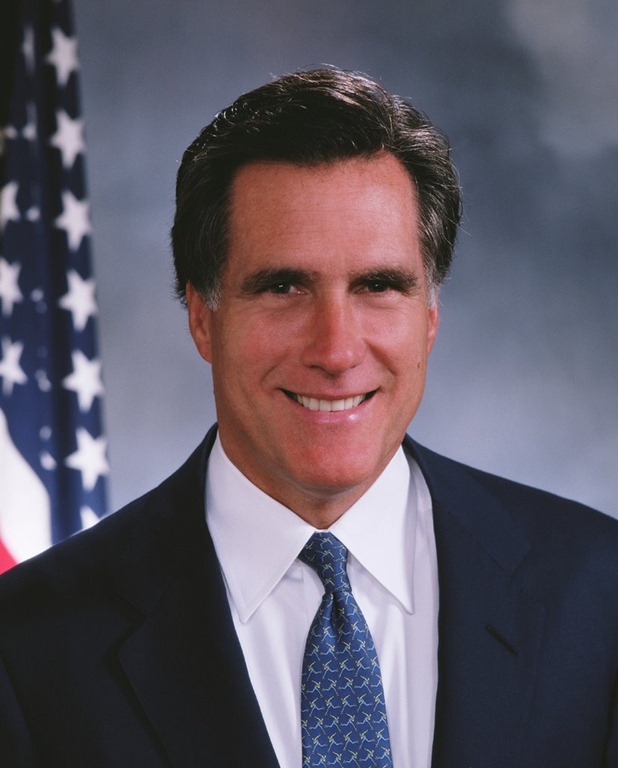
Mitt Romney wants to be president; that much is clear. He says he wants to save our Mitt-Romney-2756economy and create jobs, but he refuses to let me in on the details of how he plans to do that. And it’s not that I expect him to have a perfect plan he can turn on and walk away from; I know circumstances will change and he will have to adapt. But I need more than a knowing wink and a “just trust me on this,” particularly when the record shows Romney’s vibrant history of changing his positions on issues—and not changing just because he’s become wiser with age, but changing in order to win popular support…and later changing back again if need be. I don’t know what he really stands for, what he really wants to do, and I have no reason to trust that he has any other core interest at heart beyond his desire to win an election.

I believe Barack Obama wants to do what’s best for America, and that he has done good in his first term evenobama though some of that has led to an increase in the national debt—he had to try something to stem the economy’s slide into the worst recession of most of our lifetimes. I don’t buy the argument that he’s a failure because he didn’t do all the things he promised four years ago, because I know he’s had an immoveable object in his way. Since before he took office Republicans in the House and Senate have been in opposition: not just opposing ideas they don’t agree with but opposing ideas they do agree with, because they declared quite publicly, and with no little glee, that preventing Obama’s re-election was their top priority; they would go to any length at all to ensure that he had no achievements of which to boast…and then argue against his re-election because of his failure to work productively with Congress.

Think I’m overstating the case? Courtesy of The Daily Show, click the pic for a reminder of a small part of the catalogue of plagues that the Right has warned us were inevitable if Barack Obama was elected (none of which came true). And keep in mind: either these people really believed everything they were saying, or they thought we were just scared enough or stupid enough to believe anything they said…then imagine what might happen if these Republican obstructionists operating on behalf of their American Taliban brain trust were to have a president of their own party, one carefully crafted to avoid any pesky checks and balances…

image

Separating the symptoms from the syndrome

Had enough already of the economy, jobs, and Medicare as political issues?  Are you ready for some good, old-fashioned, divisive social issues, guaranteed to split Americans along religious lines?  That’s what evangelical Christians do, and with the election getting closer there should be no surprise that a new round is erupting.

The Republican National Convention is next week; this week the platform committee approved a plank regarding abortion that pretty much falls in line with the party’s position on that issue over the last few platforms: no abortion, no way, no how…and no exceptions for pregnancies that result from rape or incest.

“Faithful to the ‘self-evident’ truths enshrined in the Declaration of Independence, we assert the sanctity of human life and affirm that the unborn child has a fundamental individual right to life which cannot be infringed,” said the draft platform language approved Tuesday, which was first reported by CNN. “We support a human life amendment to the Constitution and endorse legislation to make clear that the Fourteenth Amendment’s protections apply to unborn children.”

I’ll give them this: that’s the only intellectually consistent anti-abortion position possible—if an unborn child has a fundamental right to life, there can be no exception that would permit that right to be “infringed.”  But that’s a hard line to take, and those exceptions have been included in many laws outlawing abortions because, to most people, it doesn’t seem fair for the government to force a woman to carry a pregnancy to term when she didn’t choose to become pregnant, or when the pregnancy itself threatens her life and health.  Unless you don’t believe that women deserve the same treatment under law as men, in which case, well, that’s tough luck for the little lady.

Is it just coincidence that this comes up as a Missouri congressman stuns us with the concept of “legitimate rape”?  Probably; more’s the pity.

Let me give Rep. Todd Akin, R-Mo., the benefit of the doubt.  When he answered a question about permitting abortion in the case of rape (KTVI-TV’s complete report is here), and said that he understood pregnancy as a result of rape was rare because “the female body has ways to try to shut that whole thing down,” I think he was trying to say that he believes that most of the pregnant women who claim they were raped are lying about having been raped, not trying to suggest that there is such a thing as “legitimate rape” as opposed to “illegitimate rape.”

In other words, he was demonstrating his ignorance.  That’s what’s driving a large part of the reaction, but what’s driving the rest—the portion from within the Republican Party—is that Akin looked stupid on a national stage, thereby threatening the GOP’s takeover of the U.S. Senate in this election, and opened up a crack in the extremist positions of the Republican Party for all the rest of us to take a peek.

We should not be fooled that Akin’s statement, merely because it is so offensive and quickly retracted or clarified, is a mere slip. It actually represents the worldview of Akin and many like-minded Republican colleagues. His comments are part and parcel of a view of civil rights, women’s rights, and science that should be antithetical to a modern society. It reflects a worldview that has held up progress on too many serious issues, a form of know-nothingism for the modern era, a rejection of the very notion of learning.

There’s little doubt that the “conservative” forces that have taken control of the GOP have a wide-ranging agenda driven by their adherence to the belief that America is a Christian nation that needs to be evangelized, to be “taken back” from the forces advocating the constitutional principles of a secular, inclusive, civil society.  What was once the party of Lincoln, of Roosevelt, even of Reagan, has moved so far to the extreme that it’s left a lot of its old membership behind.  (Let’s make posting examples of that a new parlor game, shall we—who wants to go next?)

Republicans…conservatives…evangelical extremists…organizing themselves to support and promote their beliefs, is absolutely their right, without question; speaking out against that myopic vision of our country is a right, too.  A right LZ Granderson exercised today…

Some social conservatives talk of protecting religious freedom, but what they are really seeking is a theocracy that places limits on freedom based on a version of Judeo-Christianity that fits their liking.That language is also being considered for the GOP’s national platform.

And John Avlon, also

So the real scandal is not just the sincere stupidity of Akin’s statement — it is the policy that undergirds it, enshrined in the Republican National Platform. The problem is bigger than politics, and that’s why it is worth discussing in this election, even when Akin is off the front pages.

…just to name two; I’ll be looking for the slightest excuse to post more.

Today Akin apologized for his comment and confessed he does understand that, yes, rape can cause pregnancy.  He also defied his party (from a safe perch behind Mike Huckabee’s microphone) and said he will not resign from the Senate race against Missouri’s Democratic incumbent senator; the applause and the apoplexy resume.  But Akin is not the issue…he’s only a symptom, and one to which an attentive citizenry needs to pay attention.

In the spring a young man’s fancy also turns to baseball and cars; politics is getting in the way

Yep, another great day: sunny skies and highs in the low 80s in southeast Texas, got a ticket for my first game of the new baseball season tonight, made some good progress with a new swing thought out on the driving range yesterday, and I’m about a week away from trading in a serviceable but boxy and uninspiring VW for a very low mileage Honda two-seater—just the kind I’ve always loved and used to drive—while lowering my costs in the process!  With Rick Santorum’s exit from the GOP presidential primary, I’m hoping we can all enjoy a period of relative campaign quiet, too, but here’s something to roll around in your head before Mitt Romney and Barack Obama, and the permanent political class, use up all the oxygen.

It has looked like, from the vantage point of today, that come November we voters would face a choice between the radicalism that defines today’s Republican Party or another four years of divided government and damn little constructive effort on crucial economic issues.  Even the most moderate-seeming Republican candidate, Romney, was disavowing anything in own past that smelled of reasonableness and compromise, to appeal to the extremists who make up most of the GOP primary voters.  But the need for that should be over now, absent a mind-boggling resurgence from Newt Gingrich or Ron Paul or a last gasp charge to the convention from Sarah Palin or someone of that ilk to rally the “true conservatives.”

But even as Romney starts to redefine himself to appeal to the less ideological among us, Republicans will have a quite a slog in front of them if they wish to broaden their appeal beyond those who’ve already drunk the Kool-Aid.  Former White House speechwriter and senior policy adviser Michael Gerson says it’s not just a matter of trying to counter the Democrats’ “war on women” meme: “The GOP’s main problem is not the contraceptive issue; it is the perception that it has become too ideological on many issues.”

Women and independent voters have seen a party enthusiastically confirming its most damaging stereotypes. The composite Republican candidate—reflecting the party’s ideological mean—has been harsh on immigration, confrontational on social issues, simplistic in condemning government and silent on the struggles of the poor. How many women would find this profile appealing on eHarmony?

This is the hidden curse of the Republican congressional triumph of 2010. Republican activists came to believe that purity is all that is necessary for victory. But a presidential candidate, it turns out, requires a broader ideological attraction than your average tea party House freshman.

From an academic standpoint it will be interesting to see if and how Romney and the more traditional Republican elements work to sand the scary edges off of their primary campaign messages, to widen their appeal and entice the plurality of American voters who don’t ritualistically identify with the Republican or Democratic parties; those are the people who will decide this election.  (The Obama campaign isn’t going to make it easy, already working to reinforce Romney’s “severe” conservatism and other primary campaign highlights.)  Gerson argues that “Mainly, women and independents want some reassurance that Republicans give a damn about someone other than Republican primary voters. It is not a high bar. But Romney needs to start somewhere…”.  I’ll check back in after Memorial Day to see how he’s doing.