A little something from me for the holiday

It’s as predictable as the local TV Breaking News!  alert about an apartment fire that was put out hours ago: reporters are about to tell us that Labor Day is the traditional start of the presidential campaign season.  Oh yeah?  And all that “presidential campaigning” and adjacent nonsense I’ve been so unsuccessful in avoiding for the last 20 months, what was that – a fever dream?  I wish this was just the start, but mostly I wish it was the end.

The Founding Fathers were pretty smart guys, and I don’t think they set presidential elections four years apart so we could spend half or more of the time in between laser-focused on the next election.  There is nothing I can think of that is more non-productive, unless you are one of those people who make their living from the political-industrial complex.  We can’t (probably shouldn’t) make it against the law to campaign non-stop if you wish to, but we don’t have to encourage it the way we do.  And by “we,” I mean American journalism.

I understand why the national media has to cover the campaign every day: in case something newsworthy happens.  Something actually “new,” or something tragic, or yes, even something weird.  But when Kamala Harris again expresses her joy as she seems to do most days, or Donald Trump again tells the same lies he tells every day, I can do without you – every day – trying to make it seem like that’s the most important thing that happened.  You have to have someone there every day, just in case, but you don’t have to tell me about it every day even when the story doesn’t change.

This is especially applicable to all-news television (and radio), broadcast and cable, which has tons and tons of space to fill and only just so much news every day with which to fill it.  (This I know from experience, having been an editor and newscaster at Houston’s top-rated news/talk radio station when it changed to all-news: it didn’t take even an hour before we were repeating ourselves, and then repeating the repeats.  Within a few years, the talk shows were back.)  Opening up a live camera at some event and then just letting it run is an efficient way to fill time (or is it kill time?), but a lazy way to do it and an ineffective way to inform people about what’s really going on.  (See: CNN at every Trump rally in 2015 and 2016.)

And please, when you do a story on the campaign, make an effort to try to put things in perspective, and stop being so damn petrified by the threat that “someone” will say you’re biased; just answer the accusation plainly and directly.  For instance:

“No, we are not biased against the former president and his campaign.  We are reporting facts and providing context for our readers, listeners and viewers so they can clearly understand what happened Monday at Arlington National Cemetery, including (1) the irony of the man who called American soldiers and sailors who gave their lives for their country “suckers” and “losers” because “there was nothing in it for them” now using the nation’s largest veterans cemetery as a prop for a campaign ad, in violation of service regulations/federal law (not to mention good taste and good manners), and (2) the chutzpah of the whole Trump campaign, which (a) ignored the law against political use of the grounds, (b) when confronted with the violation, slandered the person who had the temerity to do her job by saying that “an unnamed individual, clearly suffering from a mental health episode, decided to physically block members of President Trump’s team during a very solemn ceremony,” [emphasis added] and (c) then posted the video anyway.”  [I’m not linking to the TikTok video, but it’s easy to find.]  “We understand that in some cases, a presentation of the facts and the context can seem biased against the subject of a story; our stories are not meant to be puff pieces on behalf of anyone.”

And when it comes to reporting on TFG, allow me to pass along these suggestions from a New York Times review of campaign rhetoric during just one week earlier this year.  I think we all know by now that Trump lies.  A lot.  More than 30,000 times just during his presidency, the Washington Post calculated, about 21 times per day on average.  And that doesn’t include his golf scores.  The Times analysis of the deluge of deceit, the overflow of fibbery, the mountain of misrepresentation, found that “Though his penchant for bending the truth, sometimes to the breaking point, has been well documented, a close study of how he does so reveals a kind of technique to his dishonesty: a set of recurring rhetorical moves with which Mr. Trump fuels his popularity among his supporters.”  “His words focused heavily on attacking his political rivals, self-aggrandizing and stoking fear to make his case for 2024. In doing so, Mr. Trump often relied on repeated falsehoods and half-truths. He has yet to deviate from this approach in the general election.”  Check it out.


I also recommend checking out Eugene Robinson’s column in the Washington Post for getting into the details about the “dishonorable” actions of the former president at Arlington this week:

Just because we are accustomed to this kind of behavior from Trump does not mean we should accept it. Just because he has no sense of honor or appreciation of sacrifice does not mean we have to pretend honor and sacrifice no longer exist. Just because “Trump is an awful person” is an old story does not mean we should yawn at this latest demonstration and quickly move on.

(snip)

“Federal law prohibits political campaign or election-related activities within Army National Military Cemeteries, to include photographers, content creators or any other persons attending for purposes, or in direct support of a partisan political candidate’s campaign,” Arlington Cemetery officials said this week in a statement. This was made clear to Trump’s team as the visit was being planned, officials said — including the strict enforcement of the rule at Section 60, where grief and loss are still raw.

“What was abundantly clear-cut was: Section 60, no photos and no video,” a defense official told The Post.

(snip)

No one can dismiss the incident as a misunderstanding by Trump and his aides, since their official position is that Trump is infallible. The campaign’s response, as usual, was a lie — a false and gratuitously cruel statement from spokesman Steven Cheung…

(snip)

Arlington National Cemetery is a place of honor. Donald Trump thinks honor is for suckers and losers — and values sacrifice only if it might help him win an election. Do not become numb to his nature.

No reservations on the crazy train

In the Unofficial Pat Ryan Register of All Things Known and Unknown, there is recent high concern that Donald Trump has dementia.  Or is just batshit crazy.  One or the other is used to explain some of demented and/or hallucinatory things he says at his rallies.  But such concerns aren’t new: in the 2016 campaign it even led to the development of an explanation of a candidate’s speech that you’d never expect to be considered positive: that one should take him seriously but not literally.

At a rally in Ohio earlierGJcwK0kaMAEBJeW this month, in a speech in which he referred to China and automaking, Trump said (amid a typical word salad) there would be a “bloodbath” if he doesn’t win this November; sounds pretty ominous, and the Biden campaign claimed he was threatening actual violence.  But maybe he meant to convey that one result of him losing would be the continuation of Biden policies that would be devastating for the American auto industry.  In February, he told the Black Conservative Federation Gala that Black Americans like him better lately due to the many criminal and civil court cases against him: “I think that’s why the Black people are so much on my side now because they see what’s happening to me happens to them. Does that make sense?”  (No, not really)

One way or another, the listener has to do a lot of work to try to figure out what the speaker really means.  It’s the speaker’s fault if he doesn’t make his message clear enough for the audience to understand it.  (I mean the audience of the general population; his MAGA followers seem to process the dog whistle messages just fine.)

Susan Glasser in The New Yorker: I Listened to Trump’s Rambling, Unhinged, Vituperative Georgia Rally—and So Should You

But there is at least one constant message in Trump speeches lately that doesn’t need much interpretation: his promise to free those convicted of crimes in the January 6 attack on the U.S. Capitol.  Jonathan Chait sets the eerie scene in a great piece in New York Magazine:

At a recent rally in Ohio, Donald Trump stood at formal attention while an announcer instructed the crowd, “Ladies and gentlemen, please rise for the horribly and unfairly treated January 6 hostages.” As Trump saluted, the speakers played a version of the national anthem sung by imprisoned insurrectionists. “They’ve been treated terribly and very unfairly, and you know that, and everybody knows that,” Trump said at the outset of his speech. “And we’re going to be working on that as soon as the first day we get into office. We’re going to save our country, and we’re going to work with the people to treat those unbelievable patriots.”

Over the last year, the insurrection has gradually assumed a more central place in Trump’s campaign. The J6 version of the national anthem has been playing at rallies since March 2023, and Trump has been referring to jailed insurrectionists as “hostages” since November. But the prospect of pardoning them, which he has floated for two years, has in recent days been made his highest priority. Trump’s promise to “save the country,” which before encompassed his array of domestic and international policies, now refers principally to vindicating the militia that tried to illegally install him in power and that more and more has come to resemble a classic paramilitary group in the Trump imaginarium, licensed to carry out extrajudicial violence on his authority alone.

Bad enough that Trump is promising he will ignore/overturn court cases that sent hundreds of domestic terrorists to jail; Chait finds a scarier reason for Trump’s using this new message, one that potentially drives away independents who might vote for him: his desire for a second term in the White House that is unrestrained by conventional politics or judgement.

But there is a perfectly cogent reason why Trump continues to press his most extreme demands, even at the cost of repulsing potential voters. He is no longer willing to accept the alliance of convenience with reluctant partners that held traditional Republicans like Mitch McConnell, Paul Ryan, and Reince Priebus by his side during his first term. Trump has long demanded fealty from his party, which has made it harder to discern the acceleration and intensification of his work in the days since he effectively clinched the Republican nomination on Super Tuesday. Trump’s primary focus is not outward but inward, tightening his control over the GOP to almost unimaginable levels of personal loyalty.

Trump’s elevation of the insurrection to a matter of holy writ within the party is a matter of both conviction and strategy, consistent with his intention to stifle even the quietest forms of dissent. This is why Trump deposed Ronna McDaniel as head of the Republican National Committee in favor of election deniers Michael Whatley and Lara Trump. McDaniel had dutifully jettisoned her maiden name (Romney). She had strongly suggested the 2020 election was stolen, saying the vote tabulations had “problems” that were “concerning” and not “fair,” without quite stating as fact that Trump absolutely won. All her genuflections were not enough.

This is also why Trump is reportedly bringing back Paul Manafort, who served a prison sentence for bank and tax fraud, and witness tampering and obstruction of justice, and whose business partner, Konstantin Kilimnik, was assessed by the FBI to have ties to Russian intelligence. Manafort’s skills are hardly irreplaceable. The point of bringing him back, other than the familiar mob logic of rewarding an underling who took his pinch like a man and refused to rat out the boss, is to signal that loyalty to Trump matters more than any other possible consideration. Normal politicians would distance themselves from staffers who committed crimes, especially crimes on their behalf. Trump regards this as the highest qualification.

(snip)

While Trump touts his first term as a historic success, he and his closest allies view it as largely a failure. Trump, in this view, was manipulated by staffers loyal to the traditional party into letting figures like Robert Mueller and Anthony Fauci undermine him. Mike Pence’s refusal to cooperate in Trump’s plot to steal the election was the ultimate betrayal. Trump’s project is to ensure that a second term faces no sabotage.

An effective Trumpist government has difficulty functioning under the rule of law. If Trump’s staffers and allies believe that carrying out his orders, some of them plainly illegal, will lead to prison or other punishment, they will again hesitate to follow them. That belief is one he has to stamp out, especially as he faces multiple criminal charges for his attempts to steal the election in 2020.

Chait’s conclusion is that Trump’s new focus is meant to shed his movement of all but the true believers; he doesn’t want to build a coalition of various interests and beliefs, he wants only those loyal to the boss, who will support and assist any grift the boss wants.

Among the true-believing Trumpists, there’s no confusion about what Trump’s relentless demands of cultlike submission are trying to accomplish. “The Judas Iscariots of the American Right need to understand that their betrayal comes at a cost,” rails a recent column in American Greatness, one of the new pseudointellectual organs that have sprung up in the Trump era to meet conservative audience demand for sycophantic content. “Excommunication is not enough. Their treachery deserves relentless psychic pain.” It adds that Mike Pence, the New York Times columnist David French, and others “should never be allowed back into respectable conservative company under any circumstances.”

Measured in traditional political terms, January 6 martyrdom may be a disadvantageous message for Trump. The stolen-election lie polls terribly with persuadable voters, and his fixation with it is one reason why Biden’s catastrophic approval ratings have resulted in only a small Trump lead. But by Trumpian logic, it is the perfect campaign theme. It forces his internal critics to swallow their last objection against him. It sends a message to his allies that they can act with impunity. By November, the J6 national anthem will be burned into our brains as deeply as any campaign jingle.

It doesn’t require high-levelGJiBgcnXcAAa-K4 interpretive skills to see the threat posed by a future President Trump in an administration without the likes of John Kelly or Mark Esper around.  They are among 40 of Trump’s 44 one-time Cabinet members who do not support him.  Think about that: of all the people Trump put in positions to lead the government – “the best people” – 10 out of every 11 of them now say no way do they want him in power again.  They haven’t all told us exactly what they saw on the inside of the Trump White House, but it’s enough for them to warn us not to repeat the mistake that was made in 2016.

GIZl3NnXYAAPZwv

Same song, next verse

When I was a college student in the capital city of Texas, the mayor once held his regular weekly news conference and was asked to comment on the fact that the state legislature was about to begin another biennial session under the big pink dome.  His immediate reaction was to say “Lock up the kids and dogs.”

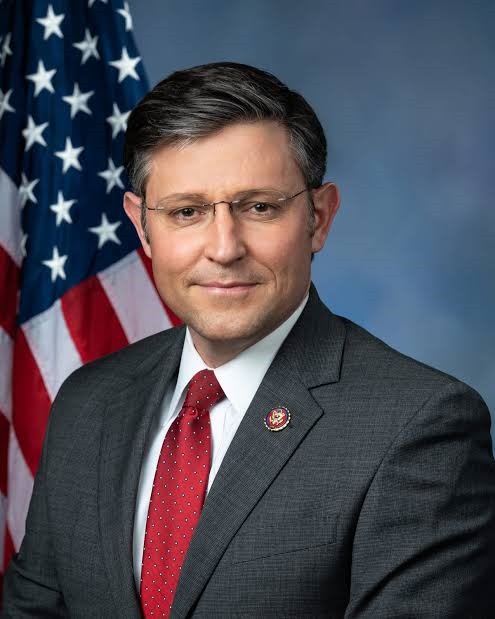
America, your legislature is back in business: the House of Representatives has selected Mike Johnson of Louisiana as its new speaker.  Who is that, you ask, and what does he believe in?  Among other things, he

So, we got that going for us…which is not nice.  Ruth Marcus writes in the Washington Post that any sense of relief you might be feeling that a well-known extremist like Jim Jordan was not elected by Republicans in Congress is misplaced.

For Jordan’s shirt sleeves demeanor and wrestler’s pugnacity, substitute a bespectacled, low-key presentation, a law degree and an unswerving commitment to conservative dogma and former president Donald Trump.

This is not an upgrade. It is Jordan in a more palatable package — evidently smoother, seemingly smarter and, therefore, potentially more effective.

Johnson, now serving his fourth term in Congress, was the moving force behind aSpeaker Johnson Supreme Court brief that helped lay the shoddy intellectual groundwork for Jan. 6, 2021. In December 2020, he rallied fellow Republican lawmakers to support Texas’s brazen bid to overturn the election results. In a lawsuit that fizzled almost as soon as it was filed, Texas Attorney General Ken Paxton sought to have the Supreme Court intervene in the election by blocking the certification of electoral college votes in four swing states — Pennsylvania, Georgia, Michigan and Wisconsin — where voting rules had been changed in the course of the election and voters, not coincidentally, had favored Joe Biden. The justices swiftly rejected the case, tartly noting that, “Texas has not demonstrated a judicially cognizable interest in the manner in which another State conducts its elections.”

(snip)

The Johnson brief was a full-throated endorsement of the “independent state legislature” theory, ultimately rejected by the Supreme Court in 2023’s Moore v. Harper. The brief asserted that under the terms of the Constitution, only state legislatures — without any review by state courts or involvement of other state parties — have power to set rules for choosing presidential electors. “The clear authority of those state legislatures to determine the rules for appointing electors was usurped at various times by governors, secretaries of state, election officials, state courts, federal courts, and private parties,” the brief argued.

(snip)

The Texas episode was of a piece with Johnson’s conservative worldview. Before being elected to Congress, he was a senior lawyer and national spokesman for the Alliance Defending Freedom, a conservative group that opposes abortion, same-sex marriage and LGBTQ+ rights.

Running for Congress in 2016, he described himself as “a Christian, a husband, a father, a lifelong conservative, constitutional law attorney and a small business owner in that order, and I think that order is important.” Johnson said he had been “called to legal ministry and I’ve been out on the front lines of the ‘culture war’ defending religious freedom, the sanctity of human life, and biblical values, including the defense of traditional marriage, and other ideals like these when they’ve been under assault.”

We shall see how well Johnson does in leading the House, or at least its too-small-for-comfort Republican majority, in handling upcoming issues like a possible government shutdown in three weeks, or requests for more aid to Israel and Ukraine, or any of the other normal kinds of business which members of Congress are supposed to take care of on our behalf.  But given his still-declared support of Trump, it’s unlikely Johnson will be much of a leader when it comes to the reality of the need to work with Democrats to get things done: as David Frum wrote in The Atlantic earlier this month, “The rules of contemporary Republican politics make it had to accept reality.  Reality is just too awkward.”

In reality, Trump has been a big vote loser for Republicans. He fluked into the presidency with a Dukakis-like share of the vote in 2016, then lost his party its majority in the House in 2018. Trump got decisively booted from the presidency in 2020; rampaged illegally on January 6, 2021; and then cost his party its Senate majority in the January 2021 runoff elections. His election-denier message damaged his party further in the elections of 2022. His demand for a Biden investigation and impeachment in 2023 is producing an embarrassing fiasco. But no Republican leader dares say these things out loud.

Most taboo of all is working with Democrats, on any terms other than total, one-sided domination: We win, you lose. So [then-Speaker Kevin] McCarthy just had to press ahead, acting as if he commanded a majority when he did not; insulting and demeaning the minority, even though he had to know that he might need their help at any minute.

That minute came. McCarthy sought Democratic votes to save him from his own refractory members, and in return he offered nothing. Not even politeness.

That proposition did not produce the desired results, and so here we are.

Where we are is a country with a solid anti-Trump majority confronting a pro-Trump minority that believes it has a right to rule without concession or compromise.

The only way to produce a stable majority in the House is for the next Republican leader to reach a working agreement with the Democrats to bypass the nihilists in the GOP caucus. But that agreement will have to be unspoken and even denied—because making agreements that show any respect for the other side will be seen by Republican partisans as betrayal. The price of GOP leadership is delivering delusions and fantasies: the delusion and fantasy that Trump won in 2020, the delusion and fantasy that the Republicans did not lose in 2022.

“Delusion and fantasy” might well stand as a new motto for the remnants of a once proud GOP: in the Public Religion Research Institute’s annual American Values Survey, one-third of Republicans believe that “because things have gotten so far off track, true American patriots may have to resort to violence in order to save our country,” almost half think we need a strong leader who is willing to break some rules to get things done, and 29% are strong believers in the QAnon conspiracy movement. In the Washington Post, Jennifer Rubin writes:

Most frightening is how many Republicans buy into white Christian nationalism, a racist ideology that rejects the basic premise of our democracy: “All men are created equal.” One-third of Americans but 52 percent of Republicans agree that “God intended America to be a new promised land where European Christians could create a society that could be an example to the rest of the world.” The number is even higher among White evangelical Protestants (54 percent). Americans who subscribe to white Christian nationalism are more than twice as likely as other Americans to say true patriots might have to resort to violence to save the country.

In a related question, 75 percent of Republicans think the Founders wanted America to be a Christian nation with Western European values.

Rubin also identifies a “positive sign of public sanity” across the ideological spectrum.

Overwhelming majorities of Americans today support teaching the good and the bad of American history, trust public school teachers to select appropriate curriculum, and strongly oppose the banning of books that discuss slavery or the banning of Advanced Placement (AP) African American History.” Moreover, “A solid majority of Americans also oppose banning social and emotional learning programs in public schools.” Though some Republicans have made “anti-wokeism” a key requirement of their political identity, their message is deeply unpopular. “Fewer than one in ten Americans favor the banning of books that include depictions of slavery from being taught in public schools (7%), compared with 88% who oppose such bans.”

Sixty percent say abortion should be legal in most or all cases, compared with 37 percent who say it should be illegal in most or all cases. In a political reversal, “Democrats are now significantly more likely than Republicans to say their support for a candidate hinges on the candidate’s position on abortion,” 50 percent vs. 38 percent.

(snip)

Taking a step back, the overall picture here is a country that is inclusive, respectful of religious differences, pro-democracy and supportive of women’s rights — except when it comes to the largely Republican, mostly White evangelical Christians who reject these fundamental ideas.

When a sizable portion of one of the major political parties, aided by a right-wing propaganda machine and infused with religious fervor, rejects the basis for multiracial, multicultural democracy, we face a severe crisis. Even if Trump does not return to the White House, this radicalized segment will not disappear. How we reintegrate millions of Americans into reality-based, pro-democracy politics in a diverse country remains the great challenge of our time.

E pluribus unity

After two days of consideration, and some moping, I’ve determined that I am disappointed with the final vote by the Senate in Donald Trump’s second impeachment trial, especially since they were so close to calling witnesses who might have provided evidence that could have won over enough votes to convict him of the charges.

I got up early (for a Saturday) to watch the closing arguments, and even though Mitch McConnell had emailed that he would vote to acquit I was happy to learn that there was a chance that witnesses would be called to testify.  As someone who believes Trump’s illegal and un-American behavior deserves whatever punishment is available, I began dreaming—calling witnesses was going to increase the chances that something would happen that would persuade more senators to convict Trump.  It might be the only way to get Republicans who were hell bent on protecting Trump—or who at least wanted to look like they were protecting Trump, in order to insulate themselves from the anger of Trump nation—into a position in which they could vote their real conscience.  Deep down, where everyone knows that Trump is a menace.  Even Lindsey Graham and Ted Cruz.

https://twitter.com/Eric_Alterman/status/1360998689448357888

Although disappointed in the verdict, I am not surprised by it.  Because this is not a movie.  In fiction, without a doubt, there would have been a surprise speech from some Republican senator that clearly and persuasively and emotionally laid the blame for inciting the attack on Congress on Trump, not just for his speech on the Ellipse that day but for the months of blatant lies inflaming his supporters into thinking a nefarious force was stealing the election.  Something like this, right up until the “but…”

Of course, there was a nefarious force at work…it was Trump.

I can’t comprehend how or why people believed Trump’s warning that an election that had not yet happened had already been rigged.  Not that Trump doesn’t have a high enough opinion of himself to make the claim that the only way he could lose would be through theft, but I still don’t get how so many Americans would accept this transparently self-serving claim as true—before the first vote was even cast, and with no offer of proof for how it would happen.  After all the opposition to Trump’s policies and his actions that had developed over the years, why was it hard to believe that a lot of people wouldn’t want him to be president any more?  You didn’t have to agree with those people to be honest enough with yourself to see that they were there, and they were going to vote for someone else.

The election came, and he did lose, and he bored right in with the lie.  There was no evidence of widespread fraud.  Court after court after court (after court) rejected literally dozens of legal claims.  Right through the recounts and the canvasses in state after state, right through the certification of electoral votes in all fifty states, the lying persisted.  These men and women who believed themselves patriots—the only real Americans left—convinced themselves that Trump was right, that taking up arms against their own government was the patriotic thing to do.  They were so entrenched in the delusion that they even photo-documented themselves committing the crime, unburdened by any concern for their own legal culpability.  Hundreds of them are now aware of just what a mistake that was.

The case against Trump presented by the House managers left any honest audience little wiggle room in concluding that Trump committed an impeachable offense: encouraging an armed assault against the United States Capitol and its defenders, the members of the legislative branch of government, and his own vice president.  The smoking gun was right there in Trump’s tiny hand: even if you accept the argument that he meant it when told his supporters that day to make a peaceful protest, you have to explain why, for hours after the violence began, he did nothing to try to stop it.  Didn’t get on TV and call on them to stop.  Didn’t Tweet at them, telling them to stop.  Didn’t call in the National Guard, or any other law enforcement to assist the Capitol police.  Did nothing to restore law and order. *

A majority of the U.S. Senate voted that Trump is guilty of the charge, but not the two-thirds of members present that the Constitution requires.  Today the Houston Chronicle editorial board praised those seven Republicans senators who braved the backlash sure to come by voting to convict based on the compelling evidence presented in the trial.  As for the others:

Their colleagues who voted to acquit either averted their eyes from the glaring evidence or cowered behind strained legal arguments. History will judge them, but the American people need not wait. We bore witness to the assault on our nation’s Capitol and the evidence presented in trial.

We will not forget Trump’s crimes or the failure of most in his party to hold him accountable. Senators failed to show the same kind of courage that Republican state officials did as they resisted the former president’s pressure to overturn an election.

They failed to put their duty to safeguard democracy above partisan allegiance. They took no strength from former Vice President Mike Pence, who rebuffed calls to interfere in the Electoral College certification process, or from former Attorney General Bill Barr, who investigated allegations of voter fraud and, finding no evidence, chose to resign rather than perpetuate Trump’s false claims.

They failed to honor the bravery of the officers who risked their lives to prevent further carnage, including Capitol officer Brian D. Sicknick who was killed and the almost 140 officers who were bruised, bloodied and bashed by a mob wielding bats and flag poles.

Perhaps the starkest profile in cowardice belongs to Senate Minority Leader Mitch McConnell for voting to acquit and then delivering a damning speech proving he knew better. McConnell declared Trump “practically and morally” responsible for the Capitol riot but relied on a questionable legal interpretation to claim the Senate lacked the power to hold a former president accountable. Then he tried to pass blame on the House for delays when he himself blocked the Senate from starting the trial while Trump was still in office.

Such excuses, including Texas Sen. John Cornyn’s claim that Democrats were being “unnecessarily vindictive” in pursuing impeachment, aren’t fooling anybody who’s been paying attention.

So, disappointed…but not discouraged.  Not yet.  The verdict of the U.S. Senate does not protect Trump from the criminal justice system, which can still prosecute him for his actions in regard to the attack on the Capitol just as it can for his attempts in Georgia and elsewhere to pressure local officials to commit election fraud.  Not to mention the civil and criminal investigations in New York and elsewhere, which get the feel of being too much to remember, so thanks to George Conway for bothering to write it down.

In the meantime I intend to try to follow the advice offered by E.J. Dionne yesterday: think about how the good that came out of this trial can be the foundation for the future:

…a diverse and able group of prosecutors laid out an indelible record not only of what happened on Jan. 6 and why, but also Trump’s irresponsibility throughout his term of office: his courting of the violent far right; his celebration of violence; his habit of privileging himself and his own interests over everything and everyone else, including his unrequitedly loyal vice president.

This record matters. We often like to pretend that we can move on and forget the past. But our judgments about the past inevitably shape our future. Every political era is, in part, a reaction to the failures — perceived and real — of the previous one. The Hoover-Coolidge Republicans loomed large for two generations of Democrats. Ronald Reagan built a thriving movement by calling out what he successfully cast as the sins of liberalism.

By tying themselves to Trump with their votes, most House and Senate Republicans made themselves complicit in his behavior. And Trump will prove to be even more of an albatross than Hoover, who, after all, had a moral core.

(snip)

It’s a sign of how far and how fast the ex-president has fallen that opponents of impeachment rationalized their votes by saying, as McConnell did, that Trump must still confront the “criminal justice system” and “civil litigation.” You’re in trouble when your would-be friends are saying you should be prosecuted rather than impeached.

All of which strengthens the hand of a president whose central campaign theme was a warning against the threat that Trump posed to democracy itself. A bipartisan majority of 57 senators and 232 House members has now declared that Joe Biden was right.

Here’s some of what Joe Biden had to say, standing in front of the Capitol two weeks after Trump’s mob tried to steal an election and subvert our system of government.

Few periods in our nation’s history have been more challenging or difficult than the one we’re in now.  A once-in-a-century virus silently stalks the country.  It’s taken as many lives in one year as America lost in all of World War II.  Millions of jobs have been lost.  Hundreds of thousands of businesses closed.  A cry for racial justice some 400 years in the making moves us.  The dream of justice for all will be deferred no longer.  A cry for survival comes from the planet itself.  A cry that can’t be any more desperate or any more clear.  And now, a rise in political extremism, white supremacy, domestic terrorism that we must confront and we will defeat.

To overcome these challenges – to restore the soul and to secure the future of America – requires more than words.  It requires that most elusive of things in a democracy:  Unity.

(snip)

I ask every American to join me in this cause.

Uniting to fight the common foes we face: Anger, resentment, hatred.  Extremism, lawlessness, violence.  Disease, joblessness, hopelessness.  With unity we can do great things.  Important things.  We can right wrongs.  We can put people to work in good jobs.  We can teach our children in safe schools.  We can overcome this deadly virus.  We can reward work, rebuild the middle class, and make health care secure for all.  We can deliver racial justice.  We can make America, once again, the leading force for good in the world.

(snip)

Our history has been a constant struggle between the American ideal that we are all created equal and the harsh, ugly reality that racism, nativism, fear, and demonization have long torn us apart.  The battle is perennial.  Victory is never assured.

Through the Civil War, the Great Depression, World War, 9/11, through struggle, sacrifice, and setbacks, our “better angels” have always prevailed.  In each of these moments, enough of us came together to carry all of us forward.  And, we can do so now.  History, faith, and reason show the way, the way of unity.

(snip)

And so today, at this time and in this place, let us start afresh.  All of us.  Let us listen to one another.  Hear one another.  See one another.  Show respect to one another.  Politics need not be a raging fire destroying everything in its path.  Every disagreement doesn’t have to be a cause for total war.  And, we must reject a culture in which facts themselves are manipulated and even manufactured.

My fellow Americans, we have to be different than this.  America has to be better than this.  And, I believe America is better than this.

(snip)

This is a time of testing.  We face an attack on democracy and on truth.  A raging virus.  Growing inequity.  The sting of systemic racism.  A climate in crisis.  America’s role in the world.  Any one of these would be enough to challenge us in profound ways.  But the fact is we face them all at once, presenting this nation with the gravest of responsibilities.  Now we must step up.  All of us.

* EDITOR’S NOTE: This post has been updated to remove a referenced Tweet which claimed Trump and his family watched the attack on the Capitol from a party tent on the White House lawn.  That was not correct; the Poynter Tweet below explains the error.  HIPRB regrets the error.

Telework Journal: What we have learned

Whether out of productive curiosity or an early onset of ennui bureaucratique, the people leading teleconferences and remote-by-video meetings I’ve been on in the past week are kicking the responsibility for meeting content over to the crowd.  The most common kick-off lately, as we finished our first four weeks of special circumstances, has been the question, “what have you learned so far from teleworking” that could conceivably be of value to others.

If that’s value to others who are teleworking, I don’t have too much to offer besides “get a comfortable chair.”  I think my biggest problem with teleworking is figuring out a new routine for how and when things are to be done, and that routine is going to be particular to me.  Whatever I finally figure out for myself is unlikely to be of too much help to you…I’m kinda quirky in how I work, and I don’t want to visit that on you.

The great philosopher Lawrence P. Berra once noted (or probably, more than once), “You can observe a lot by just watching.”  What I’ve been watching in the past week seems to be something of a steadying of our reaction to this great disruption in our lives.  Not that Americans are happy about being asked to put their lives on hold and stay inside; I think we get why that’s necessary, and we’ve started to look to the next level and the one after that, to try to make sense of this whole situation.  It appears that what more and more people are coming to realize is that America’s handling of the novel coronavirus outbreak could have been so much better.  And to identify those responsible.

That the pandemic occurred is not [Donald] Trump’s fault. The utter unpreparedness of the United States for a pandemic is Trump’s fault. The loss of stockpiled respirators to breakage because the federal government let maintenance contracts lapse in 2018 is Trump’s fault. The failure to store sufficient protective medical gear in the national arsenal is Trump’s fault. That states are bidding against other states for equipment, paying many multiples of the precrisis price for ventilators, is Trump’s fault. Air travelers summoned home and forced to stand for hours in dense airport crowds alongside infected people? That was Trump’s fault too. Ten weeks of insisting that the coronavirus is a harmless flu that would miraculously go away on its own? Trump’s fault again. The refusal of red-state governors to act promptly, the failure to close Florida and Gulf Coast beaches until late March? That fault is more widely shared, but again, responsibility rests with Trump: He could have stopped it, and he did not.

The lying about the coronavirus by hosts on Fox News and conservative talk radio is Trump’s fault: They did it to protect him. The false hope of instant cures and nonexistent vaccines is Trump’s fault, because he told those lies to cover up his failure to act in time. The severity of the economic crisis is Trump’s fault; things would have been less bad if he had acted faster instead of sending out his chief economic adviser and his son Eric to assure Americans that the first stock-market dips were buying opportunities. The firing of a Navy captain for speaking truthfully about the virus’s threat to his crew? Trump’s fault. The fact that so many key government jobs were either empty or filled by mediocrities? Trump’s fault. The insertion of Trump’s arrogant and incompetent son-in-law as commander in chief of the national medical supply chain? Trump’s fault.

For three years, Trump has blathered and bluffed and bullied his way through an office for which he is utterly inadequate. But sooner or later, every president must face a supreme test, a test that cannot be evaded by blather and bluff and bullying. That test has overwhelmed Trump.

Trump failed. He is failing. He will continue to fail. And Americans are paying for his failures.

If you’re sitting at home trying to get smarter about how we got here—more cases of COVID-19 and more deaths from the disease than any other country in the world, still not enough testing capability to truly get a handle on how and where the virus is spreading so we can marshal our efforts to fight it more effectively, sending our first-line medical care providers into the fight without enough of the right weapons—David Frum’s article is a very good place to start.   David Remnick’s story in The New Yorker is another.

And here we are, playing a tragic game of catch-up against a virus that has killed thousands and left millions unemployed. At Trump’s State of the Union address on February 4th, he pledged, “My Administration will take all necessary steps to safeguard our citizens from this threat.” Three weeks later, Kayleigh McEnany, a loud promoter of birtherism and of Trump talking points during the 2016 campaign, cheerfully told the Fox Business audience, “We will not see diseases like the coronavirus come here, we will not see terrorism come here, and isn’t that refreshing when contrasting it with the awful Presidency of President Obama?” Now McEnany is the President’s press secretary.

The coronavirus has inflicted a level of pain that is deep and global. And yet many nations, from South Korea to Germany, have done far better at responding to it than the United States has. The reasons for the American failing include a lack of preparation, delayed mobilization, insufficient testing, and a reluctance to halt travel. The Administration, from its start, has waged war on science and expertise and on what Trump’s former adviser Steve Bannon called “the administrative state.” The results are all around us. Trump has made sure that a great nation is peculiarly vulnerable to a foreseeable public-health calamity.

https://twitter.com/SangerNYT/status/1249016654761205760

Just how deeply and profoundly does Trump not get it?  His smug response to criticism that he’s not doing all he could is to point out that the TV ratings of the daily White House briefings—the ones he commandeered from his vice president after seeing that people were paying attention but not to him—are so very high.  Even a lot of Trump’s loyal defenders can’t sit still for that level off ignorance.

https://twitter.com/brithume/status/1248340683544543233

https://twitter.com/brett_mcgurk/status/1249068388921442305

As for his insistence that the blame lies with the way things were left for him by the Obama Administration…

https://twitter.com/smithstreet1969/status/1248582343830405121

…or the hearty chestnut that the whole thing is a hoax:

https://twitter.com/patryan12/status/1248621603518173184

What have we learned after four weeks of national semi-lockdown?  Doctors and nurses in a pandemic, and the people who keep their hospitals and offices running including the people who keep them supplied with the vital materials that make me better when I’m sick, are as brave or braver than anyone.  TV broadcasts that traffic in easy emotional manipulation and call it “news” should always be shunned.  Those who insist that human activity is not impacting global climate should have a quick look at the images taken from space that show dramatic changes on the planet—changes for the better—after just a few weeks of reduced driving and factory operations.  When working from home it takes longer to do things than it does when we’re at the office, at least until we figure out how to do things when we’re working from home.

And, we’ve done a sufficient job of coming to grips with a very necessary and dramatic change in our way of life, in a comparatively short period of just weeks, that we’re starting to be able to shift focus from our individual needs and see the bigger picture.  To assess the reasons why we are where we are.  To make rational choices about what we should do next.