Milo, you’re no Hall of Famer and I can prove it

Listening to a baseball game on the radio is a special treat, but I haven’t been able to tune in to my Houston Astros since the mid-1980s because I cannot abide the play-by-play announcer.  So I was quite pleased recently when Milo Hamilton announced he was retiring from the broadcast booth after the 2012 season.  Appreciation of one broadcaster or another is to some degree a matter of taste, I grant you; in this case, I’m finally getting the bad taste out of my mouth after more than 30 years!

In the days of my first experience with cable television in Austin, Texas in the late 1970s, when all you got was a dozen or so channels in total including the local stations, the special offerings including the independent “super stations” WTBS (originally WTCG) in Atlanta and WGN in Chicago which carried a ton of syndicated programming plus all the games of the Atlanta Braves and Chicago Cubs baseball teams.  To a fledgling broadcaster and long-time baseball fan it was pretty cool to see how stations in other cities put on their broadcasts, and since the Cubs played all their home games in the afternoon back then I saw them a lot.  In a very short time I decided that I did not care for the style of either of the Cubs play-by-play men, Harry Caray and Milo Hamilton.

By 1985 I was back in Houston, and was disgusted at the news that the Astros hired Hamilton to be the second play-by-play guy behind long-time local favorite Gene Elston.  By 1987 Elston was unceremoniously dumped and Hamilton had the top spot in the radio broadcast.  He has some ardent fans—most notably Astros management, that hasn’t fired him in all these years—but Hamilton is the subject of high derision and ridicule, and it’s not just me: check out the comments forum at Houston’s Leading Information Source, or even the Astros’ own website,  when the news broke that Hamilton was going to announce his retirement.

Among the things I’ve always loathed, right after his increasing inability over the years to stay focused on the game playing out right in front of his damn eyes, has been Hamilton’s pomposity, his exuberant affection for all things Milo and his assumption that you love all things Milo too.  This includes the unbecoming habit of reminding the listener that he’s a Hall of Fame broadcaster, referring to the fact that he won the Ford C. Frick Award from the National Baseball Hall of Fame and Museum in 1992.  Well, during the big doings over the retirement announcement I saw a story in the Houston Press that gave me pause: John Royal asserted that Hamilton is not a member of the Hall of Fame, just the winner of an award the Hall gives.  I had to find out for myself:

HOF

There you have it boys and girls, the bar-bet-settling evidence straight from Cooperstown!  Milo Hamilton, no matter which halls of fame you claim, you are not a member of baseball’s hall.  Happy trails!  Oh, frabjous rapture!

But as joyous as the news is, as wonderful the feeling of smacking down a hated asshole can be, it’s raised an issue.  My friend Mark Sterling, a product of Detroit who shares my distaste for Hamilton’s on-air style, and who is a lover of the late long-time Tigers broadcaster who also won the Frick, had this response to the notice heralding my achievement:

A fine piece of investigative work, indeed; certainly adding proper perspective to Milo’s body of work.  However, in the case of fellow “award winner” Ernie Harwell, Red and I will stand like the house by the side of the road, and watch that one [Craig’s assessment] go by…

Oh crap, what I have I done?  (Milo, what have you done?  You’ve gone and screwed it up for everybody.)

And then it hit me: this is only a problem for creeps like Hamilton who’ve overreached and taken credit for something they’re not entitled to.  We’ve all heard other Frick Award winners referred to as Hall of Famers by others, but the mikemen don’t bear the responsibility for that error.  They’re all in the Hall, in the exhibit in the Museum, and we who appreciate their work aren’t wrong to think of them as being in the Hall.  (Donna Stell, another friend who read the Hall’s response to my question, wondered if that makes Hamilton an exhibitionist; yes, I believe it does.)

So, I was relatively proud of myself for coming up with information that like-minded baseball lovers can appreciate.  I shared it among a group of friends, and made the parenthetical aside that “this may be the most worthwhile thing I have done this week;” my friend Tom Adolph, no doubt voicing the sentiment shared by many others, replied “This may be the best thing you have ever done.”  If so, I can live with that.

ESPN: The Worldwide Sellout

A blind man can see that the self-proclaimed Worldwide Leader in Sports is no giant of journalism, but the hype-pool of Super Bowl week is no excuse for the eyewash ESPN put out yesterday masquerading as an Earth-moving event of epic proportion.  It was pathetic; it was sad; and it goes to the heart of my belief that many in the news media compromise their integrity every day in covering sports stories, giving control over what they ask and what they publish to the players and the teams.

Loads of reporters have wanted to interview Indianapolis Colts quarterback Peyton Manning, whose great career came to an unexpected (and perhaps only temporary) stop when he missed this entire season recovering from neck surgeries.  They’ve especially wanted to talk to him since (1) his contract is expiring and everyone wonders if he’ll come back to play with the Colts, or if the team will drop him to save money and use the first pick in the upcoming draft to secure his successor, (2) the Super Bowl is being played in Indianapolis on Sunday, (3) Manning’s brother Eli, the quarterback of the New York Football Giants, is playing in this year’s big game, and (4) anything new to report on would be a blessing.

They’ve all wanted the Big Get, but Peyton Manning has declined the offers, which is his right, until yesterday, when he agreed to an interview with ESPN’s Trey Wingo.  But you and me, the great unwashed American tee wee viewer, we had to be sharp to notice that the interview was arranged through the good offices of Gatorade, which granted ESPN access to its spokesman Manning so he could talk about a Gatorade promotional event.  As such, Gatorade leveraged its position to turn a “news” interview with a hard-to-get person at a time when he’s even more in the news than normal into a commercial for Gatorade (Manning was interviewed with Gatorade bottles lined up behind him, for crying out loud!); as a business with a product to promote, that’s Gatorade’s right.

But it only works when ESPN agrees to the charade.  Check out the interview, parts 1 and 2.  I give Wingo credit for repeatedly trying to get Manning to talk about his injury, his unfortunate public disagreement with his team’s owner, and his contract situation, all things that Manning didn’timage want to discuss—all the reasons why he hadn’t been talking to anyone lately.  As for Manning—and this is particularly true in part 2—I give him credit for not straying from his intended topics.  But for a guy who is so good on camera in so many commercials and interviews, and when he hosted “Saturday Night Live,” I thought he looked uneasy throughout, as if he were seated on something not flat or soft.  When you think about it, that isn’t surprising for a guy who agreed to be interviewed but knew he wasn’t going to be responsive to most of the questions.  I’m not the only one he thought that the very camera-friendly Manning looked uncomfortable in this “interview.”

I’m not saying you can’t do an interview arranged by a press agent or a corporate sponsor, but if you put yourself out to the public as an independent journalistic voice then you don’t roll over (insert inappropriate sexual metaphor here, if desired) and let the flaks have their way with you.  This interview wasn’t live to air—ESPN had the time, and every right, to edit it as they saw fit before airing it, or not to air the damn thing at all if they determined that it wasn’t newsworthy.  What they aired was an embarrassment…or should be.

And then I think about Newt Gingrich, and the traction he’s getting complaining about presumptuous reporters asking uncomfortable questions during campaign debates.  (Jack Shafer takes him to task for pouting and blaming journalists.)  Gingrich is smart enough to know that asking hard questions is what reporters are supposed to do, and also smart enough to know that a lot of people will find him brave for “standing up to” the hated left wing liberal news media.

Remember, most people don’t see any substantive difference between the reporters covering the candidates for president and the reporters covering high school football.  When those people see that “the media” is willing to surrender control of the content of an interview and allow a pro football quarterback to hawk a promotion put on by his sports drink company but conspicuously refuse to answer any question of substance, we shouldn’t be surprised when they think it’s inappropriate “gotcha” journalism for reporters to ask a pointed question of a candidate for president.  And we sure as hell shouldn’t be surprised when the candidate exploits those feelings for his own benefit.

Thank you, Worldwide Leader, for your contribution to journalism education—the bad example.

A peek behind the curtain at The Juice Box

“OK, folks, let’s get today’s marketing department meeting started—Ben, what’s the view from the street?”

“Guys, this is highly unusual in Houston, but the baseball team is running a poor fourth vis a vis buzz on the streets right now: the football team has everyone’s attention and sympathy after winning the division and just barely losing the game that would have gotten them into the conference championship; the Rockets have gotten back over .500 and actually have a six-game winning streak that’s starting to attract attention; even the soccer team is getting the love, prepping for the opening of their new stadium and working out without two of their star players for the first time ever. Right now, we have fallen off the radar screen, Mr. Postolos.”

“Well, at least the complaints have died down about us agreeing to go to the American League starting next year; I think the people believe that Mr. Crane really had no choice on that if he wanted the other owners to approve selling the team to our group. OK, so we need something to drive attention our 45sway this week. I think it’s probably time to announce the ‘Fan Friendly Initiatives’ we’ve been working up out of the meet-and-greets with season ticket holders. Cyndi?”

“I’d suggest we start with, you know, the bring-your-own-food initiative: the people we talked to were, like, surprisingly insistent that Houston baseball fans should be allowed to bring their own food to the game instead of, you know, having to buy from our concessionaire. I mean, even though we expanded the menu to include some super-scrumptious new entrees…”

“Cyndi, if I might interrupt; I agree with you on implementing that initiative now, but I’d like to have a little reality check, too. God knows we’ve marketed the hell out of it for years now, but the truth is that the people in the stadium know that the product Aramark’s been peddling is just awful…it always has been. If they’d only been able to serve the hot food hot it would have helped, but nothing was going to make a lot of stuff palatable.”

“OK, OK, Billy, but let’s not get sidetracked with that old topic. I agree that we should go ahead and announce the new food rules—fact is, it’ll probably come as a first bluesurprise to a lot of the people that you can bring your own food or drinks to every other major league stadium but Houston’s, so let’s go ahead and get in front of this while we still have a chance. Other ideas…Moose?”

“Well, shoot, sir, if we’re gonna go that way then I reckon we oughta go along with the big guns, too—five-dollar beer! That’s what the good ol’ boys in the cheap seats want, so let’s git ’er done.”

“Agreed, and we’ll announce all the ticket price reductions, too. Is that going to be enough bang for our bucks this time out?”

“It’s solid, sir; yes, very solid. But I remain concerned in that I fear the bloom will fall from this rose far too soon; we need something to keep the interest at peak, to spark an on-going dialogue. We need to send a signal that bigger and more cherished aspects of the entire Houston baseball orangeexperience are in play, or at the very least that they may be ripe for change. Nothing gets people roiled up like the prospect of unexpected change.”

“Oiled up? Yer gonna try to git ’em all oiled up? What’s that about, Bentley?”

“No, no, Moose, I said roiled—made turbid by stirring up the sediment or dregs. We can get people focused on the Astros by making them think there are big changes in the wind, changes they had not heretofore contemplated; yes?”

“Uh, I guess…OK.”

“Bentley, it sounds as though you have something in mind here—let’s have it.”

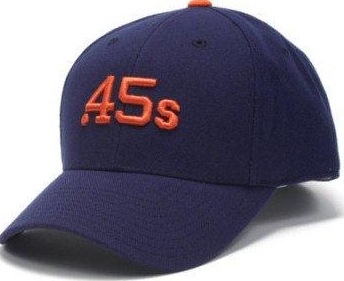
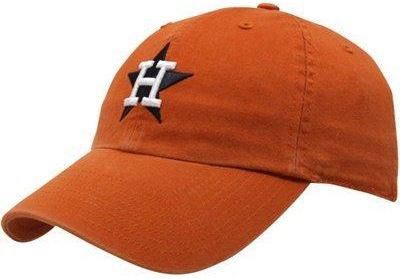
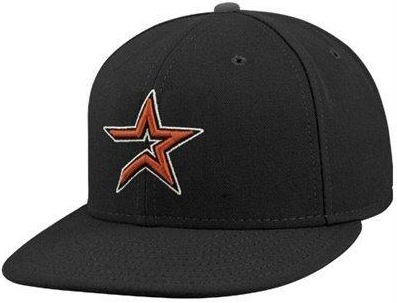
“I do indeed, Mr. Postolos; thank you. In fact I have a two-part plan, and the first element targets the team logo and uniform. In conjunction with the opening of this new stadium in 2000, our predecessors implemented a thorough upgrade of the visual branding elements of the team logo and uniforms. Although this scheme was accepted, our research shows it has never been fully embraced, and I propose we now begin planning to implement a similar refresh of the team totems and other symbology to coincide with our debut in the American League next year. Marketing is over the moon at the prospect, by the by. And FYI, should we choose to advance along this path our deadlineOpenStar copy to submit planned changes to Major League Baseball is Opening Day of this season, this April 6.”

“Mr. Crane and I have discussed that prospect and it’s very much in play; as you noted, a change in uniform that dovetails with our opening up in the AL next year makes intellectual sense and we think it will keep interest in the change brewing throughout this season, then spark a landslide of buying the new merchandise during the off-season next year. I’d say to you that this change is a virtual certainty. Now, what’s the second part of your plan.”

“Excellent, sir. Then following along this path of New Beginnings in 2013, and in conjunction with a new look for the uniforms and the logo, I propose we look at raising the wager. In its fifty years as a major league baseball organization, the Houston National League Base Ball Club has had, shall we say, a rather spotty record of achievement; no need to dredge up the details. Today, under new leadership, with promising young players, we stand on the cusp of a successful new future, one so bright that one ought to wear dark glasses. So let’s not hold back in this presentation, in this re-creation, of the team. I propose that when we unveil the new uniforms and logo, that they herald a fully new brand—we will change the name of the team!”

“Bentley…that’s pretty out there, my friend. You really want to drop the name ‘Astros’ after all these years—don’t you imagine that that will, if you’ll excuse me, piss people off?”

“Some, undoubtedly, sir; no doubt at all. But this doesn’t come from any ill will felt toward the fans or the space program, rather from that place that sees a potentially enormous marketing payday that should not be permitted to go to waste. And if I may, I propose we truly raise our gaze above the horizon: let’s be open to changing the ‘Houston’ part of the team name as well. Names indicating representation of a broader area, such ascurrent the Minnesota Twins or the Colorado Rockies, are by no means unheard of, although it would indeed be rather awkward for our organization to go by ‘Texas’ since that name is already employed by the team in North Texas. But as an organization, I suggest we give open and honest consideration to all of our available options.”

“I don’t know, it just seems so drastic to sell off so much of our history just to make a buck—oh crap, did I just say that out loud?”

“Not at all, sir, not at all.”

“I git what Bentley here’s saying, but I don’t think too much of going through with it; folks around here might feel like they’re being exploited, and you know how they can hold a grudge.”

“Excuse me, sir, but I just had an idea: we don’t have to actually make any change, but what if we, you know, just let it be known that a name change is being considered? That’ll get people paying attention to the Astros, and, like, thinking about what they love about the team, and talking about it all, and, then we’ll be all, you know, like announcing that the whole name change idea has been dropped, and they’ll thank us for supporting team history and, you know, not feel so bad about buying fresh new hats and shirts. What about that idea, sir?”

“Cyndi, lunch is on me. Good meeting, everybody. Go Astros!”

UPDATE Jan. 30: Late this evening owner Jim Crane announced a decision that the team name will not be changed. (No word on the size of Cyndi’s raise.)

It’s about the feeling you get after waiting so long for something good to happen

It’s about finally having the team you cheer for look like it can actually have a good year

It’s about a team of good guys that hasn’t given up all year despite the injuries of top players

It’s about an uncharacteristic and thrilling game-winning touchdown drive with no timeouts in the last two and a half minutes

It’s about winning it with a rookie third-string quarterback in charge

It’s about seeing his parents cheering him on while banished to the last row in the far-from-filled stadium of the cheapest-ass team in the league

It’s about the first time making the playoffs after years of miserable performances

It’s about the first division championship in your team’s ten-year history

It’s about the feeling you get after waiting so long for something good to happen

Today, it’s about being a fan of the 10-3 Houston Texans, your NFL AFC South Division Champions!

texans11

Kevin Walter with the winning catch

texans15

DeMeco Ryans carries Danieal Manning off the field as AFC South Division champs

Photos thanks to Houston Chronicle

I’ve got some great news, and I’ve got some less than great news

The great news is that the sale of the Houston Astros was approved by the Major League Baseball owners at their quarterly meeting today.  The Dreaded Drayton McLane Era in Houston Astros history is expected to finally be smothered with a pillow by the middle of next week; this will do nothing to immediately get us any better players, but it will make a lot of people feel better.

This past May when the sale agreement with an investment group led by Houston businessman Jim Crane was announced, I unburdened myself on the subject of McLane’s star-crossed stewardship of my hometown team.  In retrospect, the only thing I’d change would be to include better examples of how splurging on big name free agents made McLane feel like he was building a champion but really only reinforced his legacy of misguided priorities:

Kaz Matsui.  Woody Williams.  Vinny Castilla.  Sid Fernandez.  Dwight Gooden.  Mike Hampton.  Jason Jennings.  Pat Listach.  Brett Myers.  Russ Ortiz.

I’ve been a baseball fan since I was a kid and been lucky enough to always live in cities with big league teams, except for a few years as a small boy and then in college, so going to games regularly and seeing all the best players in person has been a big part of my life.  I’ve seen a few really good Houston teams, and I’ve seen quite a few really terrible ones since I first walked into the Astrodome in 1966, but since then the Astros have been my team.  Baseball fans are, among many things, loyal to their team.

But, I got so tired of sitting through season after season of McLane and his minions oh-so-earnestly soldiering on, unable to stop meddling in the baseball stuff they didn’t know about, from scouting to farm system to broadcasting and more, while conniving to get taxpayers to pick up most of the tab for a (beautiful) new playpen and then raising prices on everything we buy when we’re there.  And now to top it all off, the team on the field has turned from a prince into a frog.

So, I’ve got nothing but positive feelings about the old ownership hitting the bricks (not the ones they’re selling for $100).  The new guys could be worse, but I’m willing to take the chance that they’re not.  I’m not so positive about the upcoming opponents.

The less than great news is that this sale turned out, as suspected, to be contingent on moving the Astros out of the National League and into the American League’s West Division.  Probably starting in 2013—the season after next—after more than 50 years with a National League team and before that minor league teams that were associated with National League clubs dating back to the 1920s—Houston will become an American League city.  This bites.

Since the expansions and realignments leading up to the 1998 season, there have been three divisions in each league with five teams in most of those divisions, but the NL Central has had six teams and the AL West only four (I can’t remember why).  In the past few years it seems to have become important to even that out.  The rules won’t let any team owner be forced to change leagues, but the commissioner’s office took advantage of this opportunity and made the league change a requirement for approval of this sale.  The Astros’ new owner had to agree, or walk away from the whole deal.

Now the Astros will be in the same division with the Texas Rangers, Seattle Mariners, Oakland A’s and Los Angeles Angels of Anaheim and play a larger percentage of their games against them instead of against their current NL Central rivals.  Three of the AL West teams are in the Pacific time zone, which means the Astros will play a larger number of road games that won’t start until 9 p.m. Houston time and won’t end until midnight or more.  That will cut into the size of the TV and radio audiences in Houston, hurt ratings and hurt the team and the broadcasters financially.

It will mean a big change in which teams we see come to Houston.  Instead of three visits a year from the Cardinals and Cubs and other NL Central teams, and once a year from the Giants and Phillies and other National League teams, we may see all of them once a year at most. Instead, we’ll get a therapeutic dose of our new AL West buddies and annual drop-ins from not only the Yankees and Red Sox but the Twins and Orioles and Royals, too.  Oh boy.

And as for the idea that the Astros will have a wonderful rivalry with the Rangers…well, that may come to be, but it’s far from certain.  Notwithstanding all the balloon juice emanating from Major League Baseball about the “natural rivalry” between the two teams from Texas, let me presume to speak on behalf of Houston fans when I say, we don’t care about the Rangers.  Don’t hate ’em, just don’t care about ’em.  Never have.  I think Rangers fans feel the same way about the Astros, but I’ll stand to be corrected on that.

And yes, I believe watching a team that plays all of its games with the designated hitter will be annoying.  It won’t be the end of the world, but it won’t add to my enjoyment and excitement, either.  I’m just not a DH kind of guy.  Now it turns out that that will be part of the price I have to pay to get the Old Grocer out of my life and out from that seat behind home plate in the centerfield shot on my TV screen.

Well, things have been worse…did I mention Kaz Matsui?