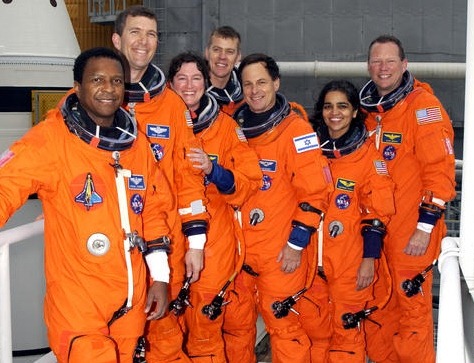
This week, January 16, is the 10th anniversary of the last launch of  space shuttle Columbia. If you’re interested in knowing what happened at NASA leading up to that launch and what happened in Houston during the flight, read Wayne Hale’s Blog. Wayne is retired from NASA now after a 32-year career that saw him rise from flight controller to flight director to posts within the space shuttle program hierarchy and at NASA Headquarters, including Space Shuttle Program Manager after the loss of Columbia and her crew.
Start with his August 14, 2012 entry and read forward in time: he carefully and colorfully sets the stage, introduces the players and fills in shuttle program background; he doesn’t retreat into engineering jargon; he offers his recollections of the most difficult time in the professional lives of many of the people who make up America’s human spaceflight program and doesn’t spare himself from a close look. He writes of “The Tyranny of Requirements” and the warnings that were plainly there in the two previous flights (for any who could see them), of “Counting Down to Disaster” while “Working on the Wrong Problem.”
As someone who worked at  NASA then and now, I’ve found his essays both moving and instructive; I don’t know where he’s going with the story exactly, but I’m eager to read each new installment. I can explain to you what happened to that vehicle as it rose to orbit 10 years ago, and what tore it apart and killed its crew as it came home 16 days later, but Wayne’s point of view on what led up to those events—what caused them, what was responsible—is unparalleled in its accessibility and honesty.
In 2002 I thought we were paying the right level of attention to the shuttle. I thought I was paying the right level of attention to the shuttle. I was a Flight Director. I was also a husband and a father and active in my community. I thought I could do it all.
I was wrong.
Later on, I will write about the MLK three day weekend that cost us a crew just because we took three days off. But how can you know in advance where the proper balance is between work and life when you work at extreme risk?
While I can’t cite specific studies, my observation of several major NASA projects that have gotten in trouble over the years shows a high correlation with new, added, late, or poorly defined requirements which caused technical issues, increased the costs, and delayed the schedule. Put simply, a good program manager has got to have the gumption to just say no to changes in requirements – even when they are really good ideas.
In the end, I am convinced that the “relentless budget reduction pressures” were a major cause of the Columbia accident that cost us a crew and an orbiter. Not the only cause, but a major cause.
So where do you draw that line, between prudent and acceptable expenses and extravagance? What do you do when you depend on a vehicle that just flat costs more to fly than you can afford?
The rest of the story is coming soon, but you can get caught up now: the story of space shuttle Columbia on Wayne Hale’s Blog is worth the effort.




 HEY, IT'S PAT RYAN'S BLOG!