Why we are so polarized

A man opens fire on a crowd in front of a grocery store; six are dead and 13 more are wounded.  A quick and easy explanation that somehow blames a political enemy would be nice, right?  Not so fast…

doc4d290f6a042817218110492This discussion got jump-started last week after the Tucson shootings thanks to the rampant news media speculation that accused gunman Jared Loughner was encouraged in this crime by violent rhetoric from the political right.  It turns out, most Americans aren’t buying: in a CBS News poll nearly 60% say there is no connection at all.

But Loughner is mentally disturbed, and according to his friends his view of the world, and his imagined grudge against Congresswoman Gabrielle Giffords, were influenced by extremist conspiracy theories (read about a couple of them here and here).  And so, some argue, Loughner is responsible for the crime but was influenced by a world in which violent rebellion against those who would hijack “our America” is seen as an heroic act.

…if you decide to go kill a bunch of innocent people, it’s a pretty safe bet that you’re not a picture of mental health. But that doesn’t sever the link between you and the people who inspired you, or insulate them from responsibility.

The quote is from Robert Wright’s Opinionator blog entry on Tuesday about the growing demonization of “the other” in our society.  He makes the point that any demagogue can whip up a fear frenzy among the gullible, that today’s technology allows each of us to shield ourselves from any competing point of view if we choose to, and that it’s easy to think the worst of people “you never communicate with, and whose views you never see depicted by anyone other than their adversaries.”

It feels true: most of us rarely discuss political issues with people who hold different views.  There seems to be no common ground from which to start a discussion, no one wants to hear what the other side has to say, and we end up beating each other over the head with talking points rather than exchanging ideas.

Paul Krugman attributes this to a deep divide in American political morality:

When people talk about partisan differences, they often seem to be implying that these differences are petty, matters that could be resolved with a bit of good will. But what we’re talking about here is a fundamental disagreement about the proper role of government.

He does a good job identifying the roots of today’s ballistic political tone, attributing it to a morally-based difference of opinion about what is appropriate, or constitutional, for our government to be doing.  A disagreement stemming from moral belief, as Krugman believes this one is, would be a disagreement not easily reconciled.

That doesn’t give us permission to stop talking to each other, or stop trying to find common ground, or to subtly encourage violent means to win the moral struggle.  Because then nobody wins.

“We are better than this; we must do better”

I knew it:  I knew right away that whether or not there was any evidence that the person who shot Congresswoman Gabrielle Giffords was motivated by the loudmouths on radio and TV, that some of those loudmouths would be blaming the others for inciting political violence.  And I was right…I also predicted the sun would rise in the east this morning.

405992-giffordsMore than two days after the fact and there is no evidence (of which I’m aware) that the man who shot Giffords and 19 [1/12, authorities have revised the figure to] 18 others was persuaded to lethal levels of violence by radio and TV stars; short of his declaration that “so-and-so said it was the right thing to do,” I don’t see that there ever will be.  So let’s leave that alone.

Starting with Sheriff Clarence Dupnik at Saturday’s news conference, there has been a lot of ink spilled calling for restraint, for throttling back the vitriol that fuels so much of the political discussion in our halls of government and our radio and television studios.  It is worth considering to what extent the personal viciousness—and the attendant self-satisfied smugness—of the professional politicians and the paid-to-be-controversial “opinion hosts” has created an environment where consideration of physical violence becomes less theoretical.

I’ve written about the tone of modern political discussion, which is clearly not intended to appeal to the intellect but to rouse the emotions and appeal to paranoia.  And I’m troubled by how successful those messengers and their messages are.

Sure, I’d like to see more restraint and less accusation in political speech, but I know that real world politics isn’t an academic debate.  And I agree with Jack Shafer’s insistence that there be no government-imposed restriction on political speech—the First Amendment makes clear that is not allowed.  (Check my We the People page for a collection of quotations on free expression.)

But I wish there was more self-control when it comes to speech intended to demonize political opponents: to say not just that someone’s position or opinion is wrong, but that those people are evil, or hostile to American ideals and virtues, because of what they believe.  Disagree with me?  Fine; argue my conclusion, dispute my facts, prove me wrong, ridicule my reasoning, do so with vigor; but to respond that my disagreement with your point of view is evidence of imbecility or treason is not a rebuttal.  It’s a sign of the weakness of your position; it’s a sign that you have nothing to say.

One of the more touching observances of a moment of silence for the victims of the shootings in Tucson came this morning from Giffords’ brother-in-law: NASA astronaut Scott Kelly, the current commander of the International Space Station.  (Full disclosure—I work at NASA Johnson Space Center and am acquainted with both Scott Kelly and his brother Mark Kelly, Giffords’ husband.)  The good stuff starts 1:27 into the clip–

We have a unique vantage point here aboard the International Space Station.  As I look out the window I see a very beautiful planet that seems very inviting and peaceful; unfortunately, it is not.  These days we are constantly reminded of the unspeakable acts of violence and damage we can inflict upon one another, not just with our actions but also with our irresponsible words.  We are better than this; we must do better.  The crew of ISS Expedition 26 and the flight control centers around the world would like to observe a moment of silence in honor of all the victims, which include my sister-in-law Gabrielle Giffords, a caring and dedicated public servant.  Please join me and the rest of the Expedition 26 crew in a moment of silence.

Last Call for 2010

party-hat I’m cleaning out files and dumping what I’ll never use—some of it because the crummy foreign-made hyperlinks are broken—and while reorganizing the rest I found some things that need to be posted now, as a benchmark, because I’m sure this stuff isn’t over yet.

I’ve been very interested in the growing disaffection with American politics and politicians, and not just what’s coming from tea parties.  Back in April Mark McKinnon and Lawrence Lessig called for a constitutional convention if only to shock the legislative classes into understanding that people have had enough of the corruption that has institutionalized itself  in Washington, D.C.  By fall, of course, Jon Stewart got tens of thousands to rally for simple reasonableness in politics and government, and by the end of the year McKinnon and some other esteemed names were launching the No Labels approach to finding solutions to problems.  This could just generate “passionate ambivalence”, but I’m optimistic: the dismissive comments coming out of the loudest mouths on both ends of the spectrum might just mean the center has found a weapon to use against the unreasonable and the extreme.

Inconceivably, the Roman Catholic Church took the disgrace of the priest sex abuse scandal, and made it worse: first a senior official says criticism of the church is like anti-Semitism; then we learn that while in his prior job the man who now leads this church had authority directly from Pope John Paul II to act in these cases, and for 20 years chose not to; and now for Christmas, the pope says western society and its permissive sexual attitudes are partly to blame for many of the church’s celibate employees sexually abusing underage members of their parishes.  Like I said before, why aren’t these people in jail?

On the subject of blogging, I recently found some great sites that have helped boost traffic here at the corner idea stand.  Take a look at Blogiche, Alpha Inventions, and BlogSurfer if you want to get more eyeballs on your blog; you’ll get a new insight into what else is out there, too.

I’ll wrap up with syndicated columnist Scott Burns and his column from last January which reminded us then (and now) that everything old is new again: there’s always a crisis, we can’t rely on our government to take care of us, and we are getting better as the years go by.

No straight path to civil rights for gay Americans

Life would be easier to follow and less confusing to live if there weren’t so many detours.  But things happen when they happen, regardless of when we think they should have happened: witness the latest victory in the struggle for civil rights for homosexual Americans.

Legalized discrimination against gays in American society has been taking a beating and is on its way out, and with last week’s vote by the U.S. Senate to join the House of Representatives in repealing the Clinton-era law which prohibited homosexuals from serving our country in the armed forces if their sexual orientation became public, we’re one step closer to equality.  Once the bill gets the president’s signature (later this week), it’s up to the administration and the Defense Department to make the necessary changes to enforce the law.  That means things won’t change right away, but they will change.

“I don’t care who you love,” Senator Ron Wyden, Democrat of Oregon, said as the debate opened.  “If you love this country enough to risk your life for it, you shouldn’t have to hide who you are.”

No gloating over winning one battle while the war remains to be won.  We can expect to hear a lot more thanks to a well-financed new group connected to Media Matters for America that promises to act as a “national rapid-response war room” taking on false and homophobic messages in the media and the political arena.

My happiness at the Senate vote was tempered by the recognition that so many members of Congress still found a reason to be against it—you can check the roll call vote in the Senate here, and the House here.  But big changes like this don’t happen overnight or all at once, and I try to keep that in mind when I see blog posts and headlines calling on the next Congress to reinstitute the law or ominously warning that this change will force God to stop blessing the American military (honest to God!) leading to the imminent and total destruction of our nation.  No doubt there are some with the same feeling about the passage of the Civil Rights Act of 1964, but I’m not going to let any of them them ruin the moment, or the movement.

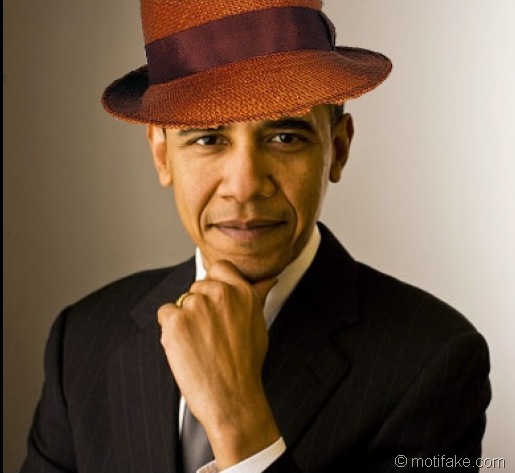
Obama the Hustler?

Charles Krauthammer thinks President Obama snookered congressional Republicans and Democrats with this week’s budget deal, and that they still don’t know that they’ve been had:

At great cost that will have to be paid after this newest free lunch, the package will add as much as 1 percent tohuggy-obama-barack-obama-chitown-huggy-bear-demotivational-poster-1219696416 GDP and lower the unemployment rate by about 1.5 percentage points. That could easily be the difference between victory and defeat in 2012.

Obama is no fool. While getting Republicans to boost his own reelection chances, he gets them to make a mockery of their newfound, second-chance, post-Bush, Tea-Party, this-time-we’re-serious persona of debt-averse fiscal responsibility.

Is he right?  Does it matter?  Do you think Barry should co-star in the next remake of “The Sting”?